
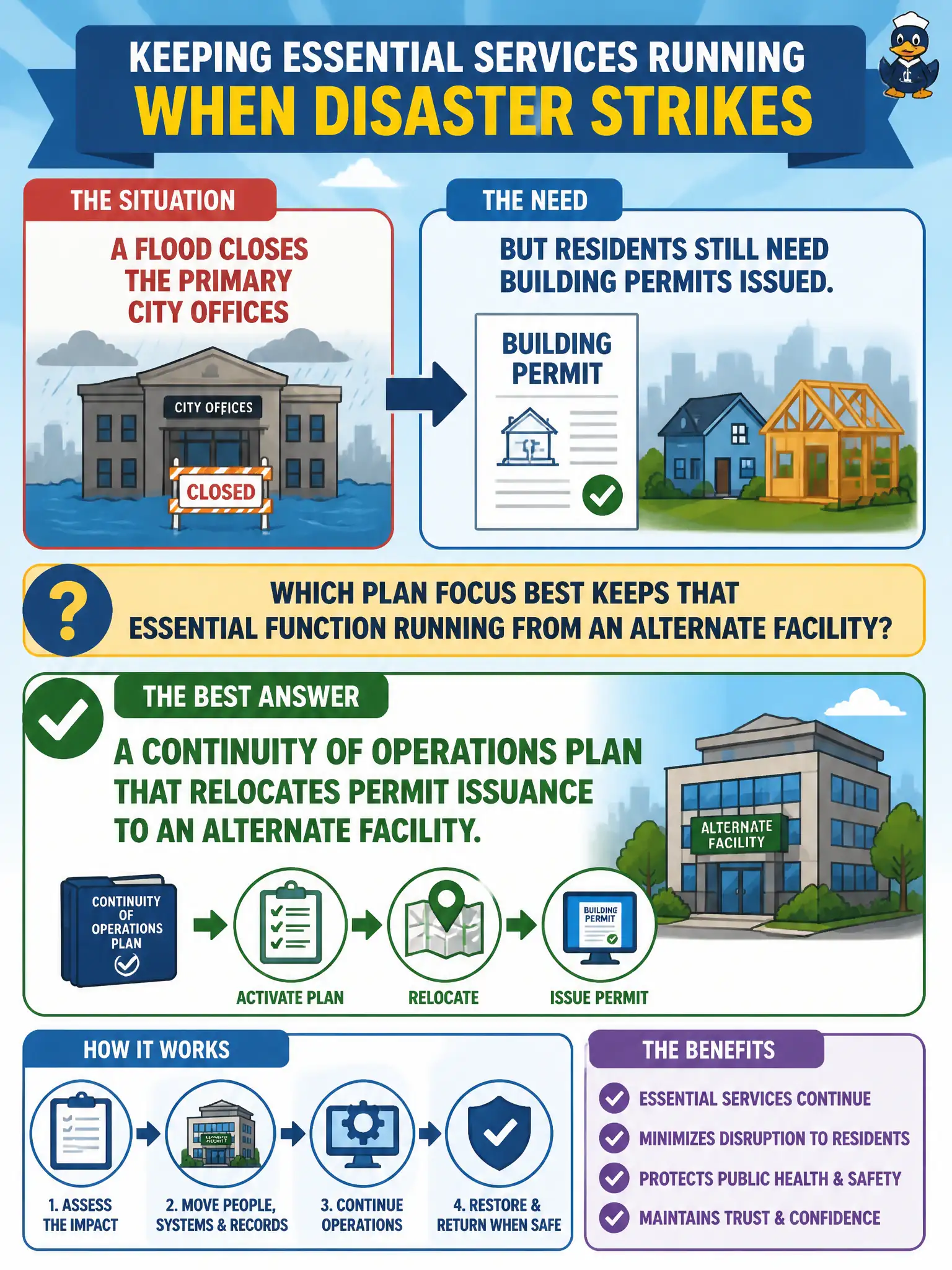
A flood closes the primary city offices, but residents still need building permits issued. Which plan focus best keeps that essential function running from an alternate facility?
Select an answer to reveal the explanation.
Short Explanation
When the main offices flood, citizens still need permits. A continuity of operations plan is the playbook that picks up that essential work at an alternate site—not a style guide or a cafeteria schedule.
Full Explanation
When floodwater takes a city hall offline, citizens still need permits, vital records, and other essential services. A continuity of operations (COOP) plan names mission-essential functions and defines how to relocate or sustain them at an alternate facility with people, processes, and technology ready to resume work. Relocating permit issuance under COOP is exactly that discipline: keep government functioning for the public despite facility loss, not merely restore IT when convenient. A marketing style guide for social-media colors during the flood addresses brand consistency, not essential-function relocation. A hardware disposal checklist without alternate-site operating procedures may be useful asset hygiene but does not tell clerks where or how to issue permits after the building floods. A cafeteria menu rotation scheduled only for the flooded building keeps food service planning tied to an unavailable site and ignores continuity of citizen-facing work. Exam caveat: distinguish COOP (sustain essential functions, often at alternate sites) from generic disaster recovery focused only on systems or from unrelated administrative documents. Operational check: for each essential municipal function, verify the COOP lists an alternate facility, minimum staff, required systems or paper fallbacks, and a tested activation trigger—then walk the permit team through that activation before storm season.