
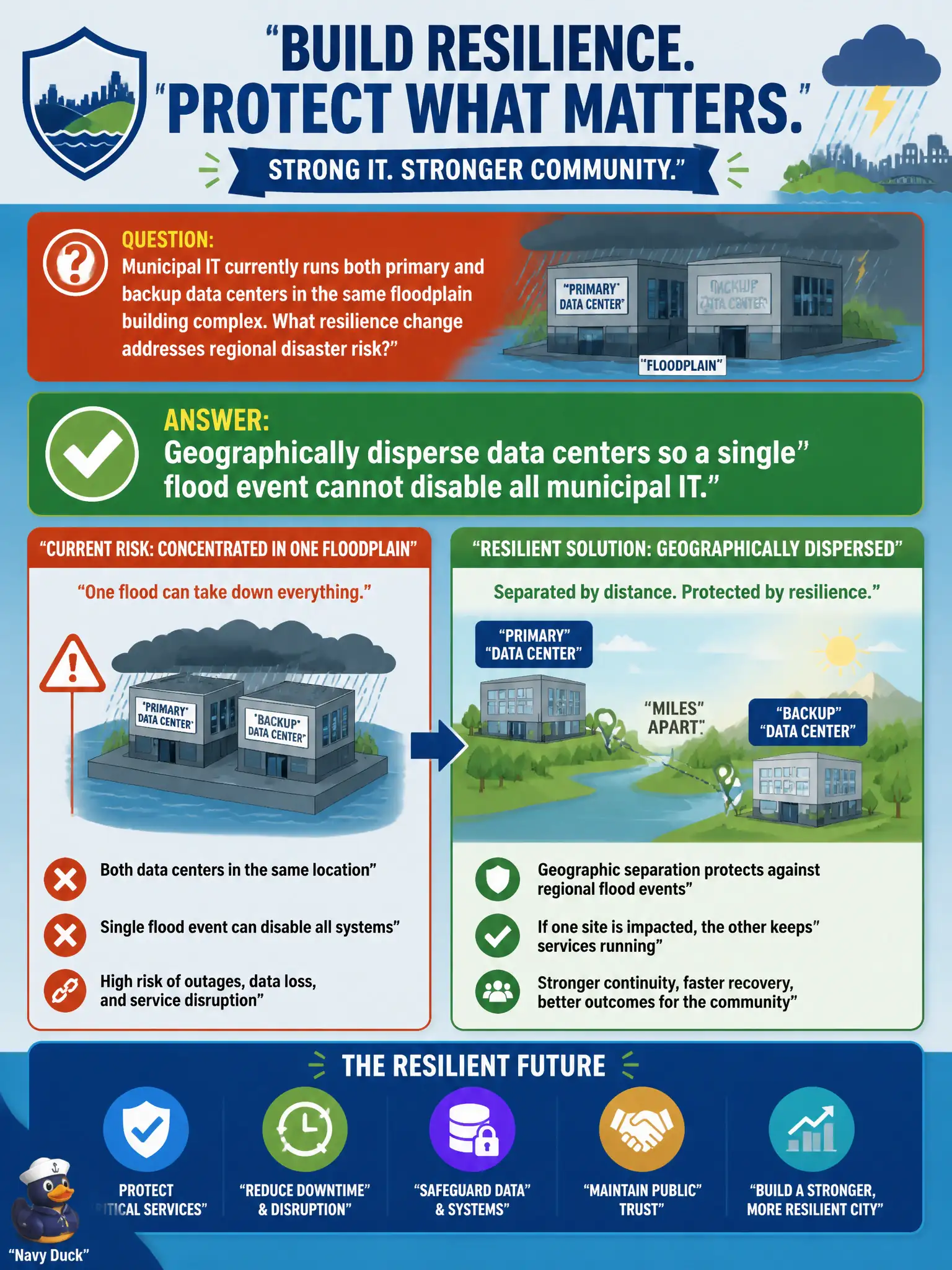
Municipal IT currently runs both primary and backup data centers in the same floodplain building complex. What resilience change addresses regional disaster risk?
Select an answer to reveal the explanation.
Short Explanation
Two rooms in the same soggy basement aren’t ‘geographic diversity’—they’re roommates in a flood. Put capacity far enough away that one storm can’t drown the whole city IT. Spare cables offsite don’t run the apps.
Full Explanation
Geographic dispersion places compute and data far enough apart that a single flood, fire, or regional outage cannot disable all municipal IT. True diversity of location underpins continuity for citizen-facing and safety systems when the primary campus sits in a flood plain or shared risk zone.
A second rack in the same room labeled “geographic diversity” shares power, HVAC, water intrusion paths, and often the same street conduit—it is local redundancy at best, not geographic separation. Spare Ethernet cables stored offsite do not host applications or data and cannot run city services during an outage. Disabling backups to “reduce flooded sites” removes recovery options and increases outage impact when water does reach the building.
Exam caveat: redundancy inside one facility is not geographic diversity. Distance requirements should reflect realistic disaster radii, not marketing checkboxes. Replication lag, independent power, and separate ISP paths matter at the distant site.
Operational check: measure distance and risk correlation between primary and alternate sites, verify the remote site can run critical workloads, test failover without relying on the flooded building, and ensure backups and replicas actually land outside the shared hazard zone.