
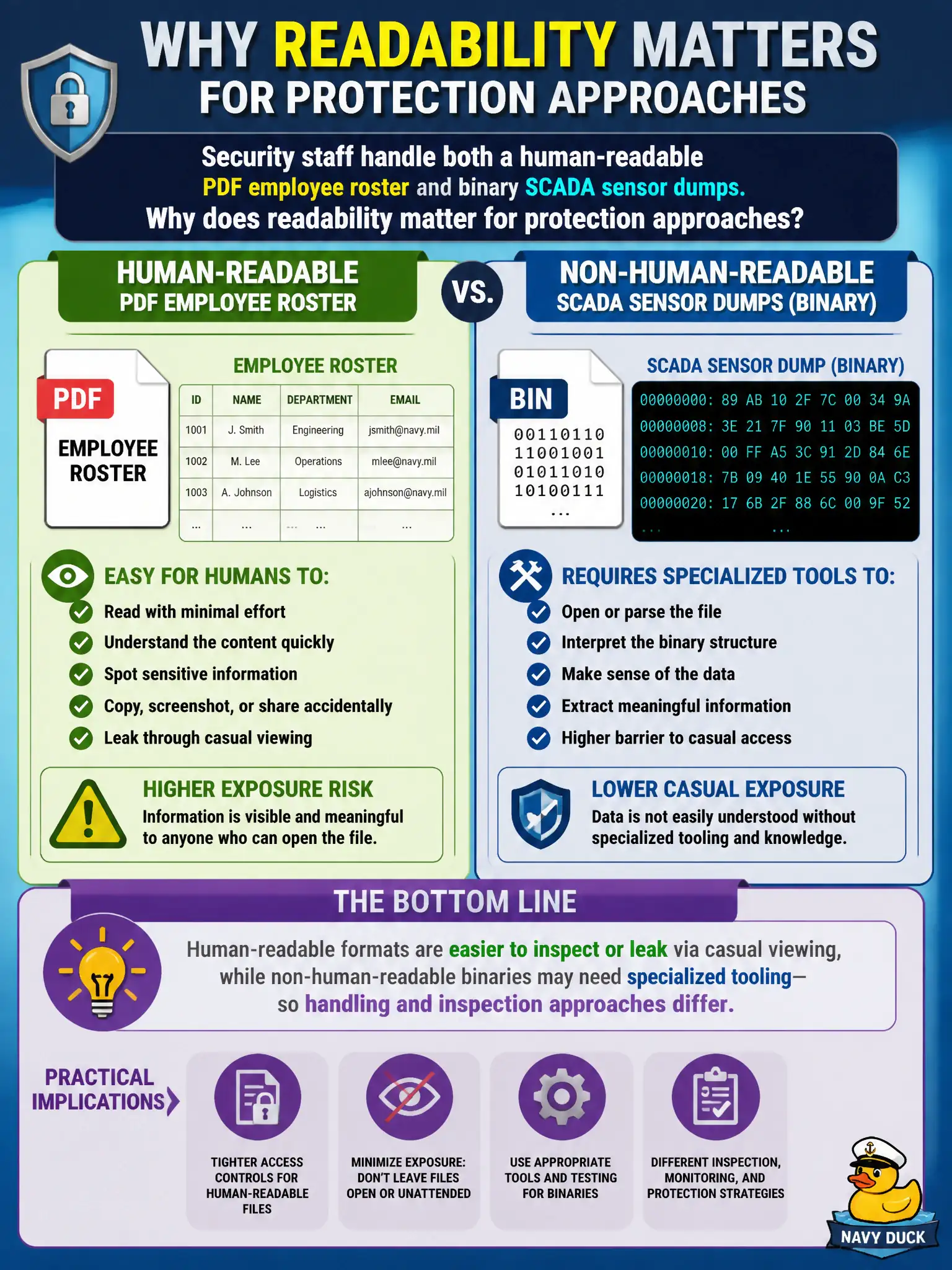
Security staff handle both a human-readable PDF employee roster and binary SCADA sensor dumps. Why does readability matter for protection approaches?
Select an answer to reveal the explanation.
Short Explanation
A PDF roster is like a sticky note anyone can skim; a binary sensor dump is a locked toolbox—you need the right tool even to peek. That difference changes how you inspect, DLP-scan, and warn people. ‘Nobody can read it’ is not a free pass for binaries.
Full Explanation
Human-readable formats such as PDF duty rosters are easy for people—and many DLP tools—to inspect, copy, or leak through casual viewing and simple text extraction. Non-human-readable binary dumps from sensors may resist casual eyeballing yet still contain sensitive telemetry; they often need specialized parsers, protocols, or tooling for inspection and may evade naïve keyword DLP unless content-aware controls understand the format.
Claiming binary dumps never need protection because humans cannot casually read them ignores automated exfiltration and offline analysis. Asserting PDF rosters are immune to DLP because they are documents is false—documents are prime DLP targets. Saying readability is irrelevant and every file type uses identical inspection oversimplifies: engines, classifiers, and handling guidance do differ by format even when policy goals align.
Exam caveat: “not human readable” is not a control. Classification and encryption still apply; inspection methods simply change. DLP efficacy varies by file type and encoding.
Operational check: include both PDF exports and binary telemetry in data-handling procedures, test DLP with representative samples of each, restrict USB and cloud sync for sensor stores, and train staff that printable rosters deserve the same need-to-know discipline as databases.