
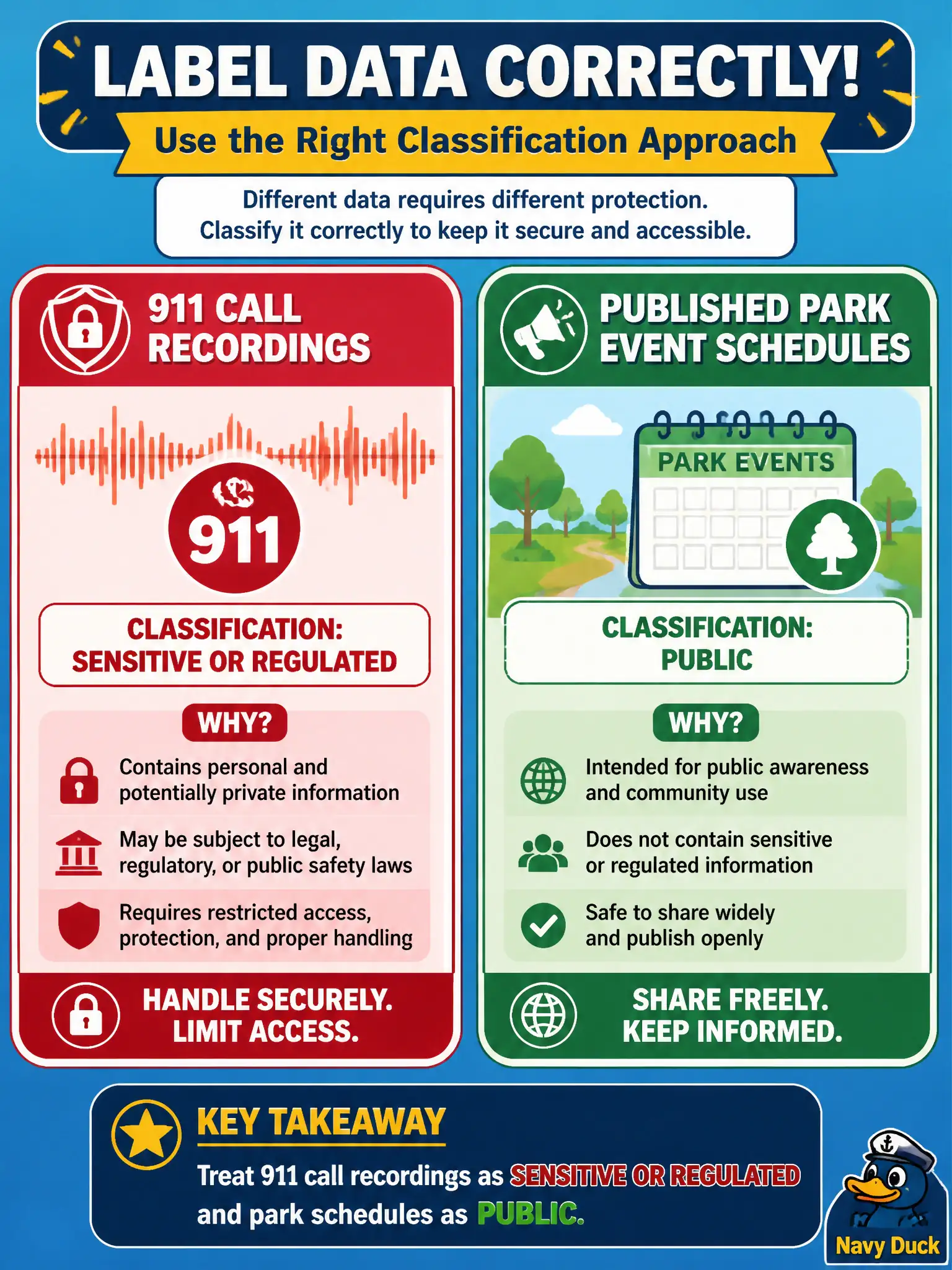
A records officer must label data correctly: 911 call recordings versus published park event schedules. Which classification approach is appropriate?
Select an answer to reveal the explanation.
Short Explanation
Not every city file wears the same lock. 911 recordings carry sensitive personal content; park picnic flyers are meant for the bulletin board. Classification is just putting the right sticker on each one.
Full Explanation
Data classification assigns handling labels based on sensitivity and regulatory impact, not on the fact that a file lives in a municipal share. Nine-one-one call recordings commonly contain personal, medical, and investigative details that warrant sensitive or regulated treatment, restricted access, encryption, retention rules, and careful disclosure workflows. Park schedules are intentionally public civic information suitable for websites and bulletin boards.
Labeling both as public because both are “city files” erases risk distinctions attackers and auditors care about. Treating park schedules as trade secrets while calling 911 audio marketing content inverts sensitivity. Avoiding labels entirely reduces paperwork by guaranteeing inconsistent handling and accidental oversharing.
Exam caveat: classification drives subsequent controls—access, encryption, DLP, retention—not the reverse. Public does not mean “unlogged,” and sensitive does not always mean “criminal justice only”; apply the label that matches content and law.
Operational check: inventory representative datasets, map each to an approved classification scheme, verify ACLs and encryption match the label for 911 audio repositories, and confirm park schedules are published through approved open channels without dragging adjacent sensitive folders into the same share permissions.