
A mayor asks what 'integrity' means for property-tax records. Which explanation is most accurate?
Select an answer to reveal the explanation.
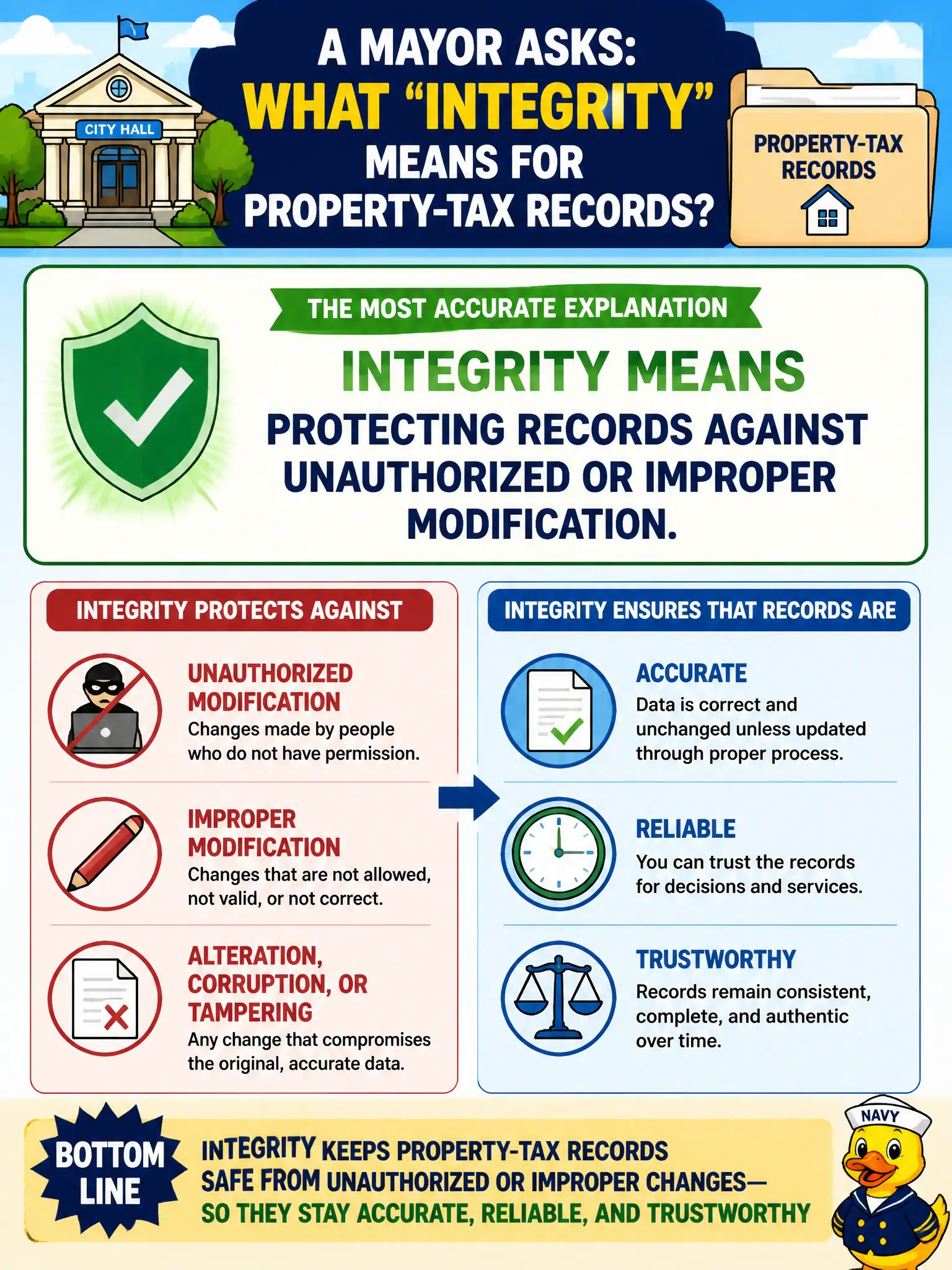
Short Explanation
Integrity is the 'do not sneakily rewrite the ledger' promise — the numbers stay as they should unless a proper change happens. That is different from keeping secrets (confidentiality) or keeping the site up (availability).
Full Explanation
Within the CIA triad, integrity is the assurance that data and systems are not improperly altered—unauthorized or inappropriate modification is prevented or at least detectable. For property-tax records, integrity means assessment amounts, exemptions, and payment postings stay accurate and trustworthy unless changed through authorized processes. Citizens and the mayor rely on those figures for fairness and fiscal operations.
Defining integrity as keeping tax records secret from all citizens at all times describes confidentiality (and overstates it—many assessment rolls are public by design). Defining integrity as the tax website staying online during peak filing week describes availability. Defining integrity as only proving which clerk printed a receipt after the fact points toward accountability or non-repudiation elements, not the core definition of integrity as protection against improper modification of the records themselves.
Exam caveat: CIA objectives can fail independently. A disclosure can violate confidentiality without changing numbers; an outage can violate availability without corrupting data; a quiet unauthorized edit can violate integrity while systems remain up and undisclosed. Non-repudiation is related to evidence of actions but is not synonymous with integrity on SY0-701.
Operational check: protect municipal tax databases with least-privilege access, change logging, checksums or database integrity controls, separation of duties for valuation versus payment posting, and monitoring for unexpected bulk updates. Periodically reconcile exports to source systems so integrity failures surface before refunds or liens go wrong.