
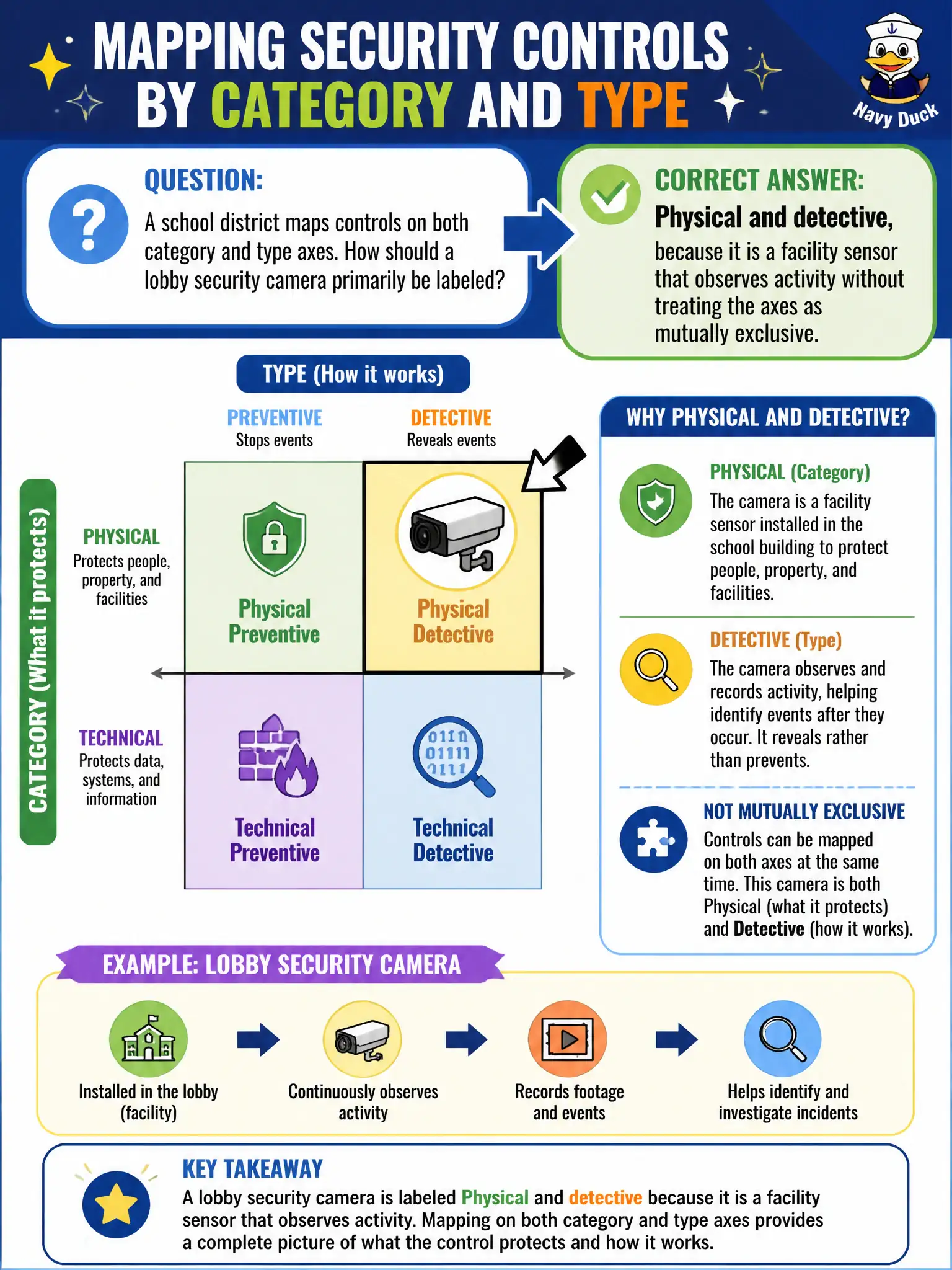
A school district maps controls on both category and type axes. How should a lobby security camera primarily be labeled?
Select an answer to reveal the explanation.
Short Explanation
Category and type are two different stickers on the same jar. A lobby camera is physical gear that mostly watches — so physical + detective. You can wear both labels at once; the exam loves that.
Full Explanation
Security+ expects candidates to classify controls on two axes at once: category (technical, managerial, operational, physical) and type (preventive, deterrent, detective, corrective, compensating, directive). A school-district lobby security camera is a facility sensor that observes and records activity in physical space, so the primary pairing is physical and detective. The axes are not mutually exclusive; one control can—and usually should—carry both a category and a type label.
Saying the camera is only managerial because it appears in district policy mistakes a governance reference for the control's category. Policies that require cameras are managerial; the camera hardware and placement remain physical. Claiming only preventive because cameras "always stop crime before it starts" overstates prevention: cameras primarily detect and record; any deterrent effect is secondary and does not make prevention the core type. Labeling the camera technical and corrective because recorded video "automatically rebuilds breached servers" invents capabilities cameras do not have—corrective restoration is an IT response process, not a camera function, and a lobby camera is not primarily a technical network control.
Exam caveat: do not force a single adjective when the question asks for category and type together. Cameras may also deter, but SY0-701's usual primary type for monitoring cameras is detective.
Operational check: inventory lobby cameras as physical/detective controls, ensure retention and access to footage are governed by policy, verify coverage of entrances without creating privacy violations in student areas, and integrate camera alerts with operational security responses rather than assuming video alone prevents incidents.