
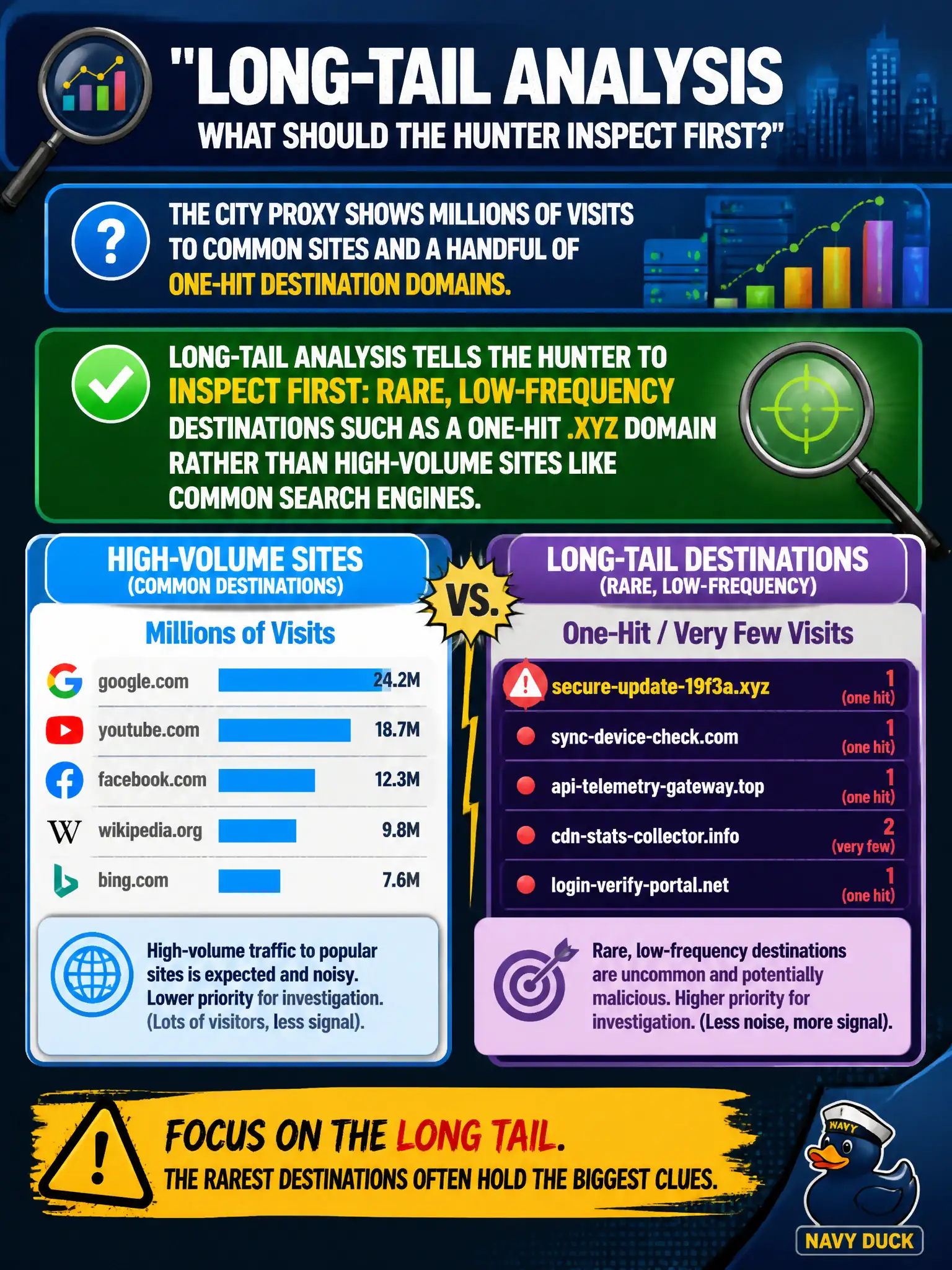
The city proxy shows millions of visits to common sites and a handful of one-hit destination domains. What does long-tail analysis tell the hunter to inspect first?
Select an answer to reveal the explanation.
Short Explanation
Long-tail hunting is window-shopping the dusty end of the shelf, not the checkout line for coffee. High-volume destinations are the head of the list; the one-hit .xyz domain is the interesting civic find. Rank rarity, then inspect the rare.
Full Explanation
Long-tail analysis ranks values by frequency and focuses hunters on rare items in that distribution rather than on the busy head. When the city proxy shows millions of visits to common sites and a handful of one-hit destination domains, long-tail analysis tells the hunter to inspect rare, low-frequency destinations—such as a one-hit .xyz domain—first, not high-volume sites like common search engines. Volume at popular destinations is usually expected civic browsing; rarity is the investigative cue. Inspecting the most frequent destination because volume always equals malice inverts the technique and wastes time on noise. Restricting the hunt to domains already listed in tactical threat intelligence ignores novel rare destinations that are not yet in intel. Focusing on the city homepage because it is the civic brand answers a brand question, not a rarity question. Exam caveat: long-tail hunting is frequency-ranked rarity analysis—do not equate head volume with malice or limit the tail to known intel only. Operational check: stats or timechart destination domains by count for civic proxy users, sort ascending or review the lowest-count tail, open one-hit uncommon domains in context of user and time, and escalate suspicious rare destinations before chasing top talkers.