
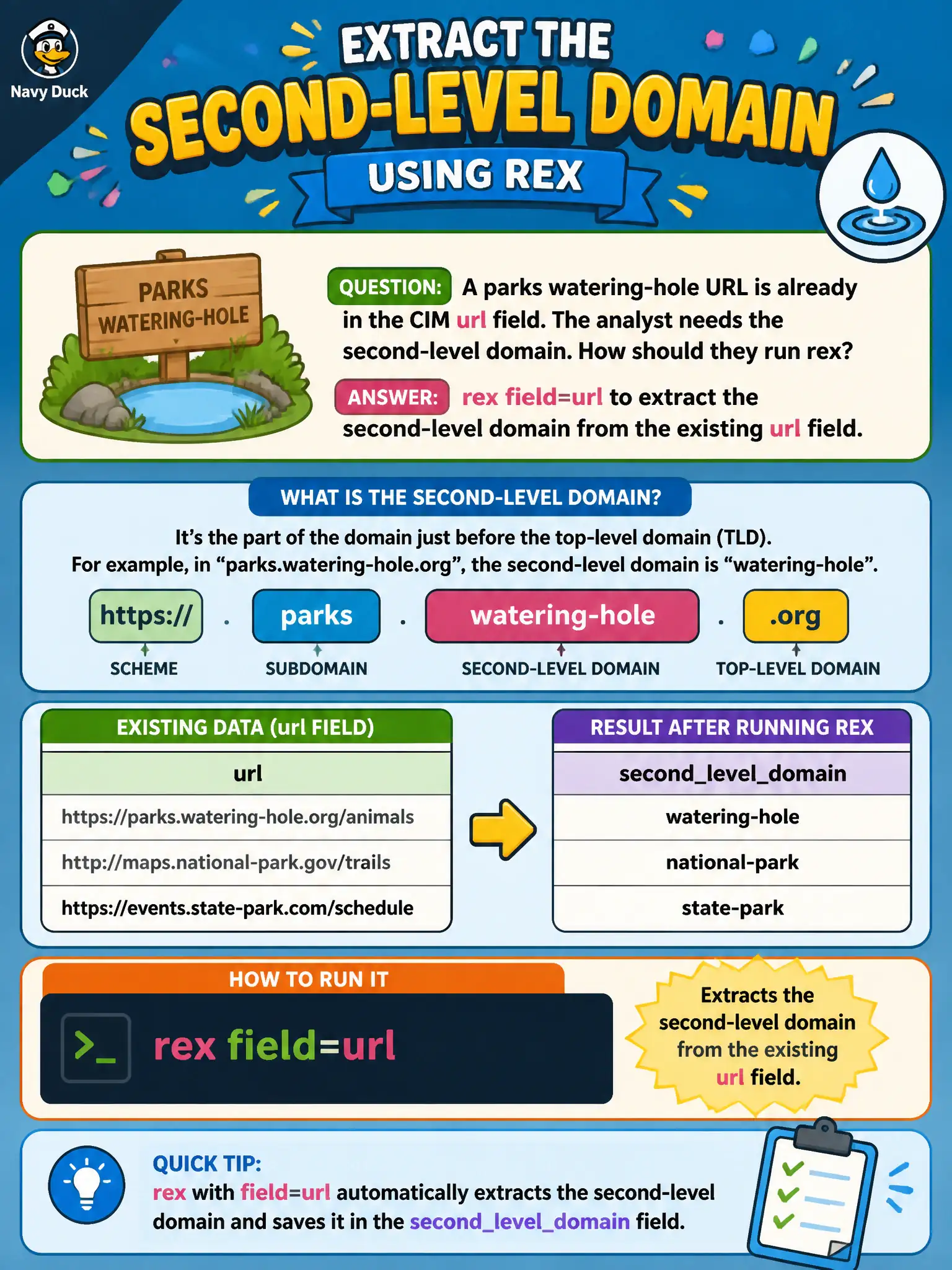
A parks watering-hole URL is already in the CIM url field. The analyst needs the second-level domain. How should they run rex?
Select an answer to reveal the explanation.
Short Explanation
rex is not married to _raw. Point it at url and it will carve the domain out of a field already in hand. That is cleaner than stuffing the URL back into the raw log.
Full Explanation
In Splunk Enterprise Security for a municipal SOC, rex accepts a field= argument so the regular expression runs against an existing field such as CIM url rather than only against _raw. When a parks watering-hole URL is already normalized into url, rex field=url extracts the second-level domain cleanly for stats, lookups, and blocklists without stuffing the URL back into the raw log. Claiming rex can only read _raw, so analysts must dump url back into _raw first, fails by concept because field= is supported and dumping is unnecessary reverse engineering. Claiming tstats will split url automatically if Authentication is accelerated fails by concept because tstats does not parse URL structure, and Authentication is the wrong model for a web watering-hole URL. Claiming eval len(url) is sufficient because length equals domain fails by concept because string length is not a second-level domain. Exam caveat: SPLK-5001 expects rex field=<existing_field> when the value to parse is already in a CIM or extracted field. Operational check: run rex field=url to extract the second-level domain from parks watering-hole URLs, verify domains against the original url values, aggregate victims or hits by that domain, and feed confirmed domains into civic blocking and awareness actions.