
A port authority embeds OEM crane technicians on-site under a new partnership. What must HR's cultural-integration plan cover besides site access?
Select an answer to reveal the explanation.
Short Explanation
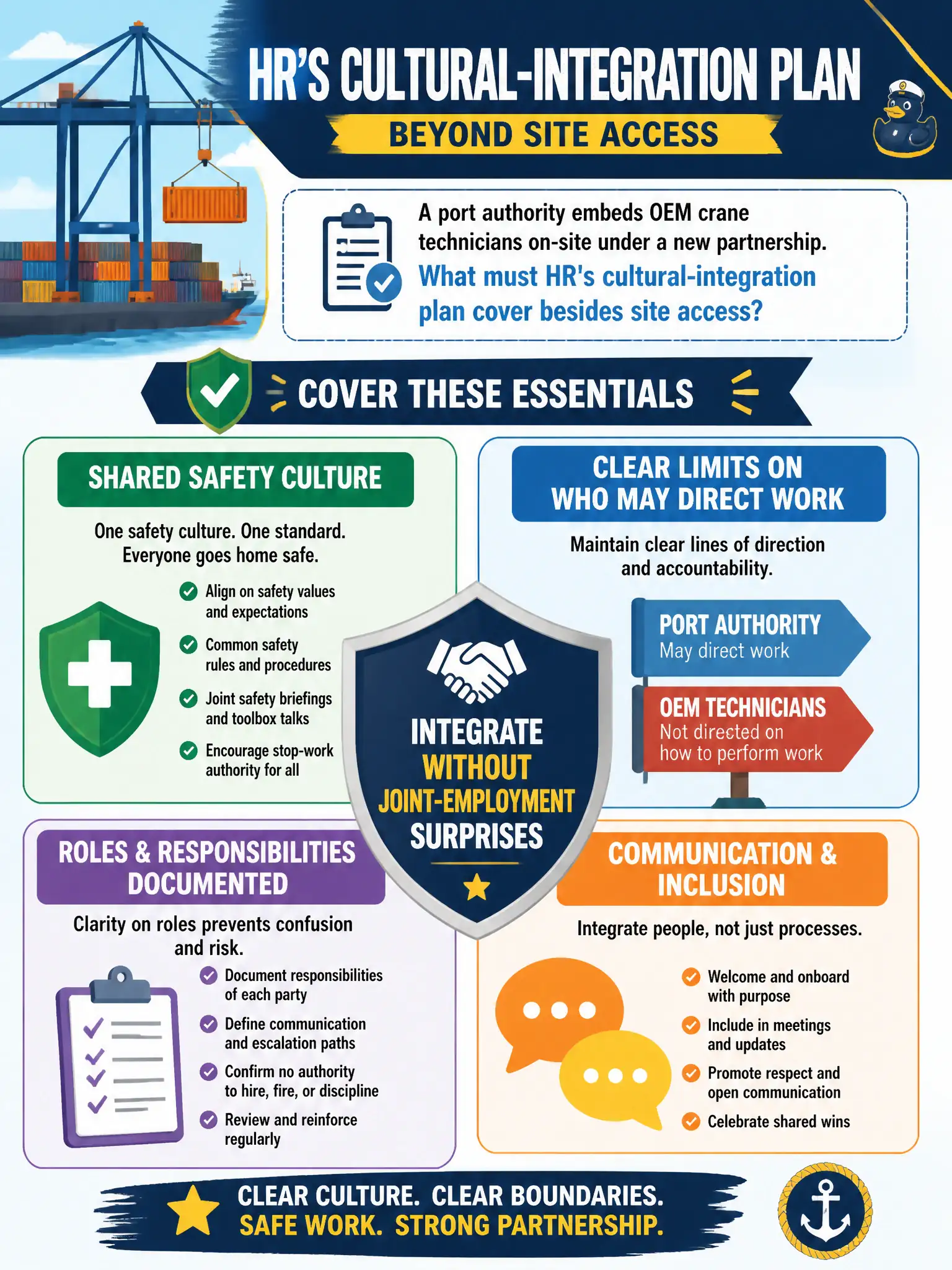
Having vendor technicians in the crane shop is like having houseguests in the kitchen—house rules still matter. Share the safety culture, and be crystal about who can assign work, or the port just hired them by accident.
Full Explanation
Embedding OEM crane technicians on-site under a port partnership requires cultural-integration design beyond parking and badges: shared safety culture and clear limits on who may direct work, so integration does not create joint-employment surprises. Vendor technicians in the crane shop are like houseguests in the kitchen—house rules still matter, and unlimited daily direction from longshore supervisors can blur employment lines the port did not intend to cross.
Providing only complimentary parking because contractors 'do not need cultural or legal design' ignores safety and joint-employment risk. Putting OEM technicians on the civil-service list automatically to erase status questions misclassifies the relationship. Letting any longshore supervisor issue unlimited daily direction so work never waits is exactly how control tests get messy.
Exam caveat: joint-employment analyses are fact-specific; clear contractual and day-to-day control limits are risk management, not hostility to partnership. The concept is safety culture plus direction limits in vendor integration.
Operational check: brief crews on shared safety rules; define in the contract and on the floor who may assign tasks to OEM techs; train supervisors on control boundaries; log incidents of improper direction; and review the arrangement with counsel after the first quarter.