
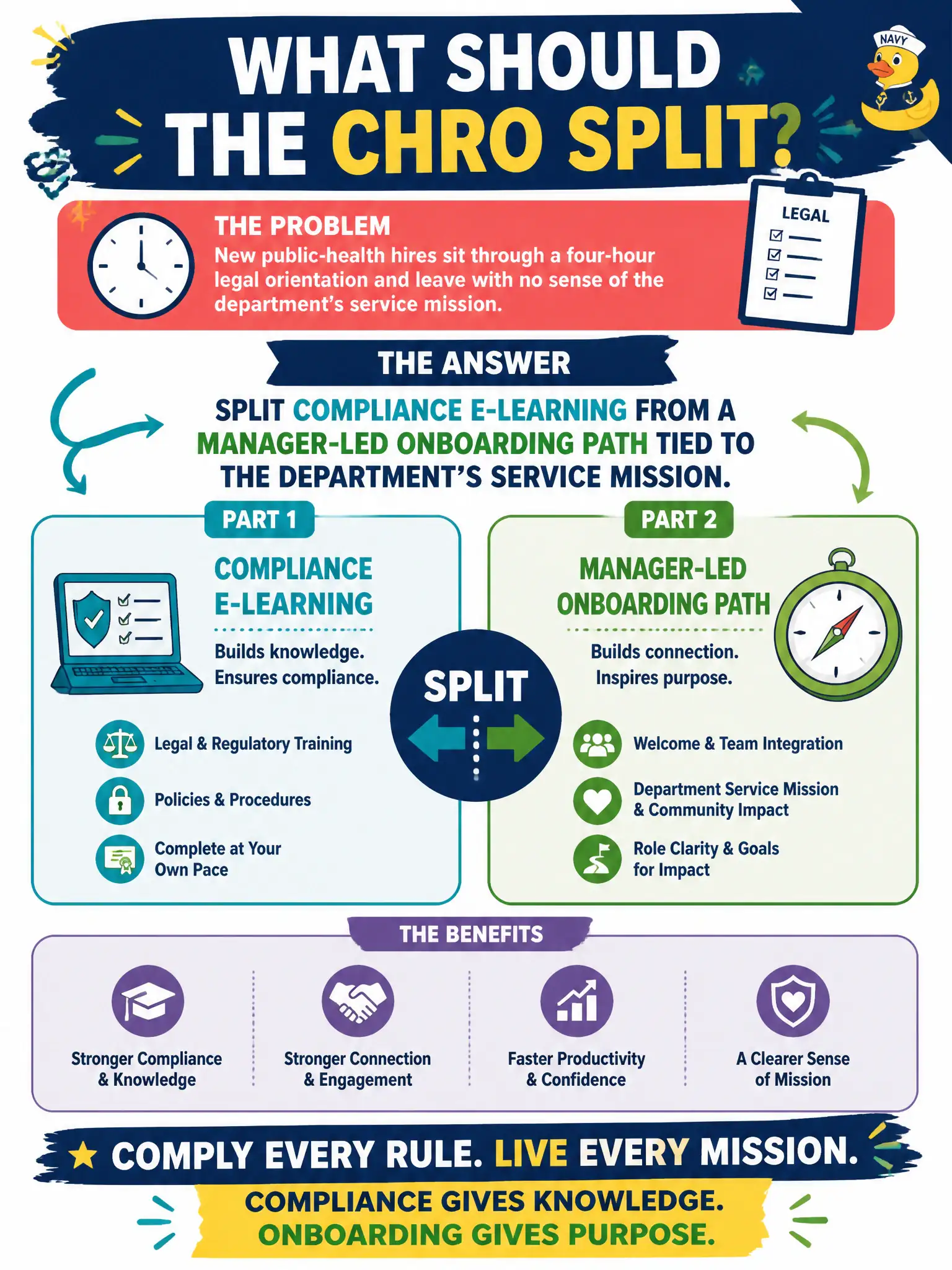
New public-health hires sit through a four-hour legal orientation and leave with no sense of the department's service mission. What should the CHRO split?
Select an answer to reveal the explanation.
Short Explanation
Four hours of "don't break the law" is a fire hose, not a first day. Park the statutes in e-learning and let a real manager walk them into the mission—that is onboarding.
Full Explanation
Four-hour legal orientation dumps that leave new public-health hires with no sense of the department's service mission should be split: compliance e-learning for statutes, and a manager-led onboarding path tied to mission and residents served. Compliance matters; packing it into a marathon that crowds out purpose produces neither retention nor understanding. Onboarding design separates channels so each learning goal gets the right method.
Keeping all compliance and culture in one marathon so nobody 'misses a statute' prioritizes coverage theater over learning. Cancelling compliance training entirely so mission talk has more time creates legal risk. Moving the legal dump to an unstructured hiring-manager one-on-one with no curriculum abandons consistent compliance onboarding.
Exam caveat: splitting formats does not reduce required compliance content; it changes delivery. Managers still need a simple mission curriculum, not improvisation. The concept is instructional design for onboarding goals.
Operational check: move statutes to tracked e-learning with completion deadlines; schedule manager-led mission sessions in week one; measure knowledge checks and new-hire understanding of service purpose; and stop booking four-hour legal marathons as day-one culture.