
New bus operators pass classroom tests then freeze on their first live routes. What onboarding design should the CHRO extend?
Select an answer to reveal the explanation.
Short Explanation
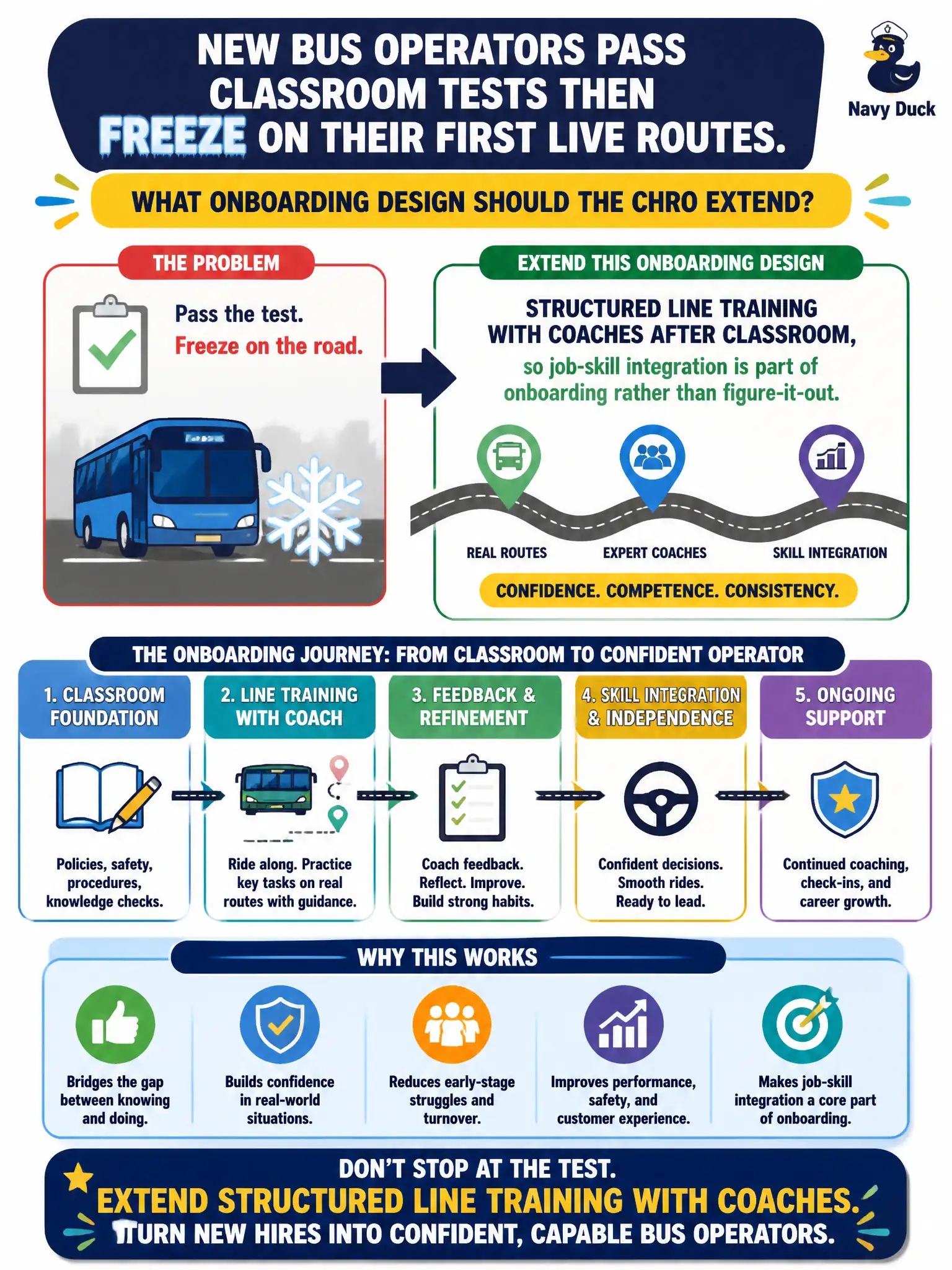
Passing the classroom and then stalling at the curb is like passing the written driving test and never getting a passenger. Onboarding has to include a coach on the real route, not another binder.
Full Explanation
New bus operators who pass classroom tests then freeze on first live routes need structured line training with coaches as part of onboarding—not more HR paperwork. Job-skill integration on the real route is onboarding; another binder is not. Classroom mastery without coached road time is like passing a written driving test and never carrying passengers, and the riding public absorbs the risk of that design gap.
Adding HR paperwork modules until operators feel 'administratively complete' misdefines readiness as form completion. Immediate solo route assignment to accelerate confidence through exposure risks safety incidents and public trust. A written recertification of classroom content with no road time repeats the same skill gap under a new label.
Exam caveat: line training must meet safety and regulatory training standards; coaching is structured, evaluated training—not informal ride-alongs without standards or sign-off. The concept is extending onboarding through supervised skill integration after classroom success.
Operational check: define a line-training curriculum with coach ratios and sign-off criteria; bar solo service until sign-off; track early incident and quit rates for coached versus uncoached cohorts; and fund coach time as onboarding capacity, not optional overtime supervisors may skip.