
All librarian recruiting runs on a national academic list, while local bilingual candidates never see the jobs. What should HR change?
Select an answer to reveal the explanation.
Short Explanation
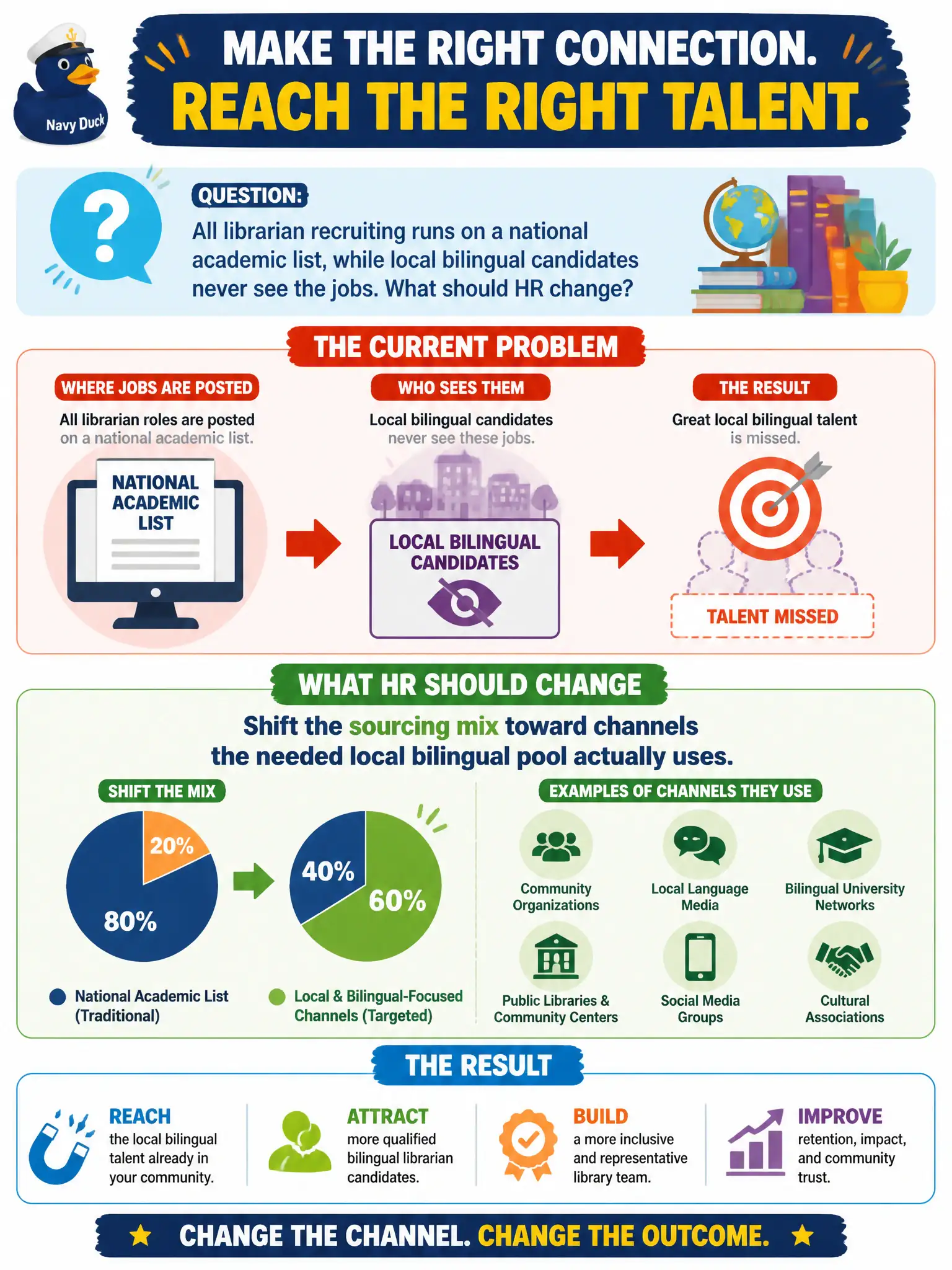
If the people needed never look at that national list, the city is fishing in the wrong lake. Channel mix is strategy. Put the posting where local bilingual candidates actually hunt.
Full Explanation
Sourcing channel mix is recruiting strategy. When all librarian recruiting runs on a national academic list while local bilingual candidates never see the jobs, HR should shift the mix toward channels that needed local bilingual pool actually uses. Fishing only in a national lake the target talent does not visit will not be fixed by longer posting windows on the same list.
Lengthening the national posting window without adding local channels extends a mismatch. Requiring a second master's degree to 'raise quality' on the same list narrows supply without reaching bilingual locals. Limiting applications to employees already on a civil-service librarian register shrinks the pool further and still misses external bilingual candidates.
Exam caveat: shifting toward local bilingual channels is not abandoning merit or minimum qualifications; postings must remain job-related and open under civil-service rules. The concept is channel strategy matched to the labor pool you need.
Operational check: identify where local bilingual library talent searches (community orgs, bilingual job boards, local MLS networks); add those channels with tracked source codes; keep qualifications intact; compare applicant demographics and hire yield by source for two cycles; and reallocate spend away from barren national-only reach.