
A city will vote next quarter on annexing a developed corridor. Inspection, planning, and utility-locate already carry a vacancy backlog. What should HR do before the annexation vote?
Select an answer to reveal the explanation.
Short Explanation
Annexing a busy corridor without counting inspectors is like opening a new checkout lane with nobody to staff it. Forecast planner, inspector, and locator demand against the vacancy backlog you already have. Put that workforce plan in front of the vote, not in front of the first angry resident.
Full Explanation
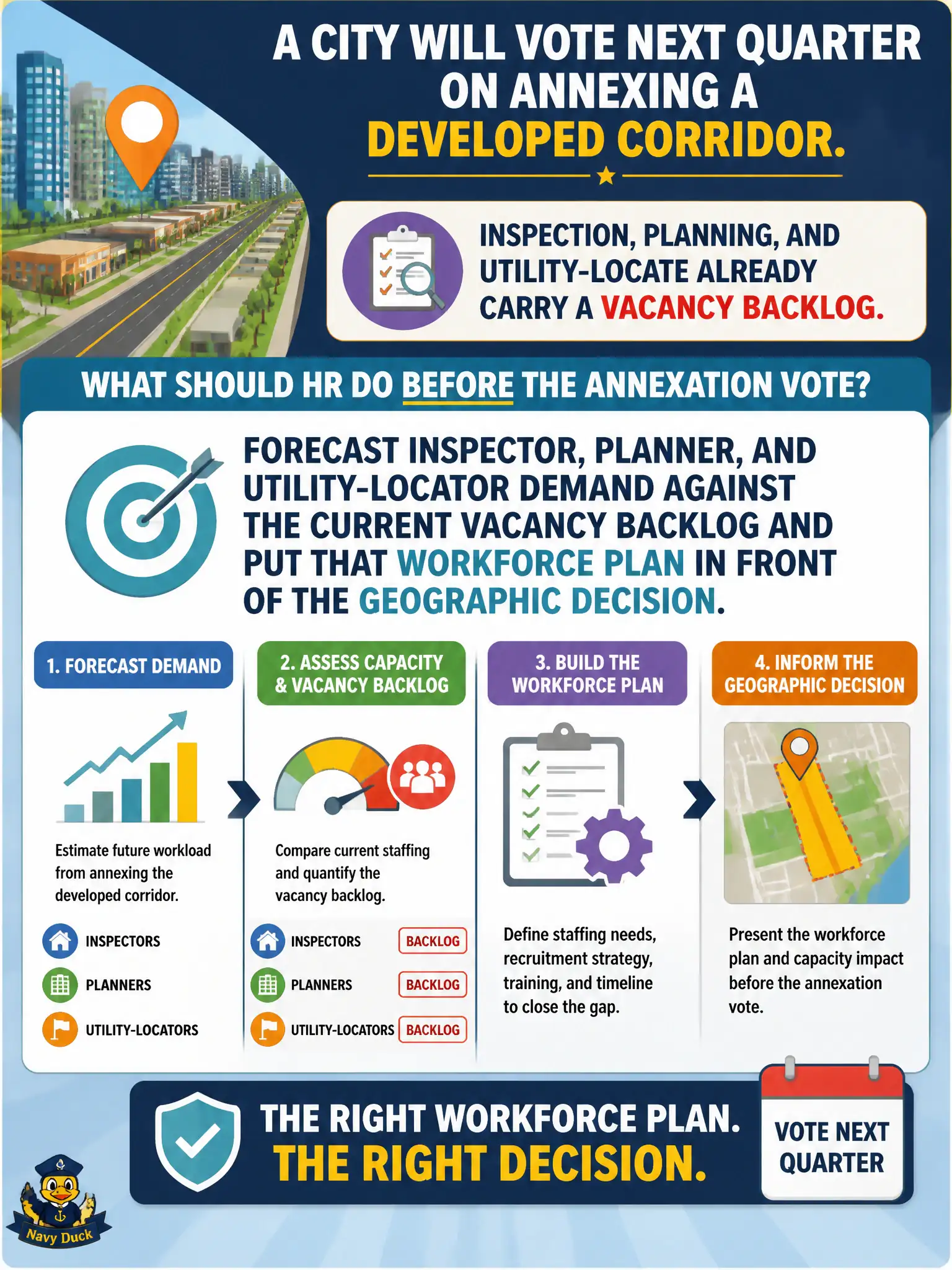
Annexing a developed corridor without a workforce plan is a service-failure strategy. Before the vote, HR should forecast inspector, planner, and utility-locator demand against the current vacancy backlog and place that plan in front of the geographic decision. Annexation adds permits, inspections, and locate tickets immediately; pretending existing staff can absorb a busy corridor converts a map victory into missed inspections and resident complaints the council will blame on 'HR hiring lag' after the fact.
Waiting for the first complaint before opening requisitions is reactive by design. Assuming inspectors can absorb the corridor because annexation is 'only a map change' denies workload reality. Freezing hiring until after annexation so the plan cannot influence the vote hides the true cost of expansion from decision-makers.
Exam caveat: forecasting does not require overstaffing for speculative peaks; it requires honest demand versus vacancy math timed to the effective date. The concept is workforce planning as an input to annexation strategy.
Operational check: model ticket and permit volume for the corridor; subtract current vacancy and training lag; present funded FTE or service-level cuts as explicit alternatives in the council packet; and tie any annexation effective date to staffing readiness gates.