
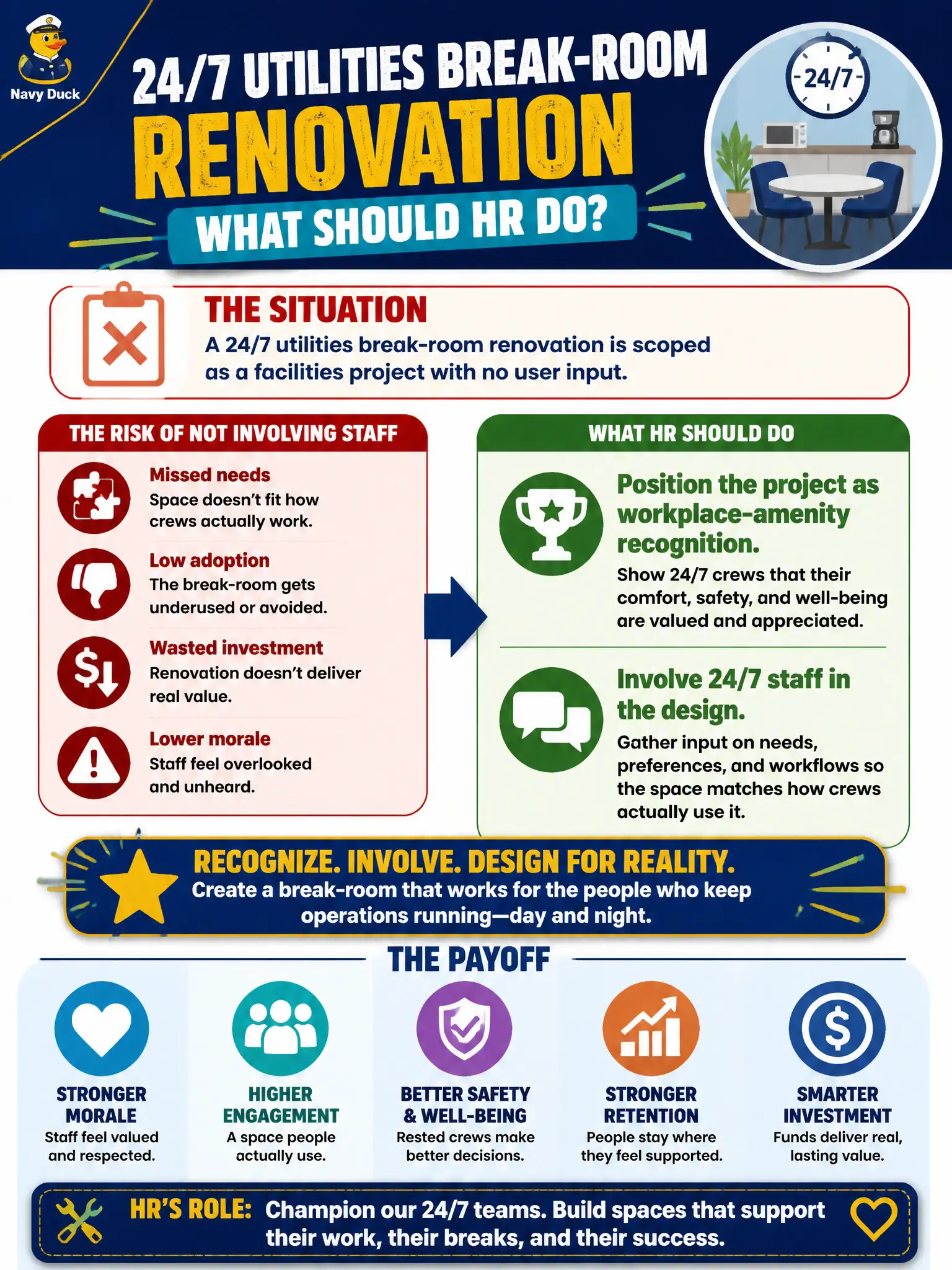
A 24/7 utilities break-room renovation is scoped as a facilities project with no user input. What should HR do?
Select an answer to reveal the explanation.
Short Explanation
Remodeling the kitchen without asking the cooks is how you get a pretty room nobody uses on nights. A break room is recognition for 24/7 people only if they help shape it. Amenities with user input beat a surprise paint color.
Full Explanation
Workplace amenities function as recognition when the people who live with the space help design it. A 24/7 utilities break-room remodel scoped as a pure Facilities project with no user input should be repositioned as amenity recognition with night and weekend crew involvement so storage, quiet, food, and timing match how crews actually use the space. Occupancy-as-surprise wastes the civic investment.
Letting Facilities finish and then announcing an HR recognition surprise after occupancy excludes users from requirements and often misses shift realities. Canceling the remodel for branded mugs substitutes a cheap token for a condition improvement crews may actually value. Limiting design input to daytime administrative staff who can attend weekday meetings reproduces headquarters bias inside a 24/7 worksite project.
Exam caveat: user input still must fit building codes, safety, and budget—participation is requirements gathering, not an unbounded wish list. Document the decision path so council and auditors can see why the design changed. Operational check: hold design sessions across shifts before final drawings, document crew requirements against the plan, and verify after occupancy that night crews rate usability as highly as day crews.