
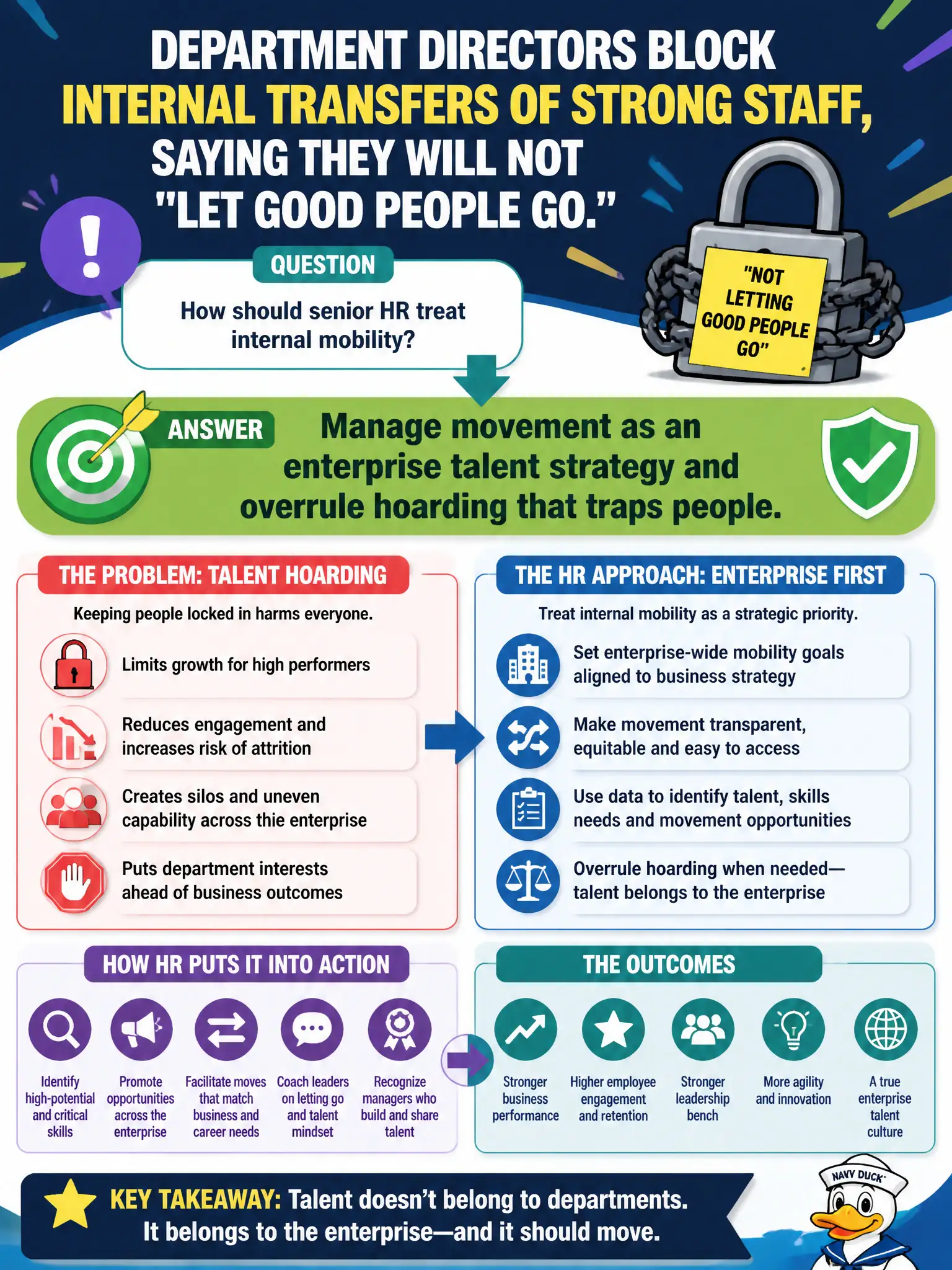
Department directors block internal transfers of strong staff, saying they will not "let good people go." How should senior HR treat internal mobility?
Select an answer to reveal the explanation.
Short Explanation
Hoarding talent is how a city turns a bench into a cage. Those people belong to the enterprise, not to one director's comfort. Senior HR has to run internal movement as a citywide strategy and overrule the veto.
Full Explanation
Department directors who block internal transfers of strong staff 'to keep good people' are hoarding enterprise talent. Senior HR should manage movement as a citywide talent strategy and overrule hoarding that traps people. Those employees belong to the municipal enterprise, not one director's comfort; civic career mobility builds bench strength across resident-facing services.
Honoring each director's veto forever fails by concept: local comfort becomes a cage. Allowing movement only when the losing department is overstaffed fails by making mobility contingent on surplus that rarely exists in lean government. Converting internal applicants to external-only so directors never notice fails transparency and demoralizes internal talent.
Exam caveat: mobility rules should address coverage backfills and knowledge transfer so releasing departments are not recklessly stripped. Operational check: publish internal mobility policy, escalate vetoes to enterprise review, and measure internal fill rates versus hoarding incidents. Public employers should record the chosen control and rejected options in the talent or labor file so future leaders understand how the decision protects continuity of resident services.