
A 911 center's only advertised growth path is "become a supervisor," which several excellent dispatchers do not want. What career-path design should senior HR build?
Select an answer to reveal the explanation.
Short Explanation
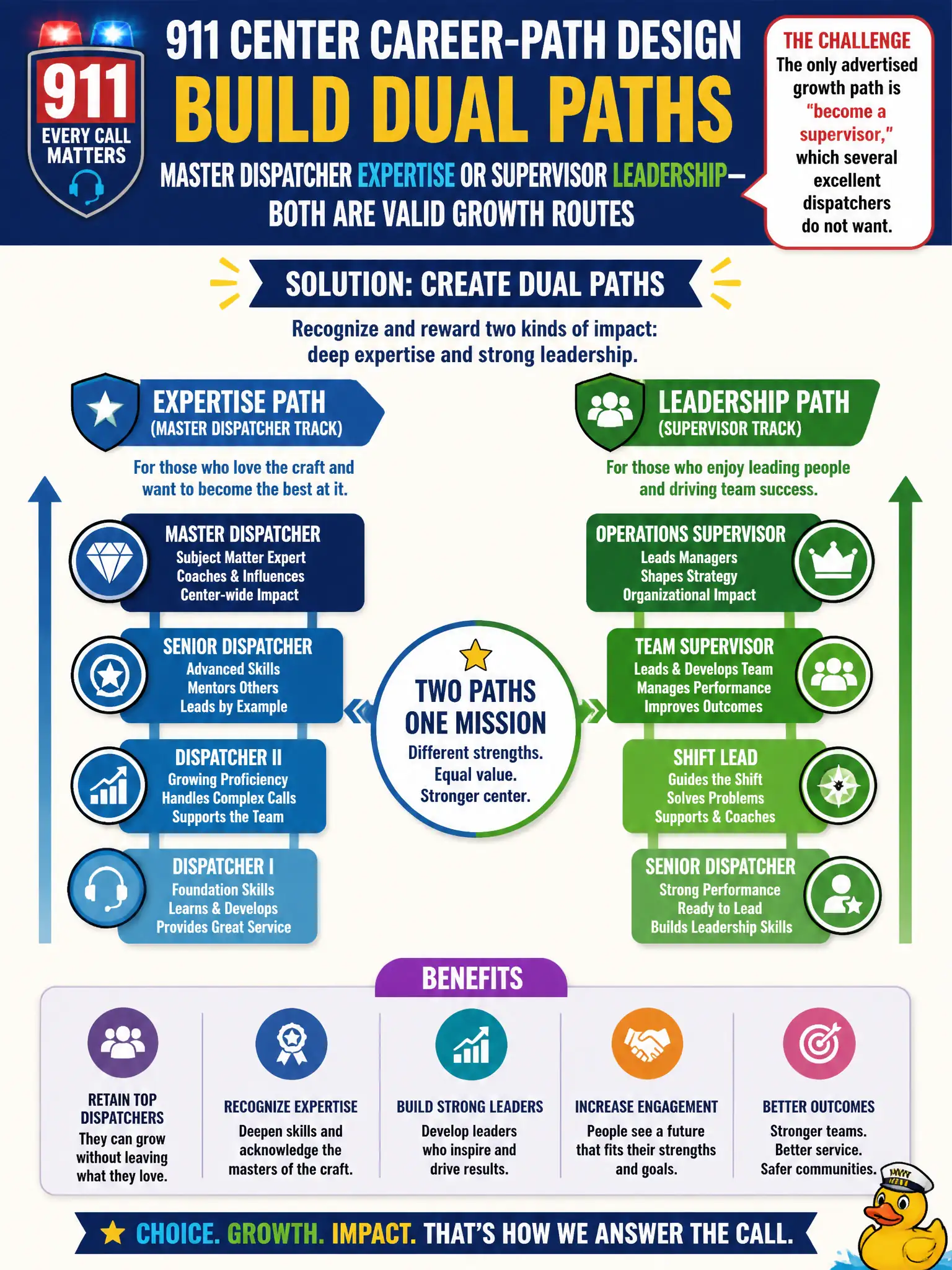
Not every great dispatcher wants the chair, and forcing them into it burns two jobs at once. Build a master-dispatcher path beside the supervisor path so expertise can grow without a badge change. Dual routes keep the best voices on the radio and still grow leaders.
Full Explanation
A 911 center whose only advertised growth path is 'become a supervisor' forces excellent dispatchers who do not want that chair into a false choice. Senior HR should create dual paths so master-dispatcher expertise and supervisor leadership are both valid growth routes. Civic emergency communications need deep radio expertise as much as supervisors; dual paths keep talent without burning two jobs at once.
Forcing those dispatchers into supervisor vacancies anyway fails by concept: reluctant supervisors and lost console excellence harm service. Telling non-supervisory talent there is no growth fails retention and honesty. Freezing all promotions until everyone wants to supervise fails by halting necessary leadership fills.
Exam caveat: dual paths need distinct competencies, pay logic, and selection criteria so 'master' is not a hollow title. Operational check: define master-dispatcher standards and rewards, post both paths, and track retention of high performers who previously stalled. Public employers should record the chosen control and rejected options in the talent or labor file so future leaders understand how the decision protects continuity of resident services. Re-validate the same control after the next operating cycle against current staffing, budget, and bargaining constraints.