
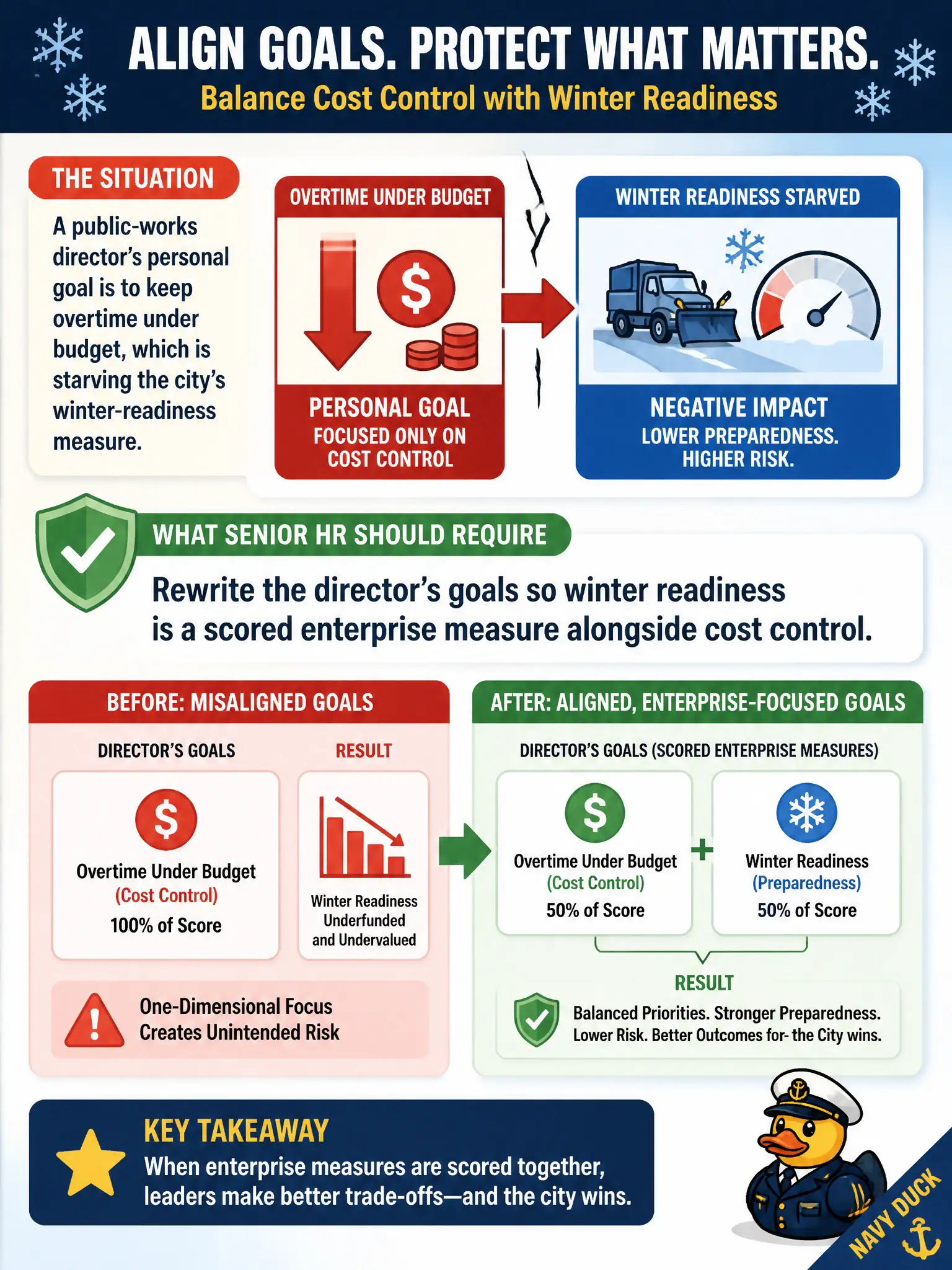
A public-works director's personal goal is to keep overtime under budget, which is starving the city's winter-readiness measure. What should senior HR require?
Select an answer to reveal the explanation.
Short Explanation
A director who wins on overtime while the city loses on ice is locally optimizing the wrong contest. Cost control matters, but it cannot eat the enterprise measure. Put readiness on that director's scorecard next to the budget or the trucks will stay in the barn.
Full Explanation
A public-works director whose personal goal is only to keep overtime under budget can starve the city's winter-readiness measure. Senior HR should rewrite the director's goals so winter readiness is a scored enterprise measure alongside cost control. Local overtime wins that leave ice untreated are civic losses. SPHR enterprise alignment puts readiness on the same scorecard as budget discipline.
Celebrating overtime savings and treating readiness as someone else's operations issue fails by concept: the director controls the staffing lever that creates readiness. Banning overtime entirely fails by pretending cost and readiness can both be solved by prohibition without capacity planning. Moving readiness to a consultant contract while leaving the overtime goal untouched fails by outsourcing accountability without fixing the incentive conflict.
Exam caveat: cost control remains legitimate—pair it with readiness metrics and authorized surge rules rather than deleting either. Operational check: add readiness KPIs to the director's plan, define overtime triggers for storms, and review mid-winter whether savings came at the expense of response capability. Public employers should record the chosen control and rejected options in the talent or labor file so future leaders understand how the decision protects continuity of resident services.