
Fire-officer succession currently names whoever is most popular in the house. What should HR add so succession actually builds continuity?
Select an answer to reveal the explanation.
Short Explanation
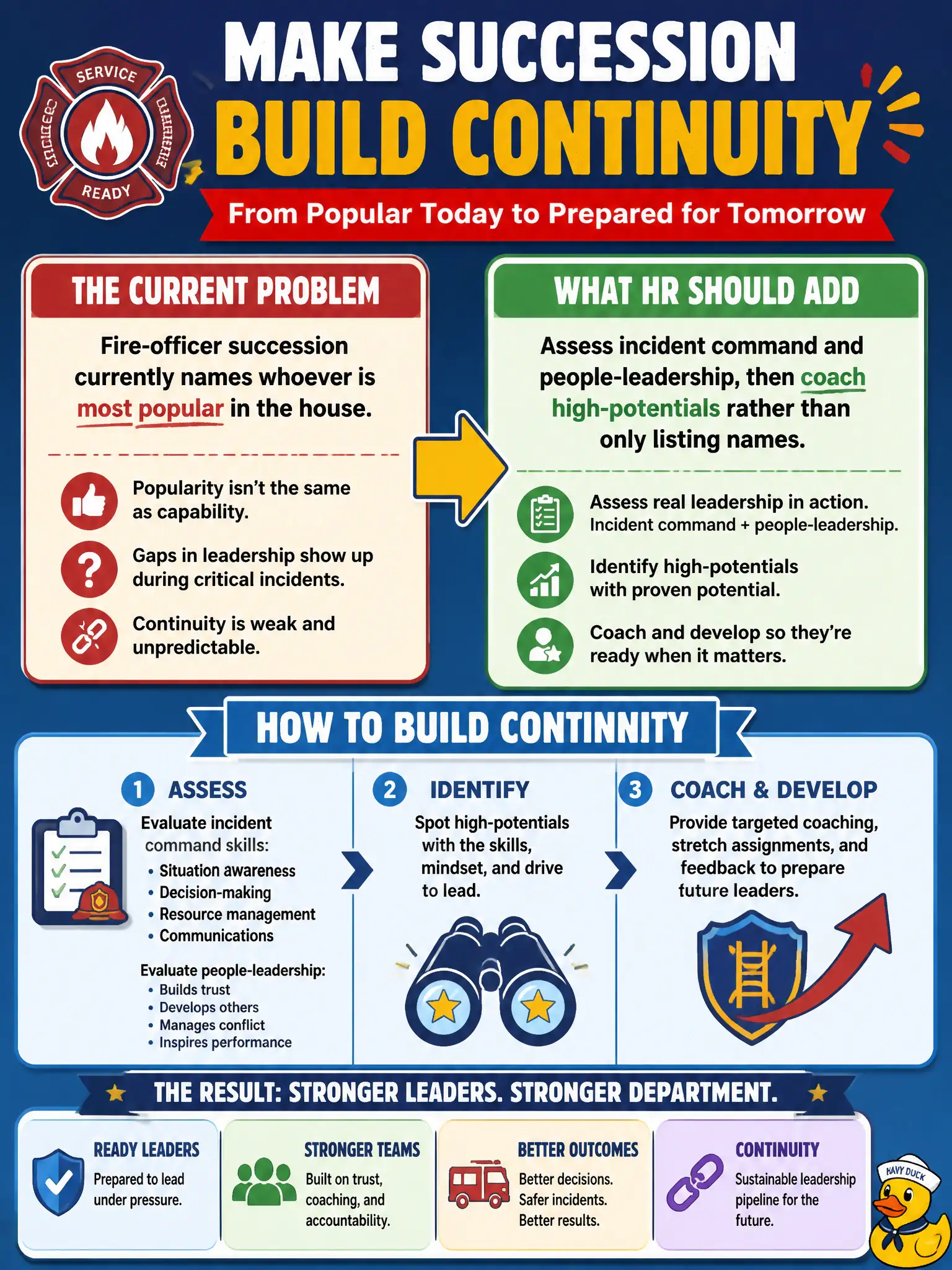
Popularity is a yearbook vote, not a command ticket. Succession has to test incident command and people leadership, then coach the people who show it. A name on a poster is not a bench.
Full Explanation
Fire-officer succession that names whoever is most popular in the house is social selection, not continuity planning for public safety. HR should assess incident command and people-leadership, then coach high-potentials rather than only listing friends. Residents depend on officers who can run scenes and crews under stress; a yearbook popularity vote is not a command ticket and does not build a defendable bench.
Keeping popularity as the only screen and publishing a ranked friends list fails by concept: affinity is not competency evidence for emergency leadership. Naming successors on a poster and skipping assessment or coaching fails because a posted name is not a developed capability. Rotating the officer title annually so no one needs development fails by substituting turnover theater for skill building.
Exam caveat: assessments must be job-related and applied consistently to avoid disparate treatment claims inside public safety ranks and promotional systems. Operational check: install structured incident-command and leadership assessments, create coaching plans for those who clear the bar, and retire popularity-only slates before the next promotional cycle. Public employers should document the rationale in the talent plan so council and managers see why rejected options would weaken continuity for residents.