
A city manager wants succession planning that pre-selects a deputy as the next department head. Civil-service rules will still govern the vacancy. What should HR design?
Select an answer to reveal the explanation.
Short Explanation
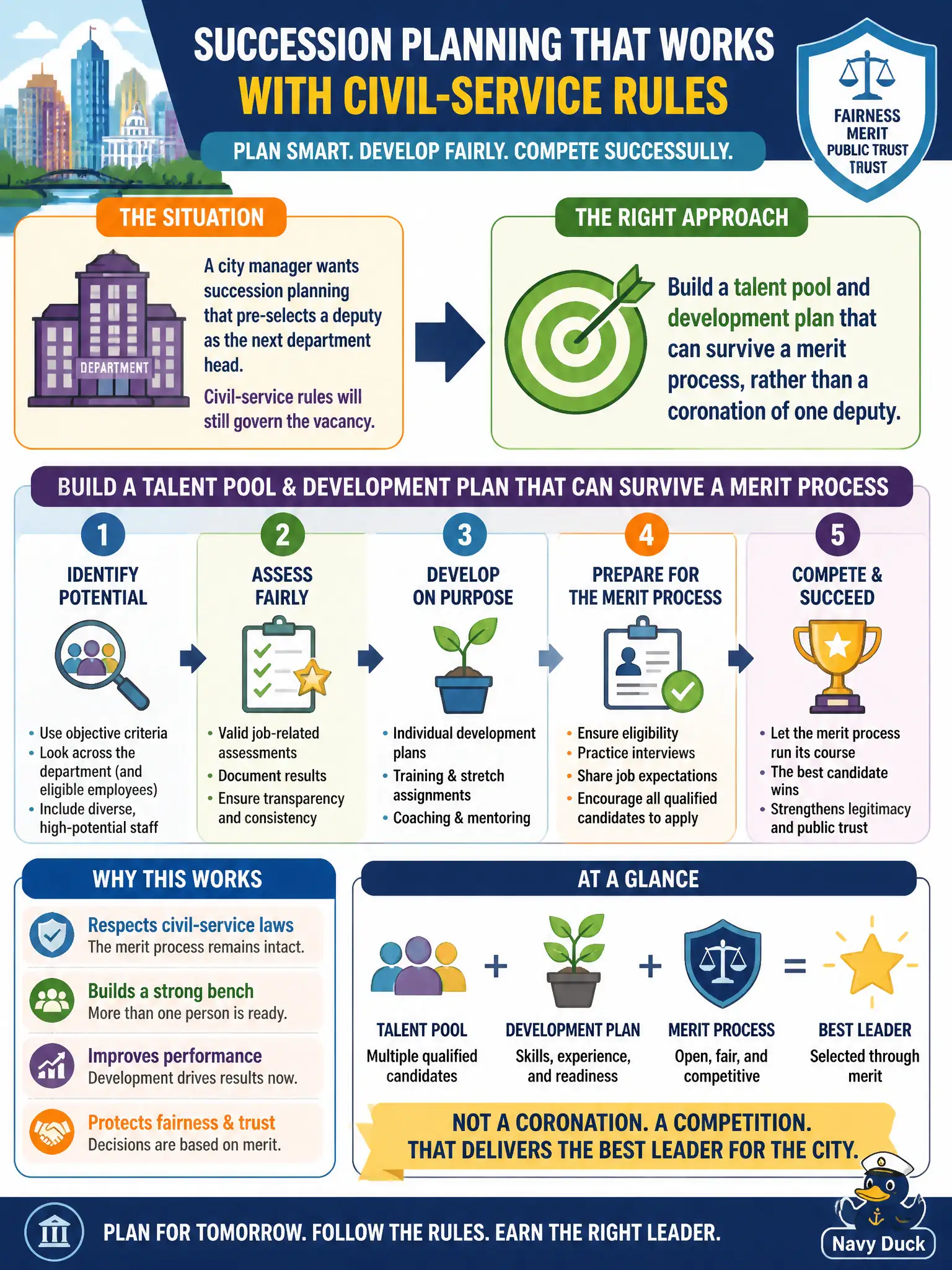
Public-sector succession is not handing someone the crown in a sealed envelope. Merit rules still run the vacancy. Grow a pool that can compete, instead of coronating one deputy.
Full Explanation
When a city manager wants succession that pre-selects a deputy as the next department head while civil-service rules will still govern the vacancy, HR should build a talent pool and development plan that can survive a merit process rather than a coronation of one heir. Public-sector succession grows competitive readiness; it does not secretly crown a favorite in a sealed memo. Civic legitimacy of appointments depends on lawful process that residents and employees can trust when the chair opens.
Naming the deputy now in a confidential memo so civil service is a formality fails by concept and legal risk: it attempts to predetermine a merit outcome. Skipping development and relying on emergency appointment after departure fails because emergencies are a last resort, not a succession strategy. Canceling succession because merit rules make planning illegal fails by misunderstanding: merit constrains selection mechanics, not development of a ready pool.
Exam caveat: pool members must receive transparent, job-related development opportunities without promises of appointment that would undermine the eventual process. Operational check: define critical competencies for the head role, enroll multiple high-potentials in stretch work, and document that any vacancy will still run through the required merit process.