
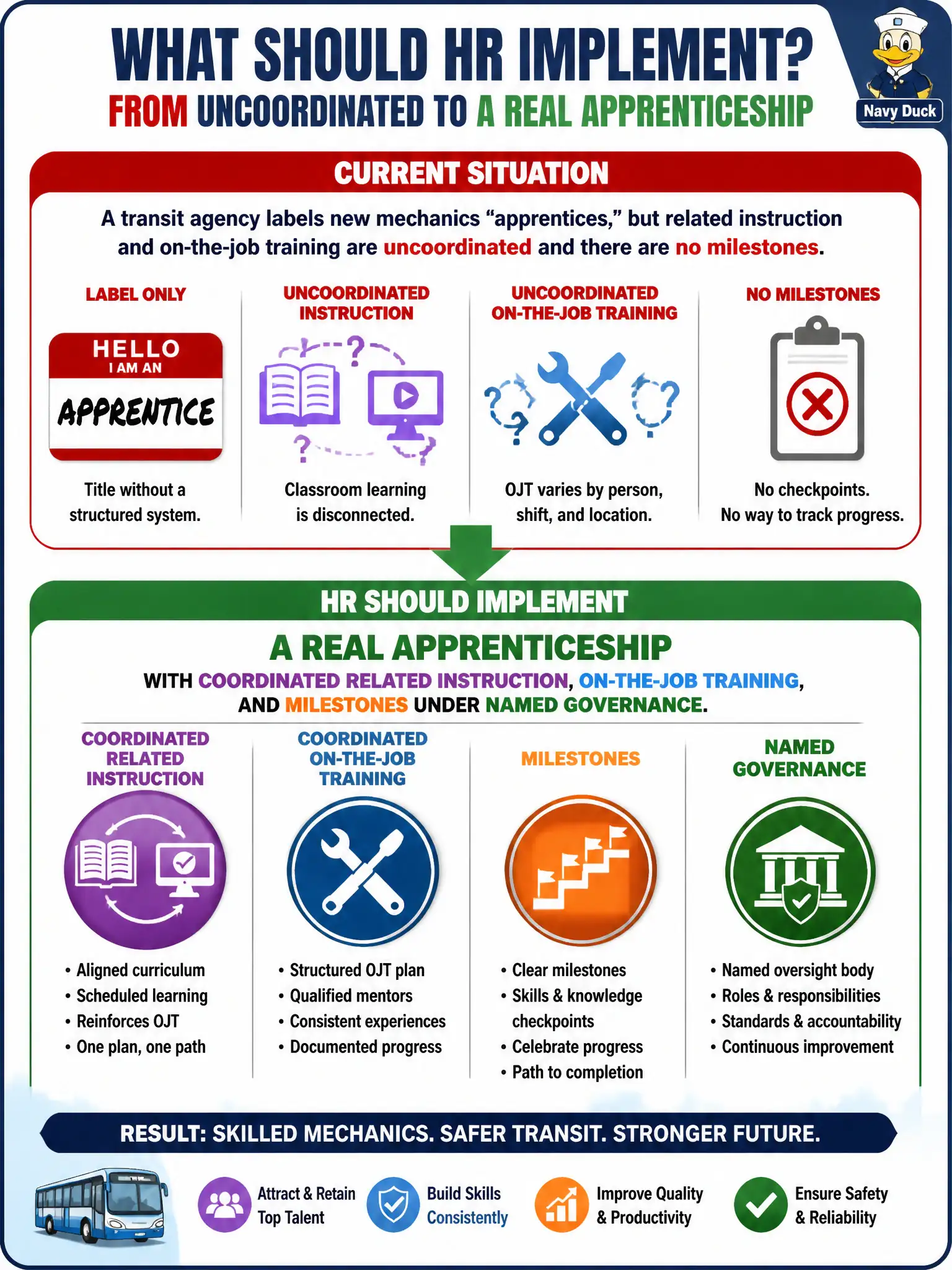
A transit agency labels new mechanics "apprentices," but related instruction and on-the-job training are uncoordinated and there are no milestones. What should HR implement?
Select an answer to reveal the explanation.
Short Explanation
Calling someone an apprentice does not make a program—any more than hanging a 'gym' sign over an empty room. Related instruction, OJT, and milestones have to talk to each other. Put a real curriculum and a governor on it.
Full Explanation
Labeling new transit mechanics 'apprentices' without coordinated related instruction, on-the-job training, and milestones is branding, not workforce development. HR should implement a real apprenticeship with those elements under named governance so garage learning is consistent and assessable. Civic transit fleets depend on maintainers who can keep buses safe and available for riders; an empty title does not produce that bench or protect public safety.
Keeping the title and treating informal shadowing as sufficient documentation fails by concept: informal shadowing without curriculum and milestones is not an apprenticeship. Ending the label and sending everyone to a generic e-learn with no OJT fails by dropping the job-embedded learning apprenticeships require. Letting each garage invent an unofficial path fails because local folklore cannot assure consistent safety competency across the agency.
Exam caveat: where registered apprenticeship or collective-bargaining language applies, design inside those rules; 'real' means coordinated and governed, not freelanced by each foreman. Operational check: write related-instruction and OJT maps, set milestone assessments, name a program owner, and audit garage compliance before the next mechanic cohort starts.