
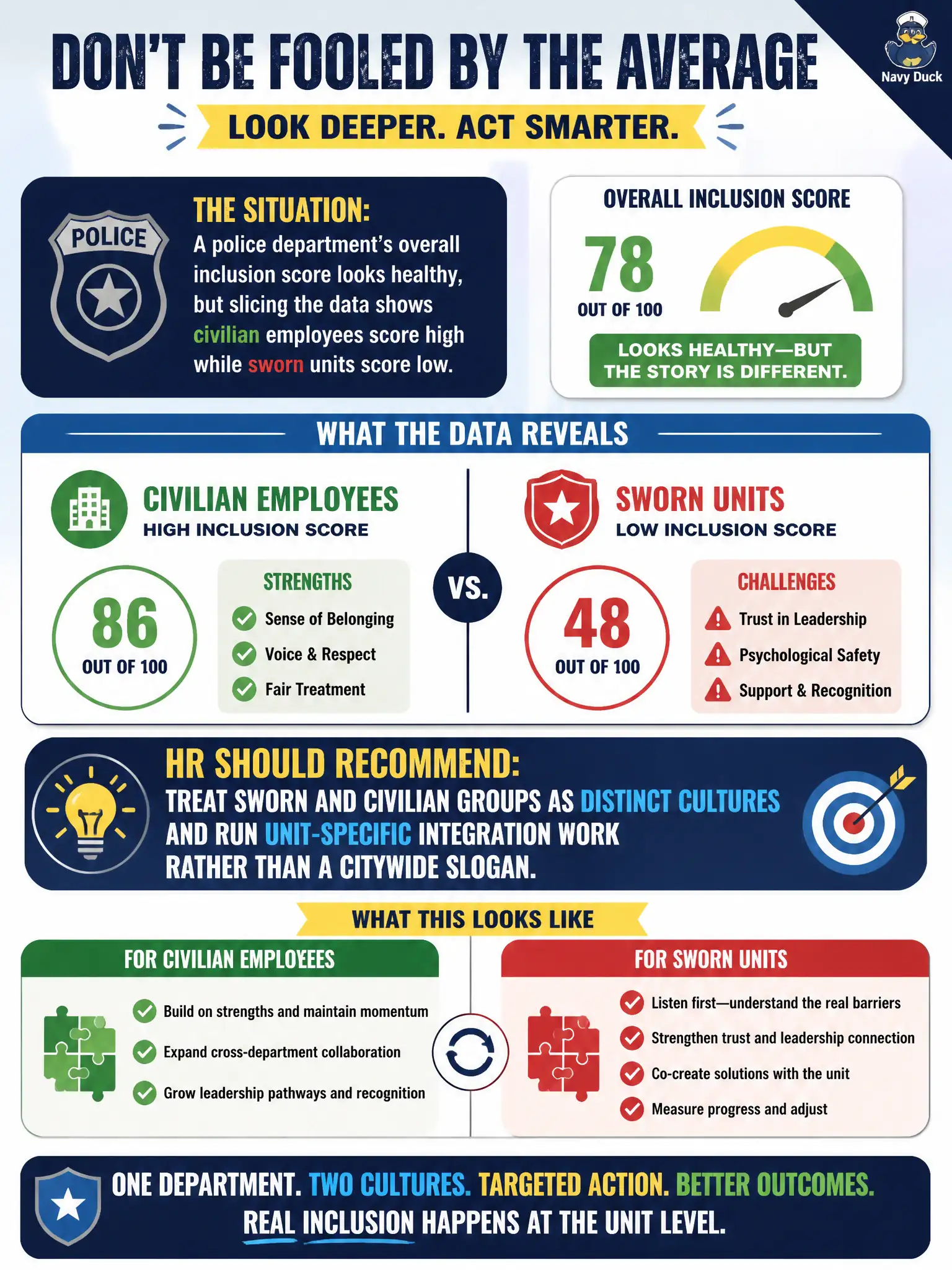
A police department's overall inclusion score looks healthy, but slicing the data shows civilian employees score high while sworn units score low. What should HR recommend?
Select an answer to reveal the explanation.
Short Explanation
One average is like tasting only the frosting and calling the whole cake sweet. Civilian scores can hide a hostile sworn subculture. Slice the data and do unit-specific work, not a citywide slogan.
Full Explanation
A healthy department-average inclusion score can mask a fractured culture inside a police agency when civilian employees score high and sworn units score low. SPHR-level analysis treats sworn and civilian groups as distinct cultures with different norms, schedules, and power dynamics, then runs unit-specific integration work rather than celebrating a blended average. Civic framing matters: residents interact with both sworn and civilian sides of public safety, and a hostile subculture in one slice still harms trust, retention, and complaint handling even if the dashboard looks fine.
Publishing a citywide slogan and treating the average as proof of integration fails by concept: slogans and averages conceal the very subgroup gap the slice revealed. Dropping sworn respondents so the average stays high fails ethically and analytically—it manufactures a healthy score by deleting the problem population. Mandating one off-the-shelf video for every employee and stopping job-family slices fails because undifferentiated training cannot remake distinct unit cultures and removes the diagnostic that showed the gap.
Exam caveat: unit-specific work must still respect collective-bargaining and civil-service constraints; it is targeted culture design, not a license for unequal policy. Operational check: keep slicing by job family, stand up sworn-unit interventions with clear behavioral metrics, and report both civilian and sworn trends to leadership so the city cannot mistake frosting for the whole cake.