
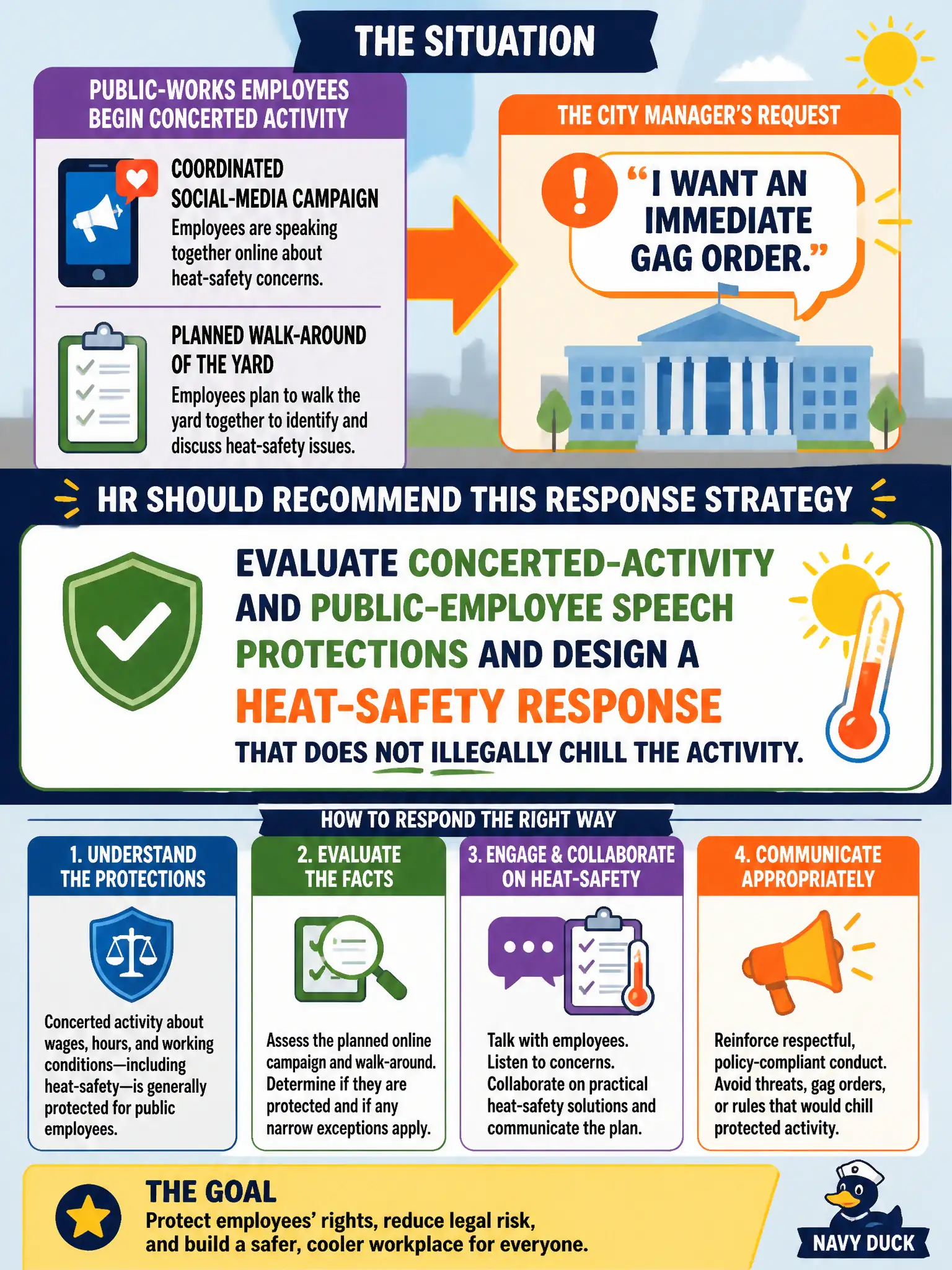
Public-works employees begin concerted activity over heat-safety, including a coordinated social-media campaign and a planned walk-around of the yard. The city manager wants an immediate gag order. What should HR recommend as the response strategy?
Select an answer to reveal the explanation.
Short Explanation
A gag order on heat-safety talk is like taping the smoke alarm because the beeping is annoying. Concerted activity—and public-employee speech on working conditions—can be protected even when it is inconvenient. Fix the heat risk; do not chill the complaint.
Full Explanation
Heat-safety concerted activity and public-employee speech on working conditions can be protected even when inconvenient for management messaging. When public-works employees organize around heat risk—including coordinated social media and a planned yard walk-around—and the city manager wants an immediate gag order, HR should evaluate concerted-activity and public-employee speech protections and design a heat-safety response that does not illegally chill the activity. The operational answer is to fix heat controls, hydration, work-rest cycles, and training while respecting lawful employee voice—not to tape over the alarm.
Issuing a gag order and disciplining off-duty discussion of heat safety risks unfair-labor-practice and constitutional speech exposure. Ignoring the heat issue and treating activity as pure insubordination addresses symptoms while leaving the hazard. Announcing that public employees never have concerted-activity rights is a legal falsehood the exam will punish.
Exam caveat: protection is not absolute; true threats, unprotected misconduct, or unprotected speech categories still matter, and management may communicate safety rules. The concept is not chilling protected concerted activity or public-concern speech while the underlying hazard goes unaddressed.
Operational check: stand up an immediate heat-safety action plan with measurable controls; consult labor counsel before any speech-restrictive directive; meet employee representatives on the hazard facts; document corrections; and train supervisors that retaliation for protected safety advocacy is forbidden.