
A city considering a reduction-in-force wants department heads to bring names to a closed session next week. No selection criteria, impact analysis, or waiver-and-notice strategy has been designed. What should HR require first?
Select an answer to reveal the explanation.
Short Explanation
Picking RIF names in a closed session is like drawing straws and then asking the lawyer to make it look like a plan. Federal law constrains how you design the reduction, not just the letters you mail later. Build the criteria and impact analysis before any list exists.
Full Explanation
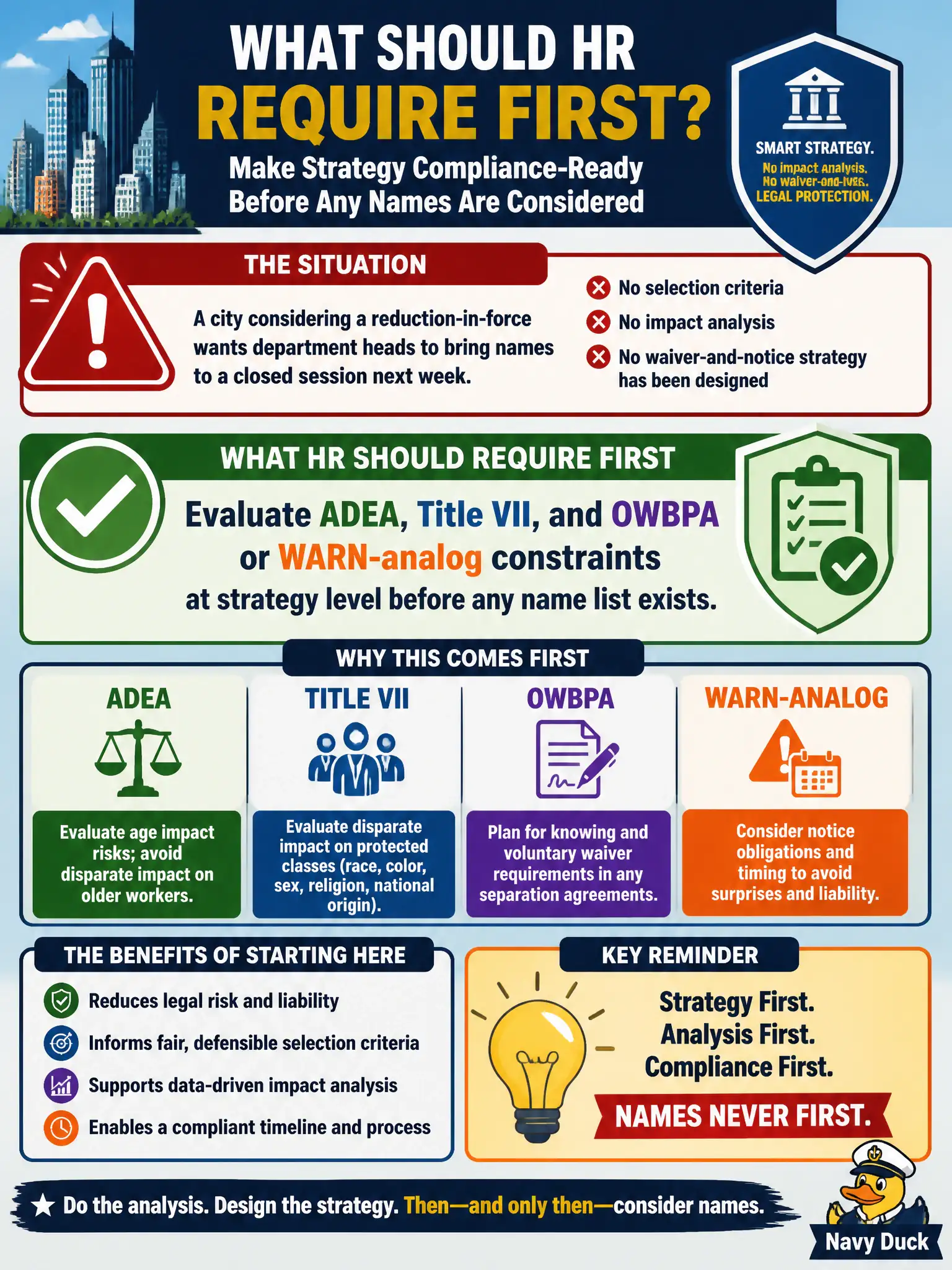
Reduction-in-force design is a legal-strategy problem before it is a name list. When a city wants department heads to bring names to closed session with no selection criteria, impact analysis, or waiver-and-notice strategy, HR must require evaluation of ADEA, Title VII, and OWBPA or WARN-analog constraints at the strategy level first. Federal and analogous notice and waiver rules constrain how you design selection, how you analyze adverse impact on age and protected classes, and how releases are structured—not merely how termination letters are worded after politics picks the names. Building criteria and analysis before any list exists is what makes a reduction defensible.
Collecting names first and asking legal to retrofit justification after the session is reverse-engineering discrimination risk into a story. Letting heads pick by personal loyalty because closed session 'hides the method' confuses secrecy with legality. Skipping federal-law review because the employer is municipal is a false exemption; public employers remain covered by core employment statutes in the ways the exam tests.
Exam caveat: early legal-strategy review is not a promise that no one will be separated, nor a requirement to keep every low performer. The concept is lawful design before naming.
Operational check: freeze name collection; draft objective selection criteria tied to documented needs; run adverse-impact analyses on proposed pools; map notice and waiver requirements with counsel; only then generate ranked lists under the approved method; and brief council that closed session will review a designed process, not a loyalty poll.