
Council asks for ROI on a supervisor academy. How should HR define return so the metric informs strategy?
Select an answer to reveal the explanation.
Short Explanation
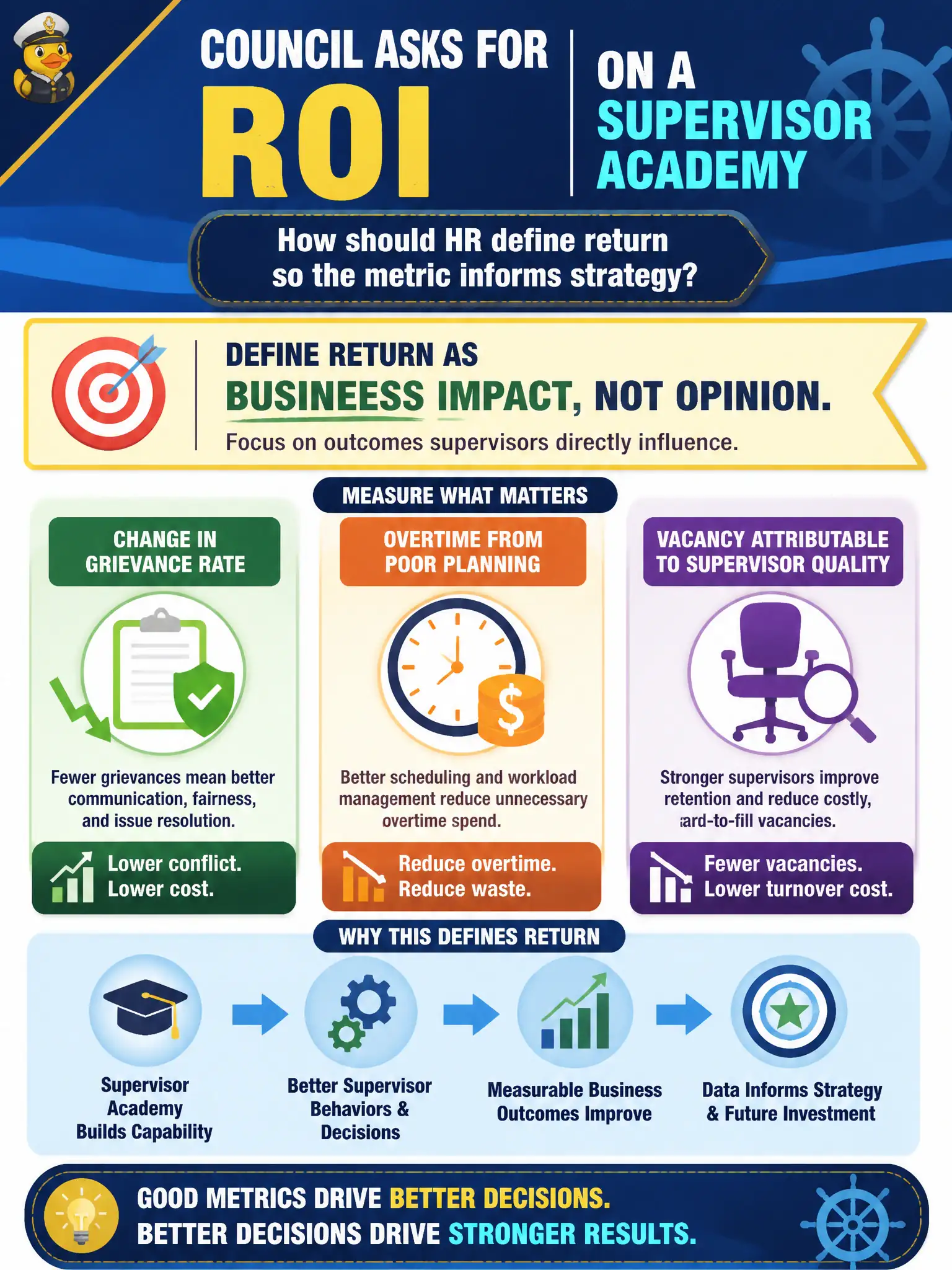
Smile sheets say the sandwiches were good. SPHR-level ROI asks whether the city got fewer grievances, less panic overtime, and fewer vacancies from bad bosses. That is operational return, not a happy-face score.
Full Explanation
Defining supervisor-academy ROI as change in grievance rate, overtime from poor planning, and vacancy attributable to supervisor quality—rather than smile sheets, certificates, or hours delivered—is correct. Smile sheets say the sandwiches were good; SPHR-level return asks whether the city got fewer grievances, less panic overtime, and fewer vacancies driven by bad bosses. Certificate counts and classroom hours show volume, not operational value for residents who experience supervisor quality through service. Exam caveat: SPHR training ROI uses enterprise people and operations outcomes, not activity or satisfaction proxies alone. Operational check: baseline grievances, planning-driven overtime, and supervisor-linked vacancy before the academy; remeasure after cohorts; attribute changes cautiously with operations partners; and report ROI in those terms when justifying continued municipal investment in supervisor development. Supervisor academies justify continued funding when grievances fall, panic overtime shrinks, and vacancy tied to poor supervision improves—not when smile sheets are high. Tie evaluation designs to those operational outcomes so learning investment competes honestly with other municipal priorities.