
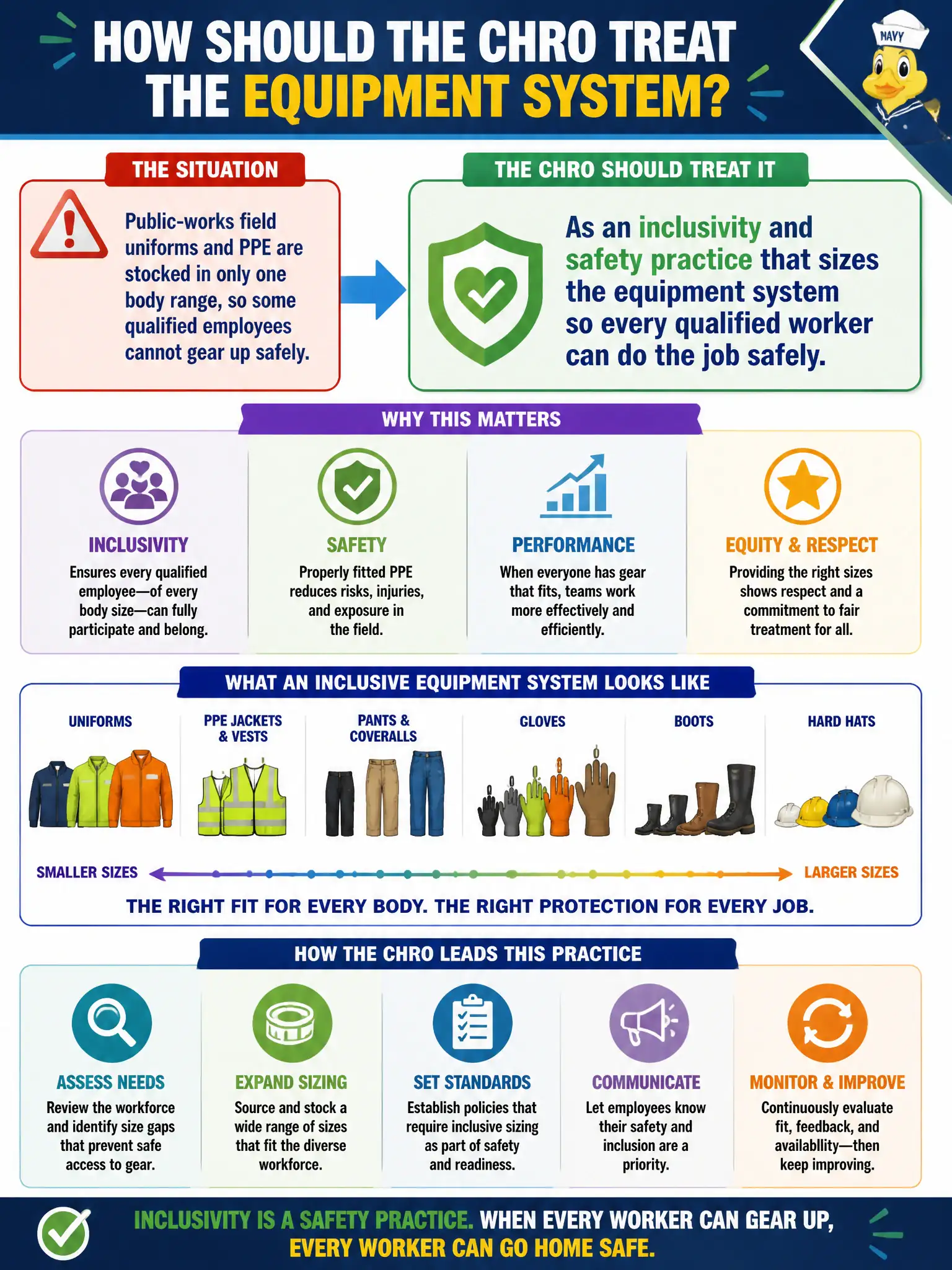
Public-works field uniforms and PPE are stocked in only one body range, so some qualified employees cannot gear up safely. How should the CHRO treat the equipment system?
Select an answer to reveal the explanation.
Short Explanation
If the only turnout coat in the cage does not fit, that is not a warehouse trivia item. Physical work systems can exclude people just as surely as a biased interview. Treat PPE range as an inclusivity and safety practice so qualified workers can actually do the job.
Full Explanation
Treating single-range PPE and field uniforms as an inclusivity and safety practice that sizes the equipment system so every qualified worker can gear up safely is correct. If the only turnout coat in the cage does not fit, that is not warehouse trivia; physical work systems exclude people as surely as a biased interview and create injury exposure for the civic workforce. Leaving the issue as a purchasing SKU problem whenever inventory turns delays protection. Waiting for the next full bargaining cycle before HR can raise fit abdicate’s interim safety duty. Treating fit only as an individual accommodation after a formal complaint leaves a recurring systemic barrier in place. Exam caveat: SPHR inclusivity includes job-design and equipment access, not only hiring slogans. Operational check: audit PPE size ranges against the qualified workforce, expand stock and vendors, update purchasing specs, and treat unfit gear as a safety incident until every public-works employee can work protected. Equipment systems that stock one body range create recurring exclusion and OSHA-relevant risk for qualified public-works employees who cannot don protective gear. Expanding sizes and vendors is both an inclusivity practice and a safety control; waiting for complaints or the next contract cycle leaves people unprotected on civic job sites.