
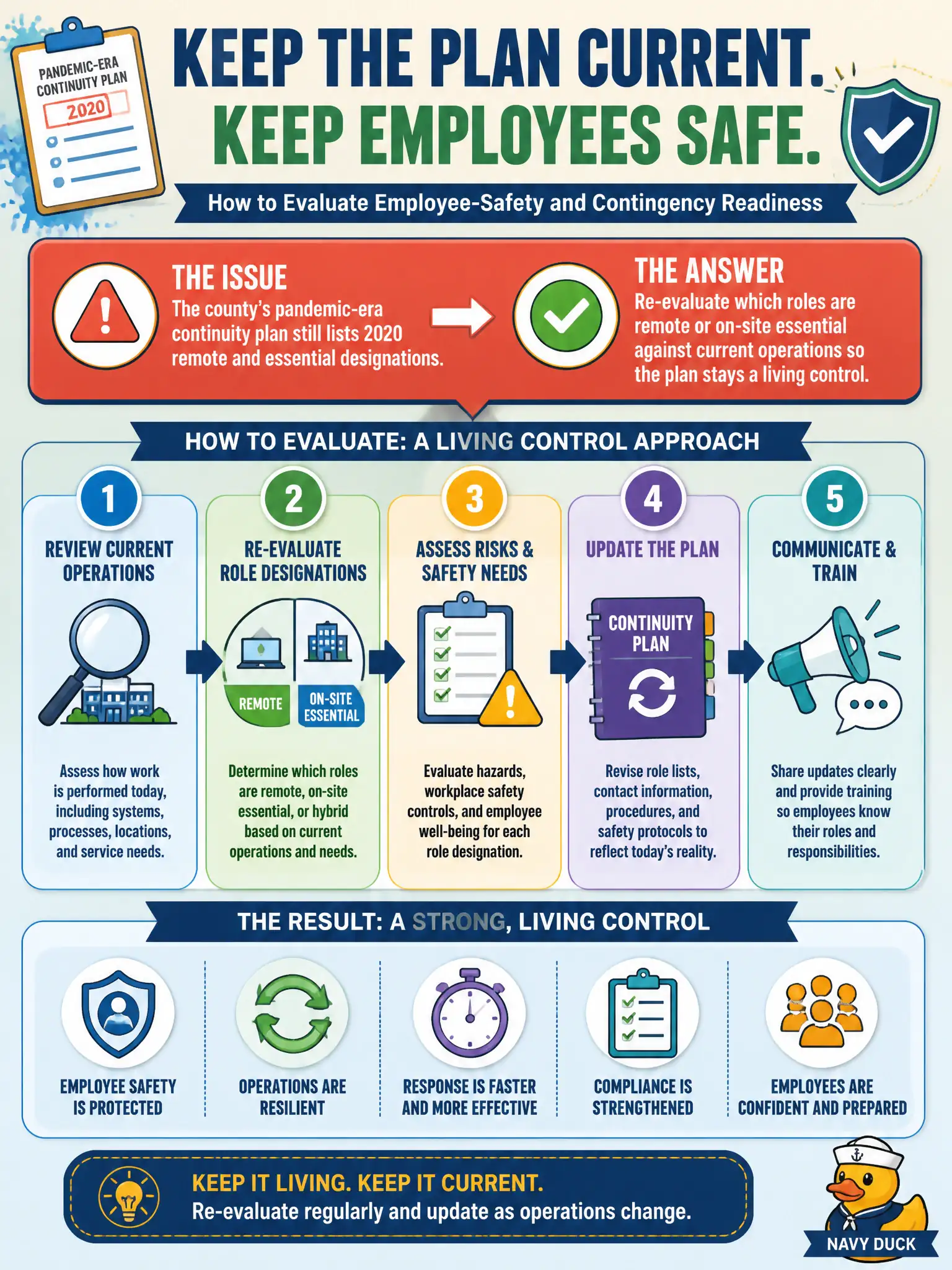
The county's pandemic-era continuity plan still lists 2020 remote and essential designations. How should the CHRO evaluate employee-safety and contingency readiness?
Select an answer to reveal the explanation.
Short Explanation
A 2020 continuity PDF is like last year's snow-route map after the roads were rebuilt. Who must be on site, who can work remote, and who is essential have probably changed. Living plans get a fresh look; dusty ones get people hurt or idle.
Full Explanation
Emergency-response and contingency plans must be living evaluations, not static artifacts from a prior emergency. Re-evaluating which county roles are remote or on-site essential against current operations keeps the pandemic-era continuity plan a living control that matches today's sites and services. Designations drive who is exposed, who reports, and how services continue.
Keeping the 2020 PDF because rewriting it would worry the workforce prioritizes avoidance over readiness. Archiving the plan now that the emergency order expired discards continuity structure still needed for other disruptions. Copying a neighboring county's plan without reviewing this county's sites imports someone else's assumptions about facilities and staffing.
Exam caveat: refresh cycles should include non-pandemic scenarios (cyber, weather, civil unrest) using the same essential-role logic. Operational check: update remote/essential lists with department heads, tabletop a current scenario, and version-control the plan with a review date no older than the policy standard. Document ownership so auditors can see who maintains the control. Re-test the control after the next tabletop or hiring cycle. Keep the civic workforce impact visible in the evaluation notes.