
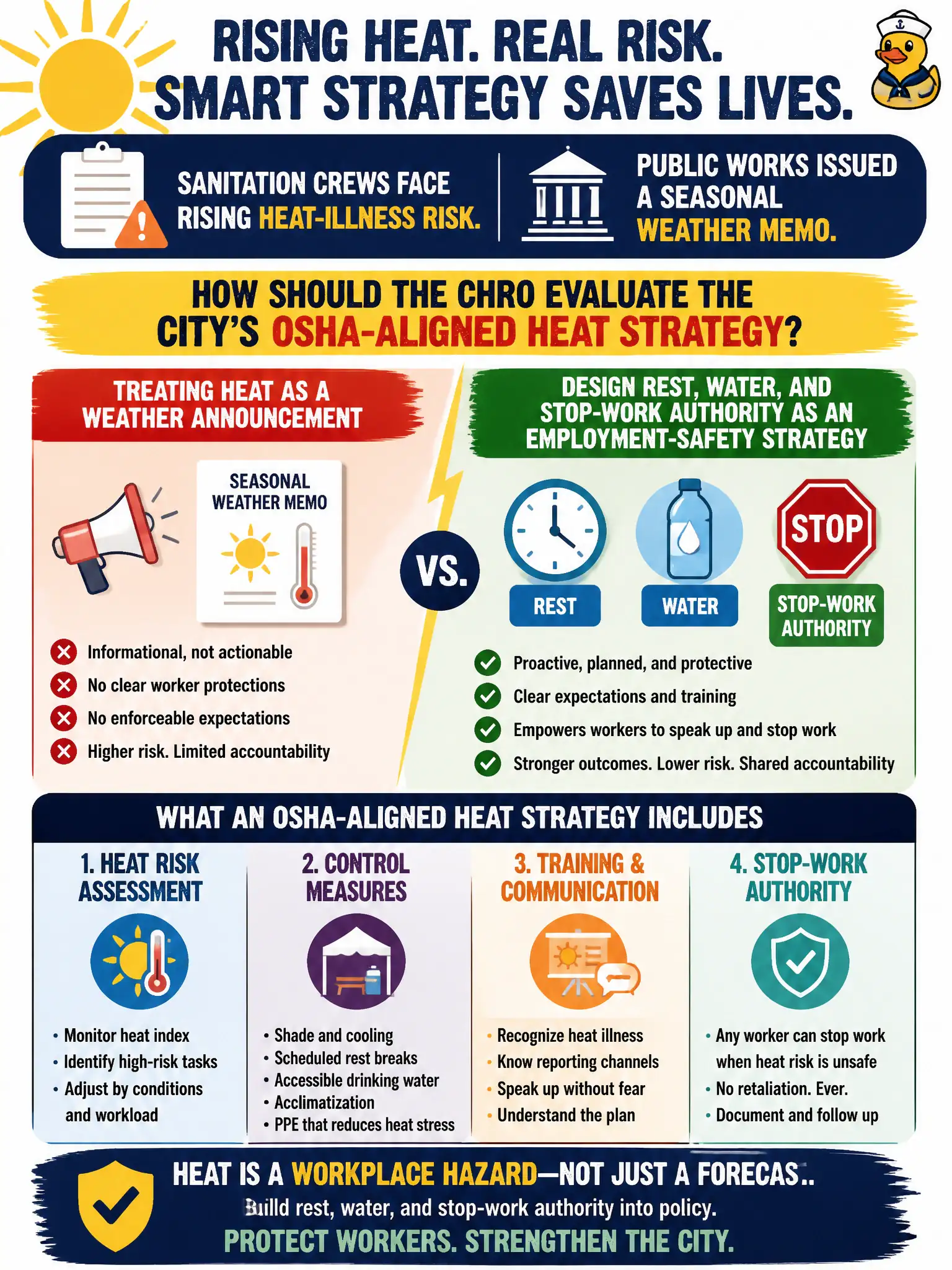
Sanitation crews face rising heat-illness risk. Public works issued a seasonal weather memo. How should the CHRO evaluate the city's OSHA-aligned heat strategy?
Select an answer to reveal the explanation.
Short Explanation
A heat memo is a forecast, not a safety program. Crews need water, shade or rest, and the right to stop when the work turns dangerous—same idea as a lockout tag, not a gym flyer. Environmental hazards get designed controls, not a suggestion.
Full Explanation
Environmental occupational hazards such as heat are a safety-strategy design problem for sanitation and other outdoor municipal crews, not a seasonal weather announcement. Designing rest, water, and stop-work authority as employment-safety strategy—rather than relying on a public-works memo—creates OSHA-aligned, enforceable protection supervisors and crews can actually use. Evaluation asks whether heat illness declines.
Relying on the seasonal weather memo as the employment-safety strategy leaves controls optional and unmeasured. Letting each crew chief decide rest and water without a city standard produces uneven protection and weak accountability. Treating heat as a personal-fitness issue with a wellness flyer shifts a workplace hazard onto individual lifestyle messaging.
Exam caveat: stop-work authority must be real—crews need assurance they will not be punished for using it when conditions demand. Operational check: publish heat thresholds with rest and hydration rules, train supervisors, track heat-illness incidents and near-misses through the season, and adjust when rates do not fall. Document ownership so auditors can see who maintains the control. Re-test the control after the next tabletop or hiring cycle.