
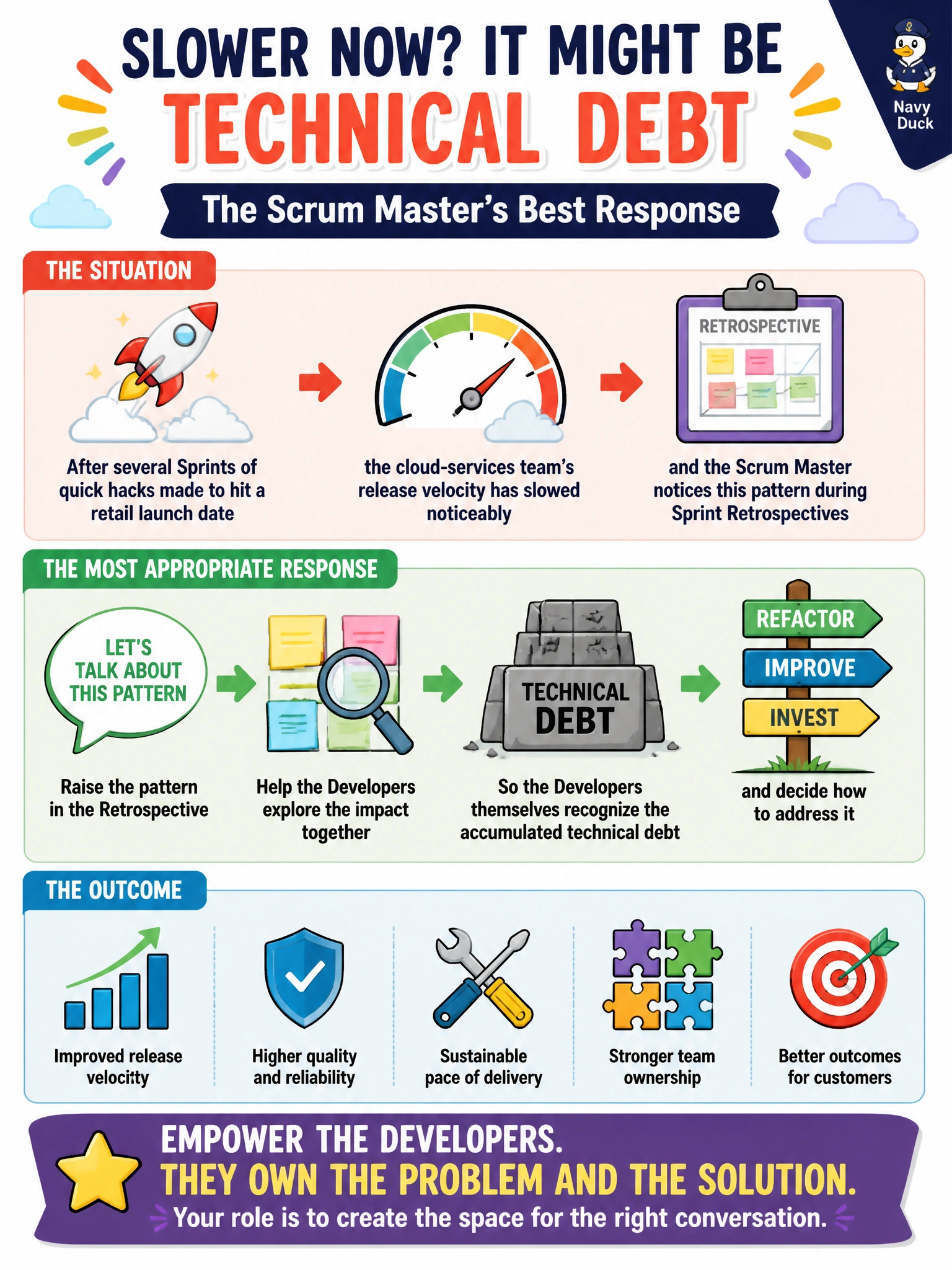
After several Sprints of quick hacks made to hit a retail launch date, the cloud-services team's release velocity has slowed noticeably, and the Scrum Master notices this pattern during Sprint Retrospectives, so what would be the most appropriate way for the Scrum Master to respond?
Select an answer to reveal the explanation.
Short Explanation
Noticing that things have gotten slower is only half the job — the real fix has to come from the people closest to the code, not from someone telling them exactly what to rewrite. The Scrum Master's move is to name the pattern openly in the Retrospective and let the Developers, who understand the code, decide how to work through the debt.
Full Explanation
A Sprint Retrospective exists precisely for the Scrum Team to inspect how it is working and adapt its practices, which makes it the natural place to surface an observed pattern like slowing velocity tied to accumulated technical debt. The Scrum Master's accountability here is to facilitate that reflection and help the team see the pattern clearly, not to dictate the technical solution, since deciding how and what to refactor is a Developer decision grounded in their understanding of the actual code. Prescribing exactly which code to rewrite oversteps the Scrum Master's role and undermines the Developers' self-management, even when the intention is to help. Permanently reducing Sprint commitments treats the symptom in isolation without the team's own diagnosis of the cause, and it removes the team's agency in choosing how to respond to its own situation. Escalating the pattern to leadership as an individual performance issue misdiagnoses a systemic, team-level consequence of prior schedule pressure as a personal failing, which is neither accurate nor likely to fix anything. The constructive path is transparency: naming the trend plainly during the Retrospective and trusting the Developers, who understand the code and the trade-offs involved, to determine what technical debt to address and how. A practical check afterward is whether the team leaves the Retrospective with a concrete, self-chosen action related to the debt for the next Sprint — if not, the pattern was named but not actually acted on.