
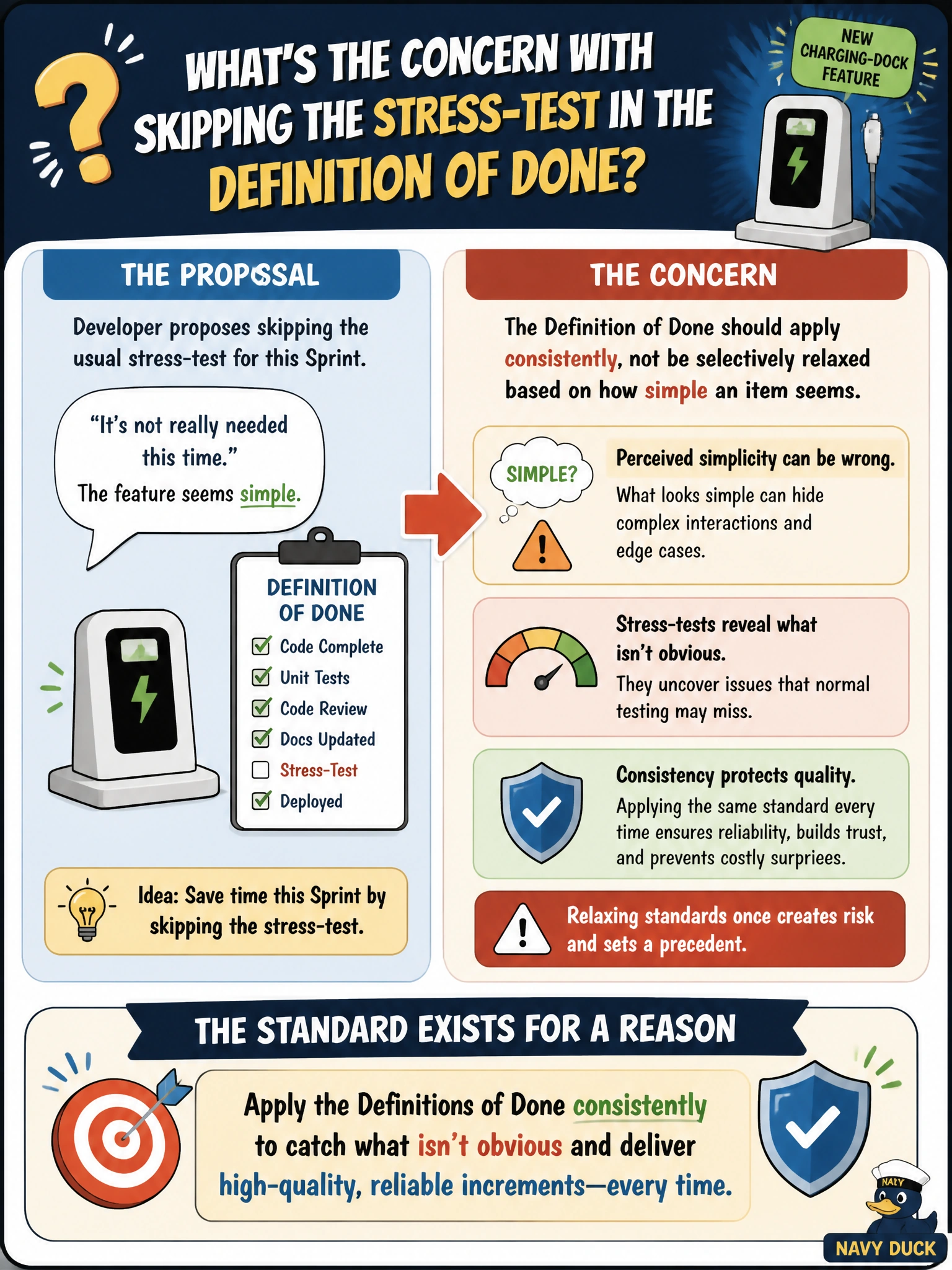
A Developer proposes that this particular Sprint's Definition of Done skip the usual stress-test requirement for a new charging-dock feature, reasoning that "it's not really needed this time" since the feature seems simple, so what is the concern with this proposal?
Select an answer to reveal the explanation.
Short Explanation
"It's simple, so we probably don't need the full check" is exactly the kind of thinking the Definition of Done exists to override — because the whole point of a stress test is to catch the problems that don't look obvious from the outside. Letting the standard flex based on a guess about difficulty turns a reliable quality bar into a judgment call that's easy to get wrong.
Full Explanation
The Definition of Done is meant to apply consistently to every Product Backlog item that qualifies for it, precisely because a team's intuition about which items are "simple enough" to skip a check is not reliable — features that look straightforward on the surface, especially anything touching physical hardware like a charging dock, can hide failure modes that only a proper stress test would reveal. Allowing the standard to flex based on a subjective read of difficulty reintroduces the exact inconsistency the Definition of Done is designed to eliminate, and it sets a precedent that makes future selective skipping easier to justify. This is a team-wide standard, not something Developers can individually reinterpret item by item, and it is not something the Product Owner can retroactively bless after the fact either, since informing them after the Sprint ends does nothing to address the risk that was actually taken during the Sprint. Limiting the concern to hardware-adjacent features also misses the point, since the underlying issue is the precedent of skipping the standard based on perceived simplicity, which applies regardless of what kind of feature is involved. The healthier path is to apply the full Definition of Done and, if the stress test genuinely reveals no issues, treat that as confirmation the feature really was simple rather than evidence the check wasn't needed. A concrete check is to look back at how often "this seems simple enough to skip" judgments have turned out to be wrong in the past — for most teams, the answer is often enough to make the shortcut not worth the risk.