
As a robotics company's retail launch approaches, the app, firmware, and cloud teams historically schedule a dedicated multi-week "integration Sprint" right before release because their code has rarely been combined and tested together before then, so what underlying practice gap does this reveal?
Select an answer to reveal the explanation.
Short Explanation
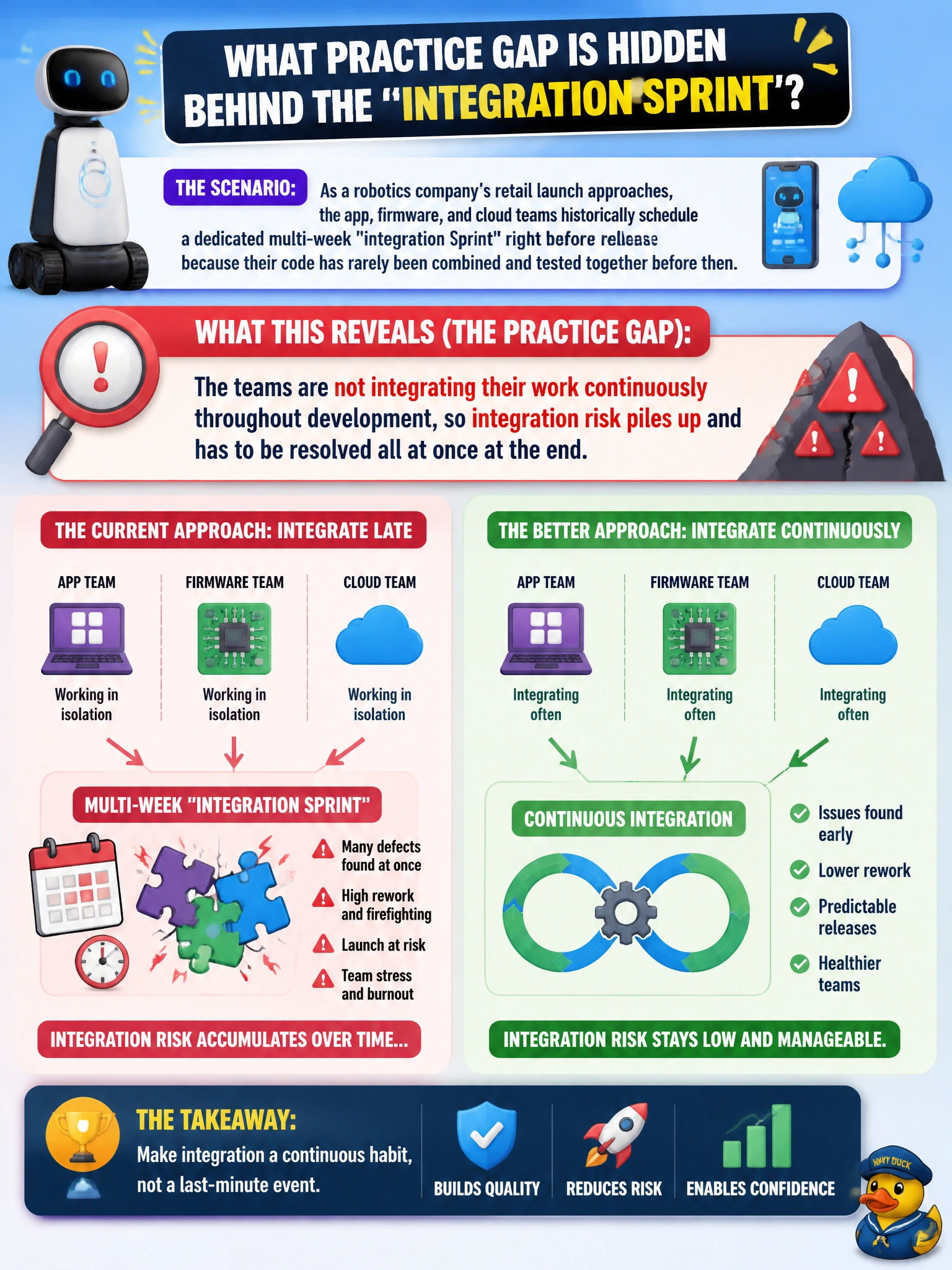
Needing a dedicated multi-week sprint just to see whether everyone's work actually fits together is a strong hint that it was never being checked along the way. Continuous integration spreads that checking out across every Sprint, in small pieces, instead of stacking it all up into one high-stress crunch right before launch.
Full Explanation
A separate integration phase scheduled specifically because the teams' work has rarely been combined before is a clear symptom of infrequent integration throughout the rest of development. When teams integrate continuously — merging and testing combined behavior regularly rather than only near the end — integration problems surface in small, manageable pieces spread across many Sprints instead of arriving all at once as a large, urgent crunch. This is a supporting engineering practice, not a Scrum Guide rule, but it directly determines whether the combined product can actually be released with confidence on the schedule the business expects. A longer release cycle would only give the same problem more room to grow rather than resolving it, since the root cause is the lack of continuous integration, not insufficient calendar time. A stricter shared Definition of Done is not the culprit either — in fact, a Definition of Done that required regular cross-team integration checks throughout development would have prevented this exact situation. The Product Owner's ordering of the Product Backlog is also not the primary lever here, since integration is a matter of engineering workflow and discipline rather than backlog prioritization. A practical check is to ask how many Sprints passed since the last time all three teams' work was combined and verified together — if the honest answer is measured in months rather than one Sprint, continuous integration isn't actually happening.