
A retail stakeholder is angry with the Product Owner in a hallway conversation about a slipped launch date for the home-robot, and the conversation is becoming tense. The Scrum Master happens to walk by. What is the appropriate role for the Scrum Master to play?
Select an answer to reveal the explanation.
Short Explanation
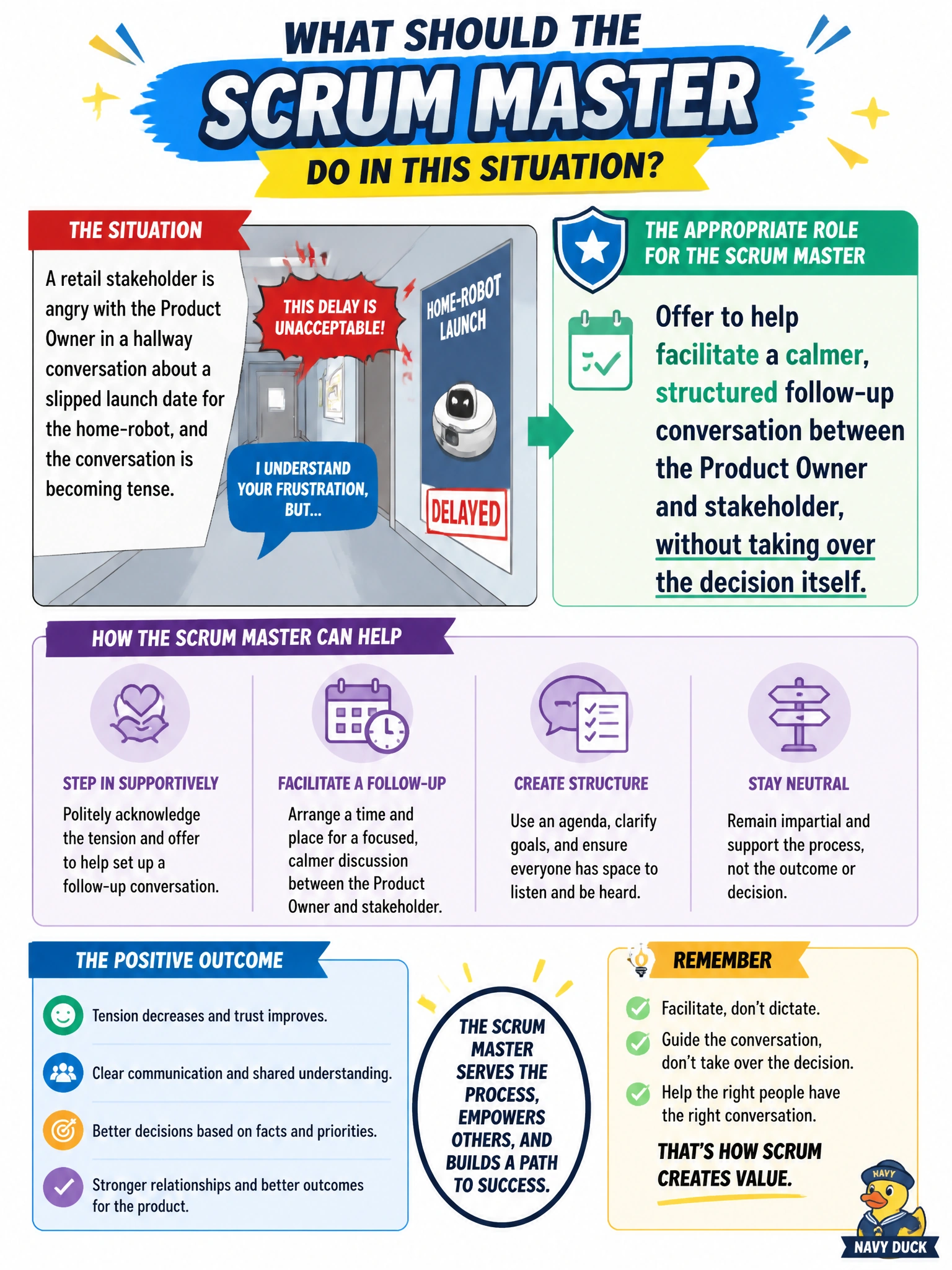
Tense hallway moments rarely produce good decisions — they mostly produce raised voices. Offering to set up a calmer, structured conversation lets the two people who actually own this decision, the Product Owner and the stakeholder, work it out with the Scrum Master helping the conversation go well rather than deciding the outcome.
Full Explanation
The Scrum Master's accountability to stakeholders includes helping them understand and interact effectively with the Scrum Team, which in a tense moment often means offering structure — a scheduled, calmer conversation with clear ground rules — rather than either avoiding the friction or absorbing the decision personally. Taking over and personally negotiating a new date oversteps the Scrum Master's role; forecasting and release commitments involving the Product Backlog belong to the Product Owner, not to the Scrum Master acting as a substitute negotiator. Declaring the topic none of the Scrum Master's concern misses that facilitating healthy stakeholder relationships is squarely part of the role, even when the underlying decision itself belongs to someone else. Taking the Product Owner's side and arguing against the stakeholder abandons neutrality, which a good facilitator needs to keep both parties trusting the process rather than feeling like the Scrum Master picked a team. A concrete check: after the follow-up conversation happens, see whether it ended with a shared understanding of next steps rather than lingering hallway tension.