
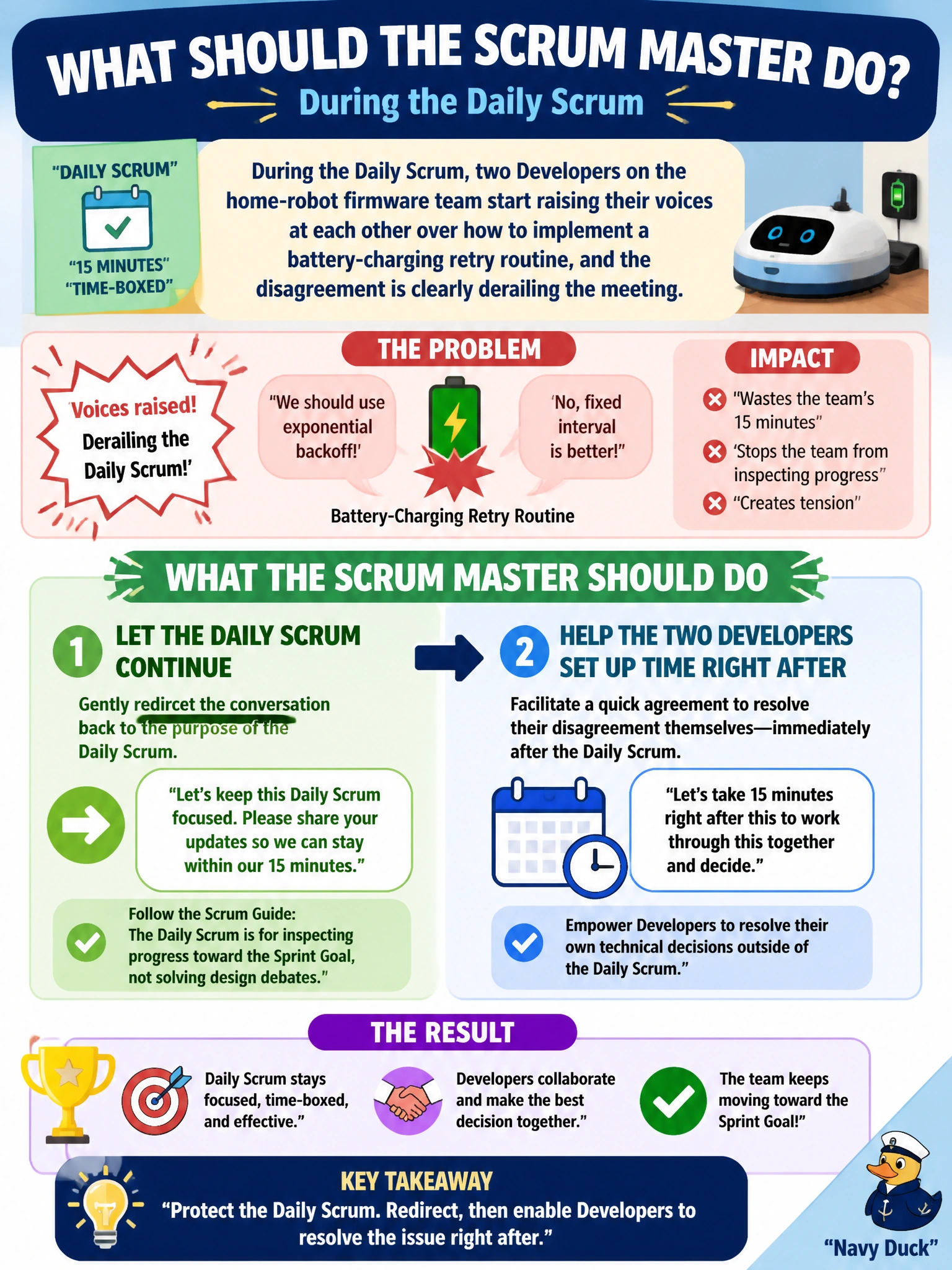
During the Daily Scrum, two Developers on the home-robot firmware team start raising their voices at each other over how to implement a battery-charging retry routine, and the disagreement is clearly derailing the meeting. What should the Scrum Master do?
Select an answer to reveal the explanation.
Short Explanation
Think of the Daily Scrum like a quick huddle, not a design review — it's 15 minutes for the Developers to sync on their plan, not the place to hash out a technical disagreement. A good facilitator protects that timebox by moving the debate to a side conversation right after, then trusts the two people closest to the firmware to work it out.
Full Explanation
The Scrum Master's job here is to protect the Daily Scrum's purpose and timebox while still making sure the underlying disagreement gets resolved — just not in that room. Pulling the two Developers aside immediately afterward keeps the event focused and treats the conflict as something the team can own, which is the mechanism behind self-management: the people doing the work decide how the work gets done. Escalating to a manager undercuts that by importing an external authority to make a decision the Developers are accountable for, and it teaches the team to bypass each other whenever things get uncomfortable. The Scrum Master personally choosing the retry approach is the same mistake in a different direction — the Scrum Master isn't a technical arbiter and doing so erodes the Developers' ownership of how they build the product. Staying silent isn't safe, it's avoidant; an unresolved shouting match will resurface, probably worse, and the team will read the silence as tacit approval of yelling. A useful operational check: after facilitating, ask the two Developers to summarize back to each other what they agreed on, so the resolution is explicit rather than assumed.