
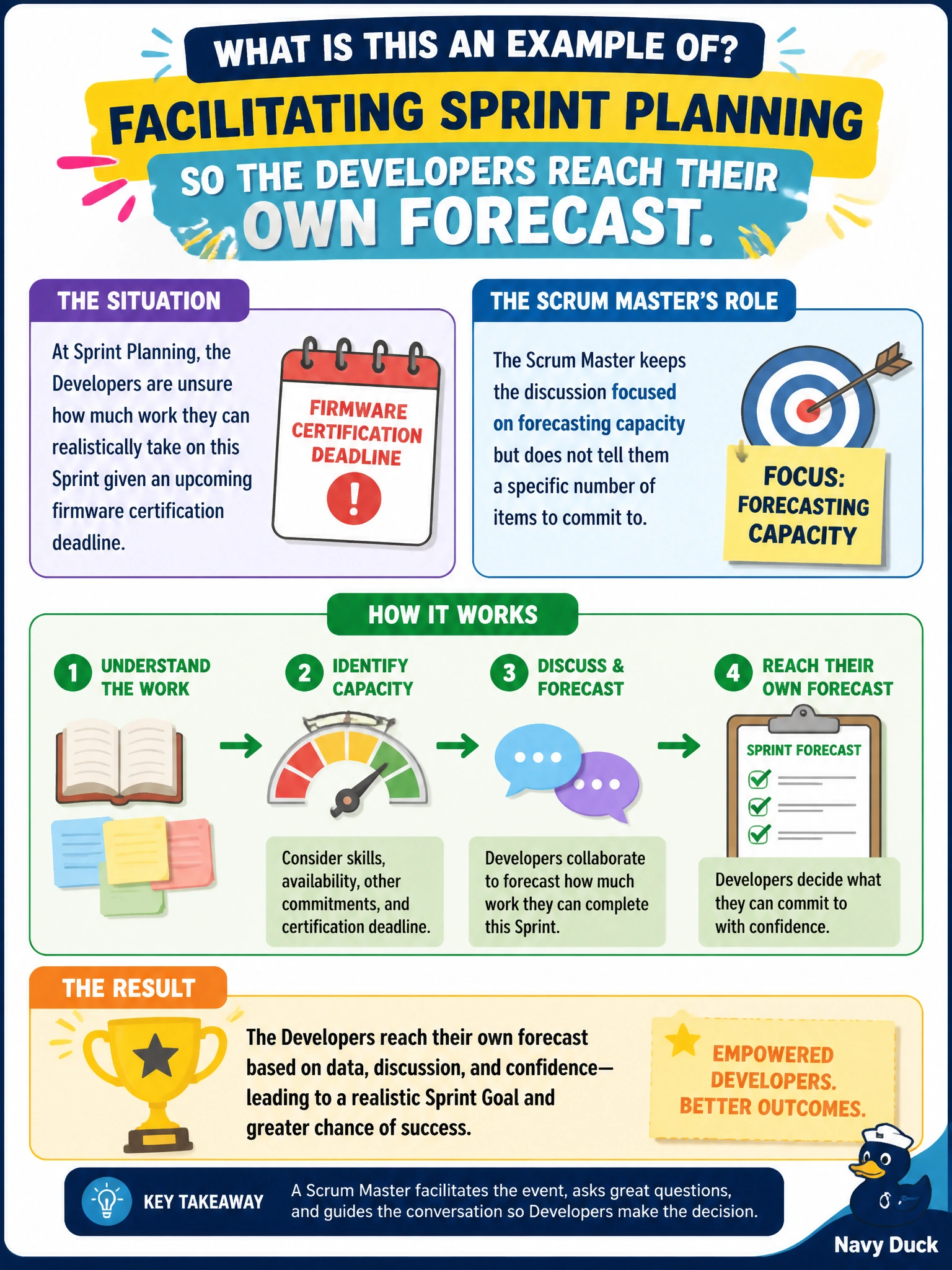
At Sprint Planning, the Developers are unsure how much work they can realistically take on this Sprint given an upcoming firmware certification deadline. The Scrum Master keeps the discussion focused on forecasting capacity but does not tell them a specific number of items to commit to. What is this an example of?
Select an answer to reveal the explanation.
Short Explanation
Keeping a planning conversation on track — without dropping in the answer yourself — is facilitation at work. The Scrum Master shapes the room so the people doing the work land on their own number, one they'll actually believe in enough to commit to.
Full Explanation
Facilitating Sprint Planning means structuring the conversation — keeping it focused on the right question, timeboxing it, surfacing relevant constraints like the certification deadline — while leaving the actual forecast to the Developers who will do the work. That's precisely what's described: the Scrum Master shapes the discussion without inserting a number, which keeps the forecast owned by the people accountable for delivering it. Coaching on estimation technique is a plausible-sounding but different intervention — it would involve questions aimed at improving how the Developers estimate, which isn't what's happening here; the scenario describes keeping focus, not developing an estimation skill. "Managing the workload" misassigns authority the Scrum Master doesn't have — Scrum has no management function over the Developers' capacity decisions, and framing it as protecting the deadline through management overstates the role. Teaching about certification deadlines is off-target because there's no indication the Developers lack knowledge about the deadline itself; the described behavior is about the structure of the planning conversation, not transferring new factual content. A practical check: if the Scrum Master's interventions are all about the shape and flow of the conversation rather than its content, that points to facilitating.