
At Sprint Review, the app team demonstrates a new feature completed this Sprint alongside several features completed in prior Sprints, all still working together in the same build. How should the team describe what they're demonstrating?
Select an answer to reveal the explanation.
Short Explanation
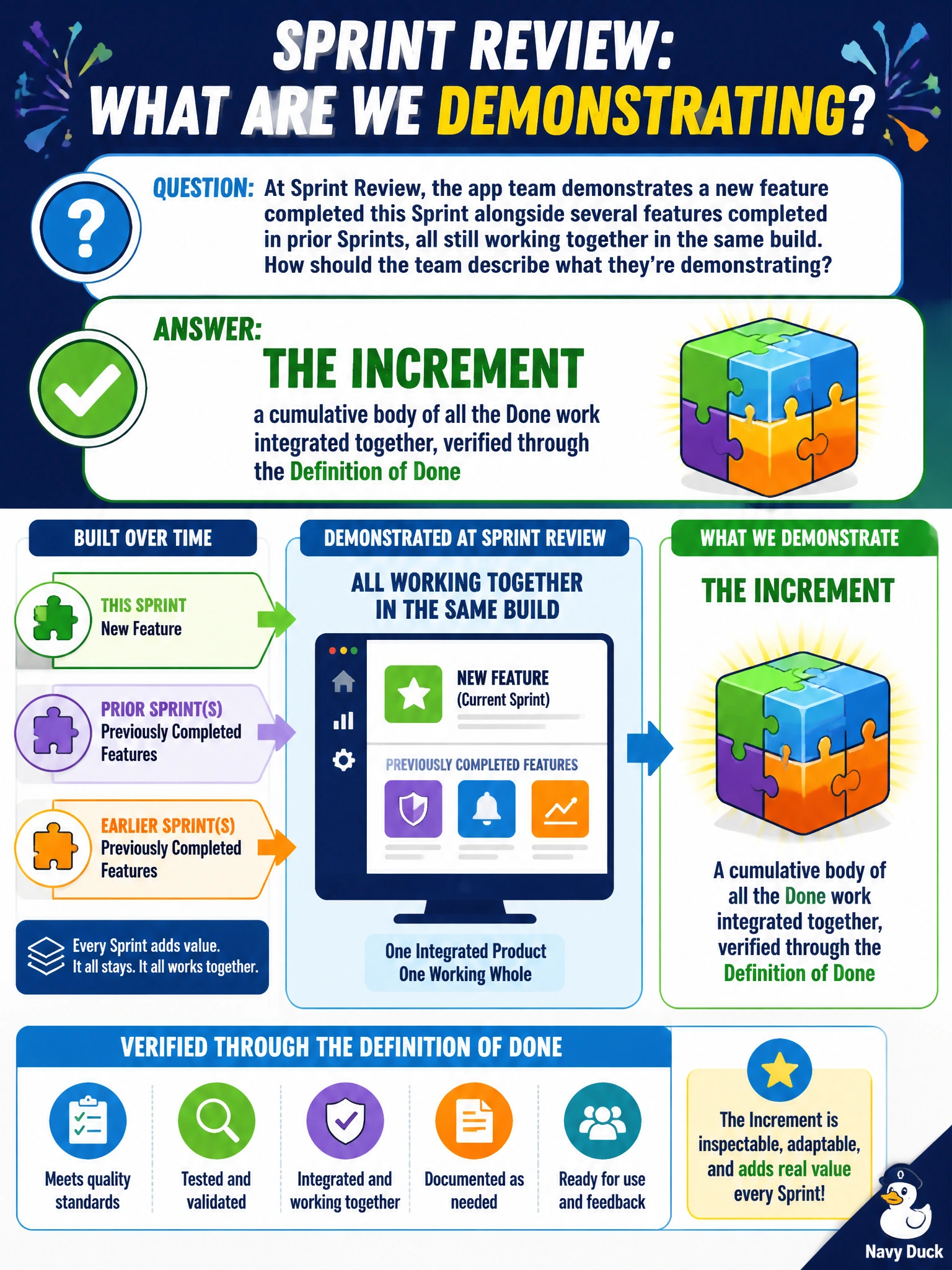
The Increment isn't just today's new feature standing alone; it's everything the team has ever finished, working together as one whole. Every new piece of Done work gets added to what came before, and the whole thing has to hold together and meet the Definition of Done. That's what the app team is actually showing off at Sprint Review.
Full Explanation
An Increment is a cumulative body of work: each new Increment adds to and is thoroughly verified with all prior Increments, forming one integrated whole that must work together and meet the Definition of Done. So the app team demonstrating this Sprint's new feature alongside everything built in prior Sprints is describing the Increment accurately, since it's the sum of Done work, not just the newest slice. Treating only the newest feature as the Increment and everything before it as separate history misunderstands the cumulative nature the Guide describes; the Increment isn't reset each Sprint. Calling it a "release candidate" borrows release-management language the Guide doesn't use for this concept, and blurs the distinction between an Increment existing and a Product Owner's separate decision about whether and when to release it. Calling it a prototype because it hasn't shipped confuses release status with Increment status; an Increment must be usable and meet the Definition of Done regardless of whether the Product Owner chooses to release it externally. A practical check at Sprint Review: ask whether what's being shown is the whole working product to date, not just a demo of the newest feature in isolation.