
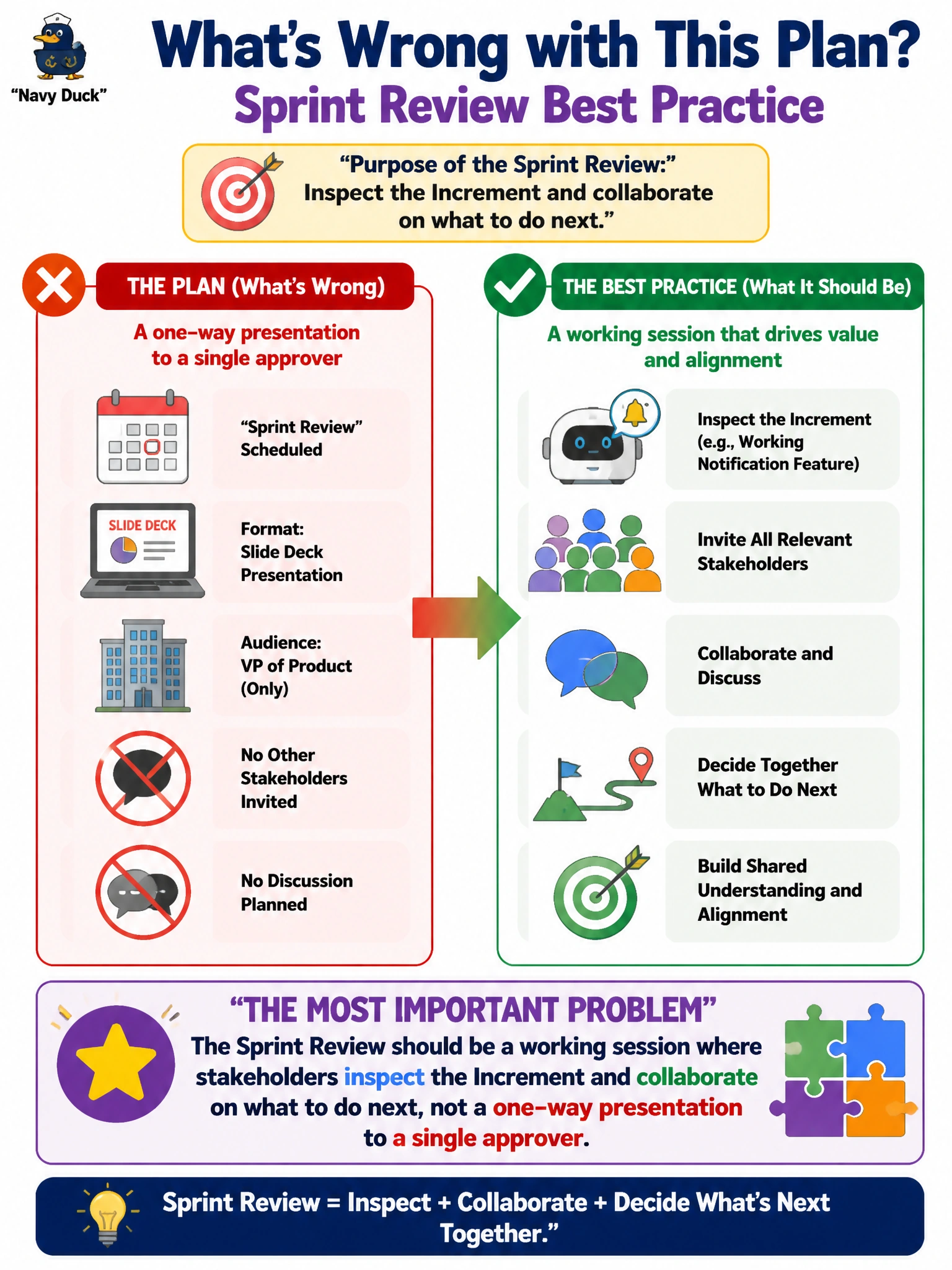
A home-robot company's app team finishes a Sprint with a working notification feature. The Scrum Master schedules the Sprint Review as a slide deck presented to the VP of Product, with no other stakeholders invited and no discussion planned. What is the most important problem with this plan?
Select an answer to reveal the explanation.
Short Explanation
Think of the Sprint Review less like a demo you sit through and more like a planning meeting you work in. The point isn't to get a thumbs-up from one VP — it's to get the right stakeholders looking at the real Increment and adjusting the Product Backlog together. A slide deck to one approver skips the collaboration that makes the whole thing worth doing.
Full Explanation
The Scrum Guide describes the Sprint Review as a working session, not a milestone gate: the Scrum Team presents the results of their work to key stakeholders, and progress toward the Product Goal is discussed. The whole group collaborates on what to do next, and the Product Backlog may be adjusted as a result. A single-approver slide presentation fails that purpose on two fronts — it narrows the audience to one decision-maker instead of the stakeholders who can give useful input, and it replaces inspection-and-adaptation with a status update nobody can act on. The 'invite everyone' option misreads the Guide, which asks for relevant stakeholders, not the whole company. Replacing the Review with a written report removes the collaborative inspection Scrum relies on — a document can't answer follow-up questions or adjust direction in the room. And the Review is not optional; it is one of the five events and happens every Sprint regardless of how confident the Developers are in the Increment. A concrete check: after a Sprint Review, look at whether the Product Backlog changed as a result of the conversation — if it never does, the Review has drifted into a presentation.