
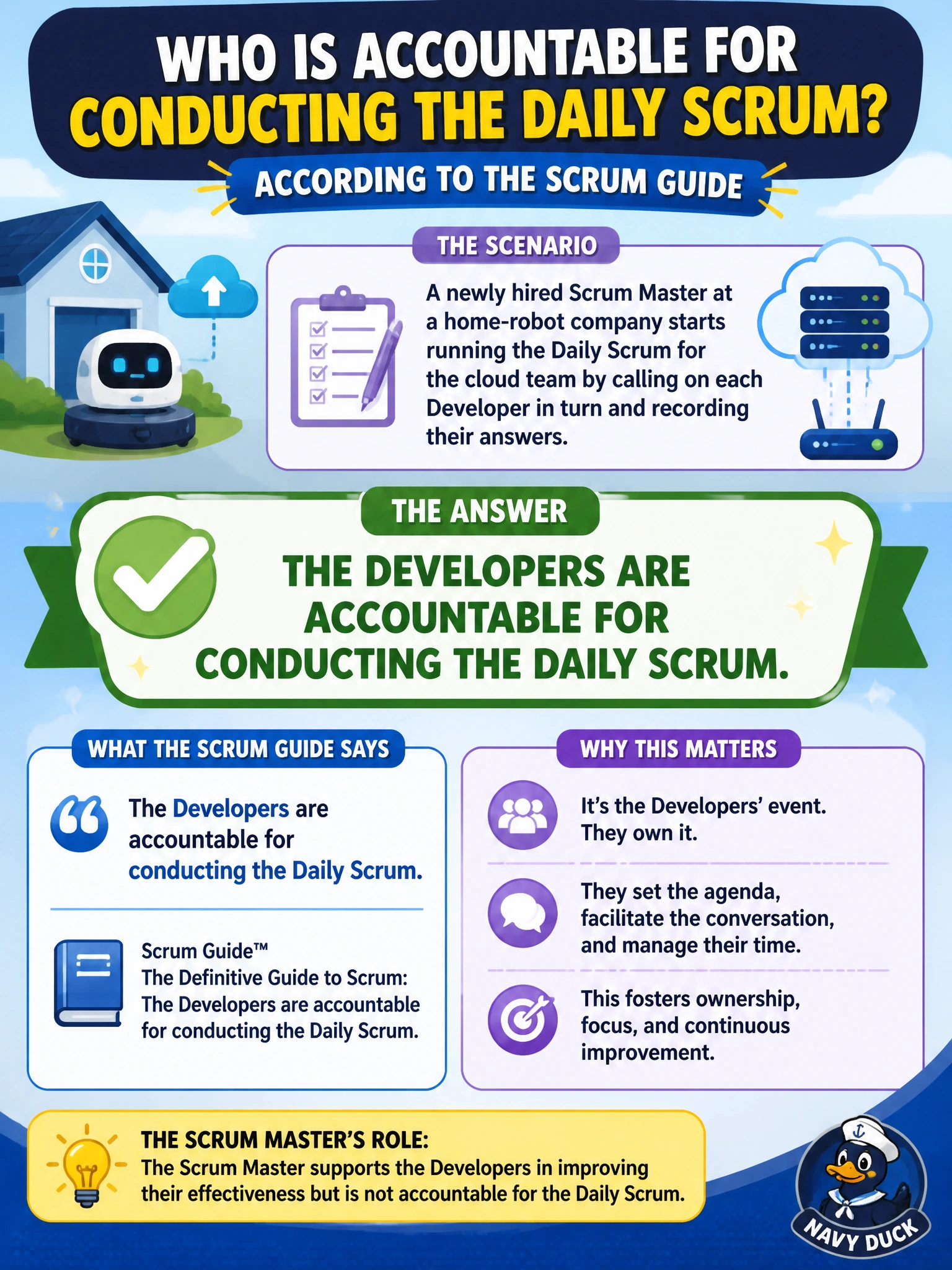
A newly hired Scrum Master at a home-robot company starts running the Daily Scrum for the cloud team by calling on each Developer in turn and recording their answers. Who does the Scrum Guide say is accountable for conducting the Daily Scrum?
Select an answer to reveal the explanation.
Short Explanation
Running the Daily Scrum like a roll call kind of misses the point — the Guide puts the Developers in charge of their own check-in, not a facilitator calling names. It's their plan, so it's their event to conduct however works for them. A Scrum Master's job here is to make sure the event exists and stays useful, not to run it.
Full Explanation
The Scrum Guide states plainly that the Developers are accountable for conducting the Daily Scrum, and it explicitly notes the Scrum Master ensures the meeting takes place but the Developers are responsible for conducting it - the Scrum Master isn't the one calling on people or steering the format. A new Scrum Master running roll call is stepping into a role the Guide reserves for the Developers themselves, which can quietly undercut their self-management by turning a self-organized check-in into a supervised status meeting. Assigning the Scrum Master conducting authority directly contradicts that explicit Guide language. Assigning it to the Product Owner confuses tracking product value, which is the Product Owner's concern, with the Developers' own daily inspection of their Sprint Backlog. Rotating it to whoever is most senior invents a hierarchy inside the Developers that the Guide's flat, no-sub-teams structure doesn't support. Caveat: the Scrum Master can and should coach a team that's struggling to run an effective Daily Scrum, but coaching the skill is different from taking over the role permanently. Operational check: a healthy sign is Developers talking to each other during the Daily Scrum, not each one reporting to a single person running the meeting.