From a compliance and ethics perspective, what is the primary benefit of conducting structured exit interviews with departing employees?
Select an answer to reveal the explanation.
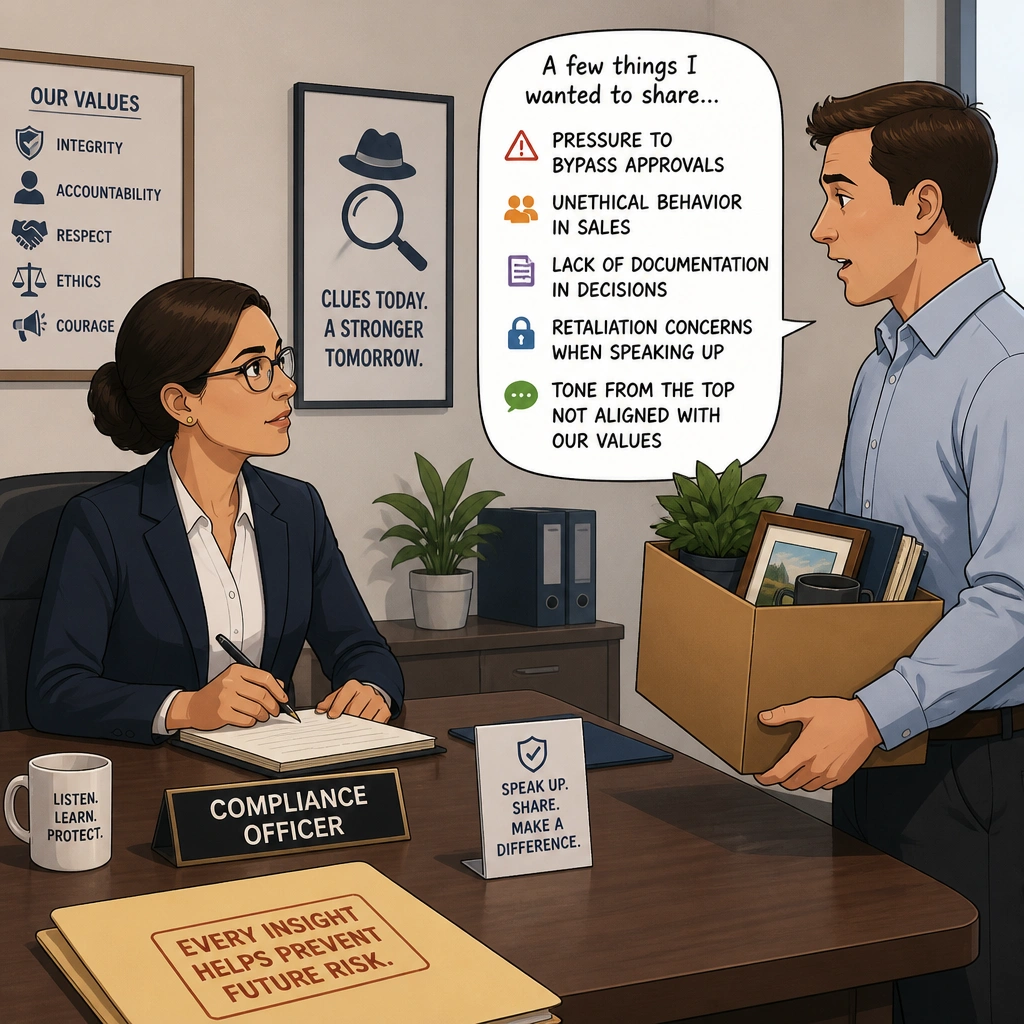
Short Explanation and Infographic
Think of it like this: when someone is walking out the door for a new job, they suddenly lose their fear of speaking up. They aren't worried about how their boss will treat them tomorrow because they won't be there! That makes exit interviews a goldmine for compliance officers. You get a chance to ask, 'Hey, did you see anything unethical while you were here?' or 'Are there risks we should know about?' Pay close attention here: departing employees will often tell you the raw truth about what's actually happening in the field, stuff that your regular surveys might miss. It's a fantastic detective tool!
Full explanation below image
Full Explanation
From a compliance perspective, exit interviews serve as a valuable detective mechanism for identifying hidden risks, systemic misconduct, or cultural issues within an organization. Employees who are leaving the company are often more candid than current staff because their fear of immediate retaliation or negative career impacts within the firm is minimized. By asking structured questions about ethical climate, pressure to bypass controls, or observed policy violations, the compliance department can uncover issues that have gone unreported through normal hotline channels. This feedback provides actionable intelligence to initiate investigations or strengthen controls. Option A is the correct answer because gathering compliance-related feedback from departing employees is the primary compliance-focused objective of an exit interview. Option B is incorrect because payroll and expense disputes are administrative HR and finance tasks, not the target of compliance exit interviews. Option C is incorrect because attempting to pressure employees to retract external whistleblowing reports is unethical and may constitute illegal retaliation or obstruction. Option D is incorrect because convincing employees to stay is a retention effort managed by HR and departmental leadership, rather than a compliance detection activity.