Following the conclusion of a significant compliance investigation, the Chief Compliance Officer schedules a formal 'lessons learned' review. What is the main objective of this post-investigation phase?
Select an answer to reveal the explanation.
Short Explanation and Infographic
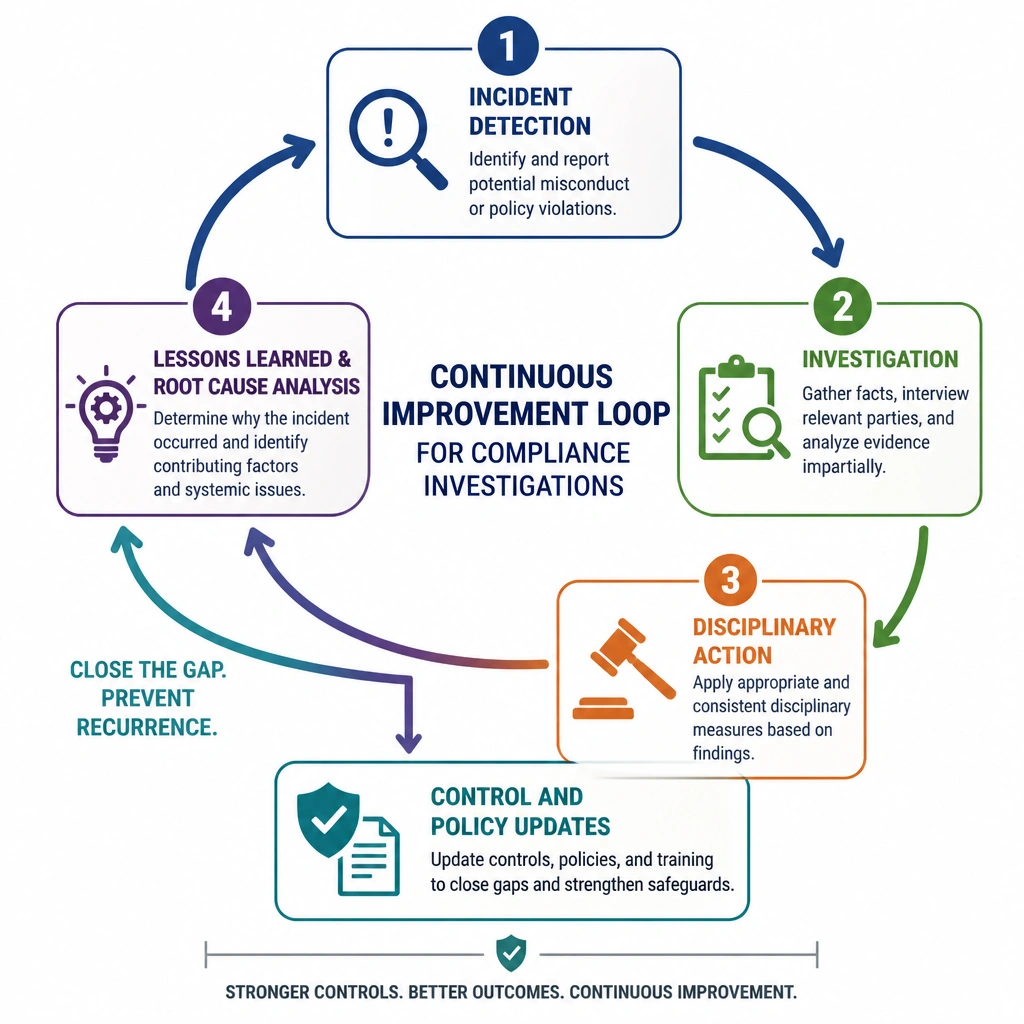
Okay, let's dive into this: once an investigation wraps up and you've dealt with the immediate issue, you aren't done yet! You have to ask yourself, 'How did this happen in the first place?' If you just punish the bad guy and move on, the next person is going to fall into the exact same trap. That's why we do a 'lessons learned' review. We're looking for the root cause—was it a bad policy, a missing control, or did we just fail to train them properly? Once you figure that out, you patch the hole. Think of it like fixing a leak in the roof so your house doesn't flood the next time it rains. Makes sense, right? Let's keep rolling.
Full explanation below image
Full Explanation
The 'lessons learned' review is a crucial element of the corrective action phase of an effective compliance program. A truly operational program is designed to learn from its failures and adapt. By performing a root cause analysis during this review, the compliance team determines how the violation occurred, what controls failed or were bypassed, and why the misconduct was not prevented or detected earlier. The ultimate objective is to leverage these insights to implement systemic improvements, which may include revising policies, strengthening internal controls, updating training modules, or reallocating compliance resources. This feedback loop ensures the program evolves to address emerging risks. Option A is incorrect because public humiliation is unprofessional, damages morale, and violates privacy standards, rather than serving as an instructional corrective tool. Option B is the correct answer because identifying root causes and implementing systemic program enhancements is the core objective of the lessons learned process. Option C is incorrect because the purpose of the review is to identify areas that need change, not to justify complacency or resist program improvements. Option D is incorrect because corporate communication departments do not prosecute employees, and social media campaigns are not a component of internal corrective actions.