An organization decides to outsource all background screening and due diligence of its overseas suppliers to a specialized third-party agency. What is the most significant compliance risk associated with fully delegating this process?
Select an answer to reveal the explanation.
Short Explanation and Infographic
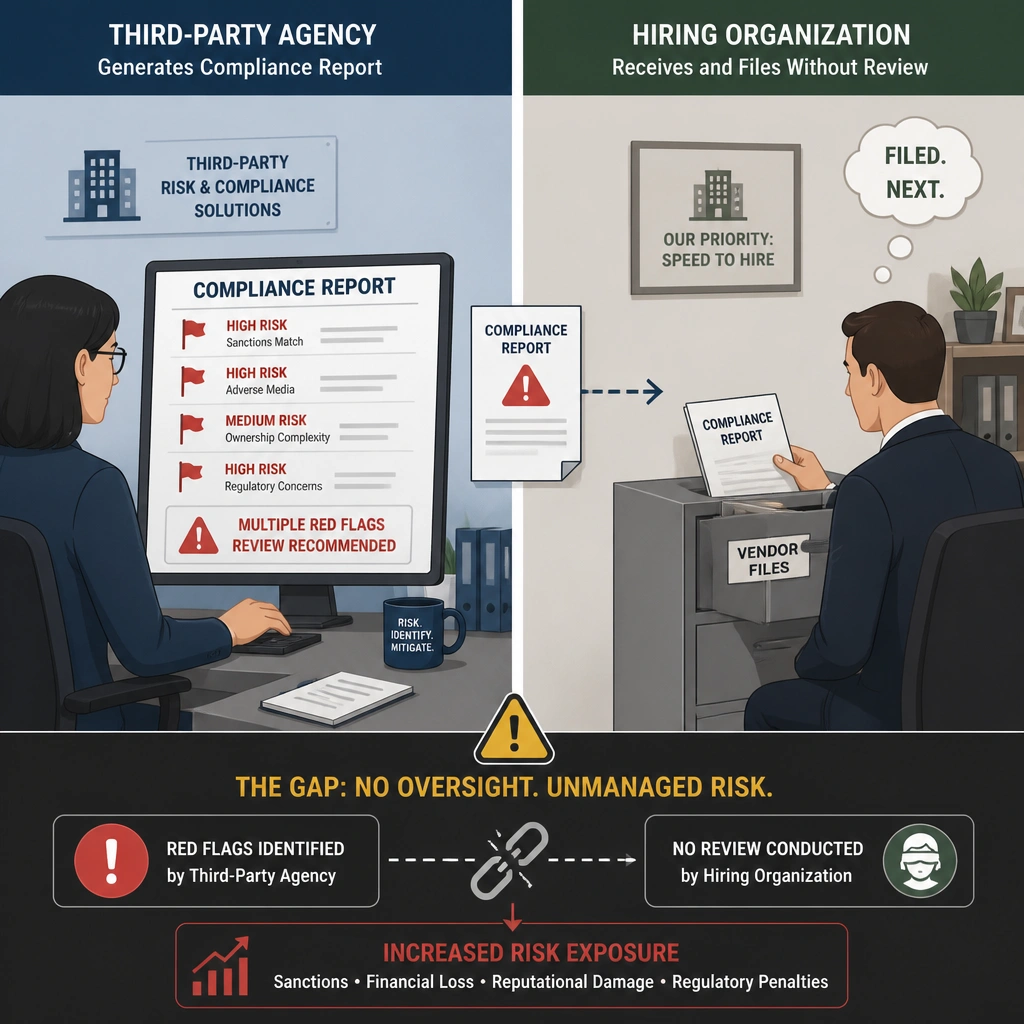
Here's the deal: you can outsource the work, but you can never outsource the responsibility. If your boss walks in and asks why a supplier was bribing officials, saying 'Well, our vendor said they were clean' is not going to save you! The big trap here is when companies pay a third-party screening firm, file the reports away without reading them, and assume everything is fine. You lose direct eyes on the results, which means you aren't actually managing your risk. You've got to review the findings, ask hard questions, and make the final call yourself. Don't make the mistake of thinking due diligence is just a box to check!
Full explanation below image
Full Explanation
Outsourcing the collection of due diligence data to a specialized vendor is a common practice, but it introduces a major compliance risk if the organization abdicates its decision-making authority. Compliance programs must retain ownership of the risk evaluation and decision-making processes. If an organization blindly relies on a vendor's reports without internally analyzing the red flags or understanding the context of the findings, it fails to effectively manage its third-party risks. The company remains legally and reputationally liable for any misconduct by its suppliers, meaning it must have direct knowledge of the due diligence results to implement appropriate risk-mitigation measures. Option A is incorrect because budgetary concerns, while important, are commercial rather than core compliance risks. Option B is the correct answer because it addresses the compliance risk of losing visibility and ownership over the evaluation of due diligence findings. Option C is incorrect because suppliers routinely submit to third-party due diligence as a condition of doing business, and this is not the main compliance risk. Option D is incorrect because minor operational delays are secondary to the compliance risk of failing to manage third-party misconduct.