Shortly after hiring a senior procurement manager, a company discovers the individual was previously debarred by a government regulatory agency for kickback violations—a detail missed during the hiring process. This gap represents a failure in which compliance area?
Select an answer to reveal the explanation.
Short Explanation and Infographic
Think of it like this: would you let someone house-sit your place without checking who they are first? Of course not! But companies do this all the time by rushing their hiring. In the compliance world, we treat prospective employees—especially the ones in high-risk spots like procurement—with the same caution as external third parties. That means solid pre-employment due diligence and background checks. If you hire someone with a history of regulatory violations because your background check was lazy, that's a flat-out failure in your due diligence process. Trust me, it's way easier to keep a bad actor out of the building than it is to clean up after them once they're in!
Full explanation below image
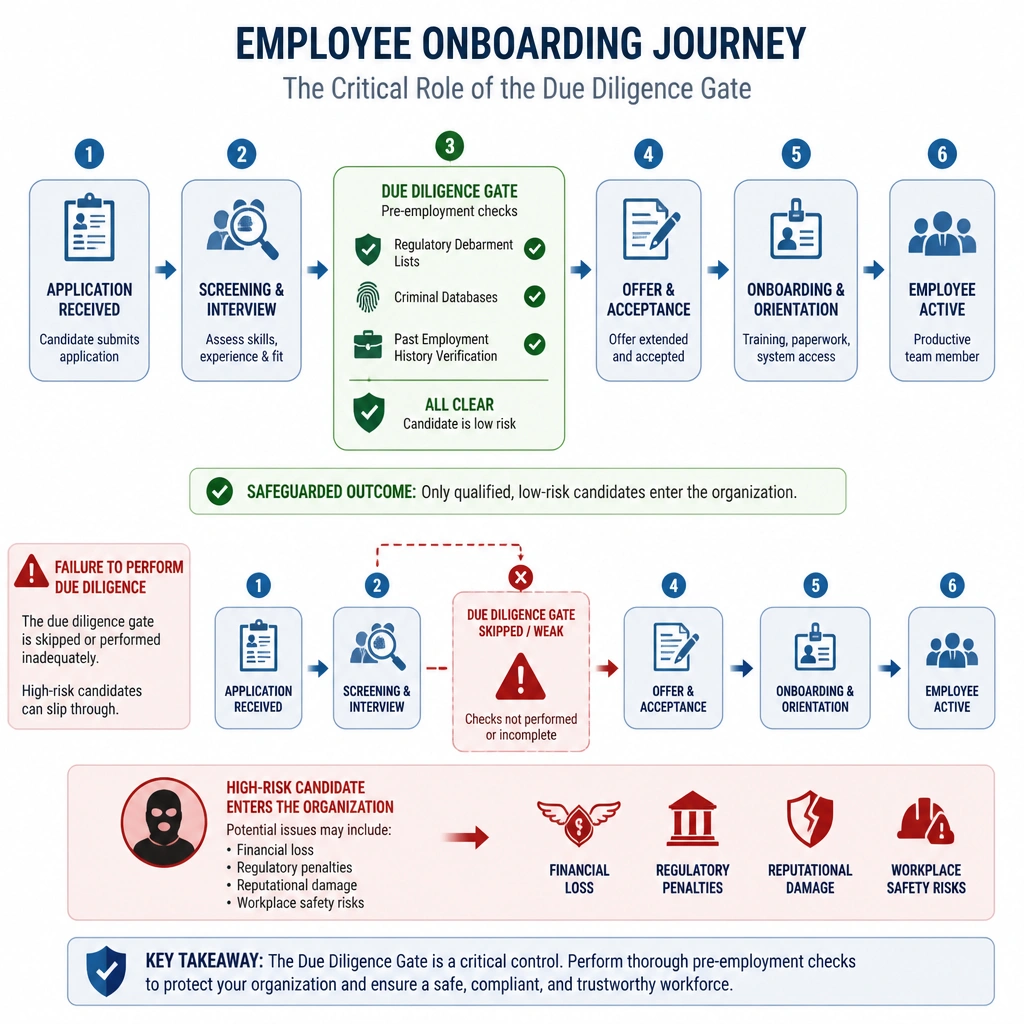
Full Explanation
Pre-employment due diligence and background screening are critical preventive compliance controls designed to ensure that the organization does not hire individuals who have a history of unethical behavior, regulatory violations, or criminal conduct. Under compliance standards, including the Federal Sentencing Guidelines for Organizations (FSGO) and international equivalents, companies must exercise due diligence to avoid delegating substantial discretionary authority to individuals whom the organization knew, or should have known through reasonable diligence, had a propensity to engage in illegal activities. A failure to uncover a public record of debarment or regulatory violation before hiring indicates a breakdown in this pre-employment screening process. Option A is incorrect because corrective controls are reactive measures taken after a violation occurs, rather than preventive hiring screens. Option B is incorrect because real-time transaction monitoring looks at ongoing transactions, not candidate background histories. Option C is the correct answer because it directly identifies the pre-employment due diligence screening gap. Option D is incorrect because reporting hotlines are designed to receive complaints about active issues, not to proactively verify the credentials of prospective hires.