
Which of the following best describes how establishing a robust "Speak-Up" culture serves as a critical component of an organization's compliance detective controls?
Select an answer to reveal the explanation.
Short Explanation
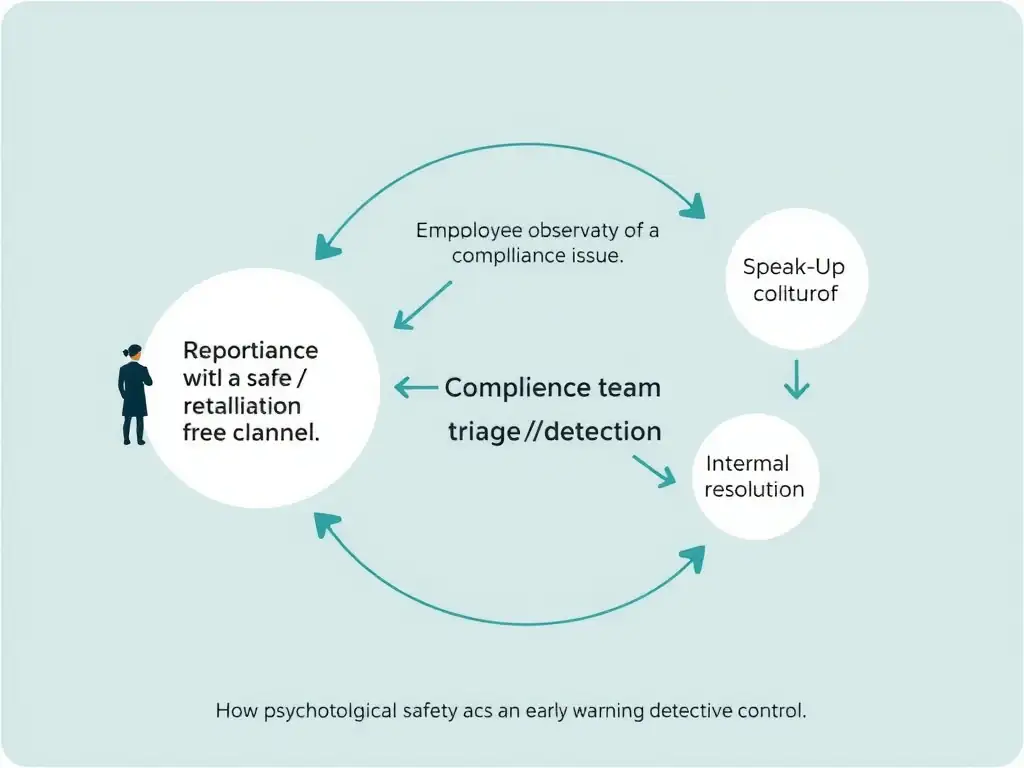
Here's the deal: your best eyes and ears are your employees, but they'll stay quiet if they fear retaliation. A Speak-Up culture gives them psychological safety to raise concerns early, so you can catch problems before they blow up.
Full Explanation
A 'Speak-Up' culture is characterized by psychological safety, where employees believe they can report ethical issues, policy violations, or legal concerns without fear of retaliation, harassment, or marginalization. In a compliance framework, this culture acts as a highly effective detective control. Because frontline employees are closest to daily operations, they are often the first to witness misconduct. Providing them with safe, reliable reporting channels, such as hotlines or open-door policies, allows the compliance team to detect and address issues internally before they trigger regulatory investigation or cause significant reputational damage. The option describing psychological safety so employees feel secure raising potential compliance concerns, allowing the company to identify and resolve issues early, is correct because fostering psychological safety to encourage early reporting is the core function of a Speak-Up culture. The option claiming it guarantees that all employees will document and report every minor operational task to their direct supervisors daily is incorrect because micromanaging daily operational tasks does not define a Speak-Up culture or serve as a detective compliance check. The option claiming it eliminates the need for any formal compliance audits or internal investigation protocols by outsourcing oversight to staff is incorrect because a Speak-Up culture complements—but never replaces—formal auditing, monitoring, and investigation protocols. The option claiming it restricts employees to reporting only major criminal violations directly to law enforcement rather than internal channels is incorrect because the objective is to encourage reporting of all compliance concerns internally, not to restrict reports or bypass internal channels in favor of law enforcement.