The Board of Directors of an international logistics company wants to demonstrate active oversight and ensure their compliance program is genuinely effective. What is the most effective approach for the board to adopt?
Select an answer to reveal the explanation.
Short Explanation and Infographic
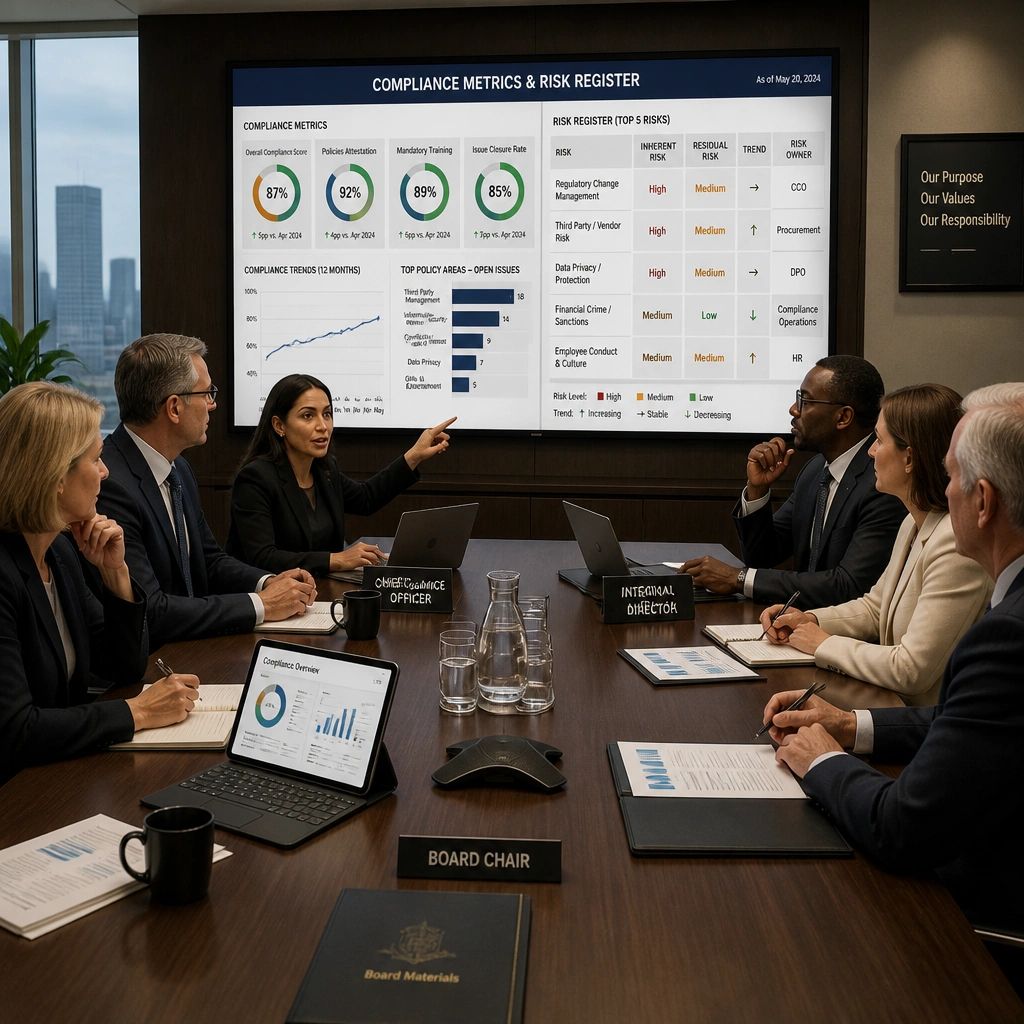
Pay close attention here: if you're on a board of directors, you can't just sit back, eat donuts, and assume everything is fine. But you also can't micromanage every single minor policy slip. Think of it like managing an IT department—you don't inspect every single line of code, but you do sit down with your lead architect and security auditors to look at the big picture and the major vulnerabilities. Board members need to have open, regular, and honest discussions with the Compliance Officer and Internal Audit. That's how you get real visibility into what's actually happening on the ground. Trust me on this one.
Full explanation below image
Full Explanation
Under modern corporate governance standards, such as the Delaware Caremark doctrine and DOJ guidance, a board of directors must exercise active, informed oversight of the company's compliance program. Board members can face personal liability if they fail to implement reporting systems or ignore red flags. To fulfill this fiduciary duty, boards must establish direct, unhindered communication channels with the compliance function. Option D is correct because regular, in-depth engagement with the Chief Compliance Officer (CCO) and the Internal Audit head allows the board to understand program performance, evaluate resources, analyze audit findings, and review key risk areas. Executive sessions (meetings without general management present) are a critical best practice to allow the compliance officer to speak candidly about potential challenges. Option A is incorrect because high turnover in the CCO position disrupts program continuity, damages trust, and signals a weak compliance culture. Option B is incorrect because reviewing minor infractions overwhelms the board with low-level operational details, preventing them from focusing on systemic risks and strategic oversight. Option C is incorrect because requiring the compliance officer to attend all business meetings is logistically impossible and a poor use of specialized resources. The compliance function should design controls and monitor them, not act as a permanent shadow to operations.