A multinational energy corporation operates in dynamic regulatory environments globally. The Chief Compliance Officer schedules annual reviews of all compliance policies and procedures. Why is this regular update cycle essential?
Select an answer to reveal the explanation.
Short Explanation and Infographic
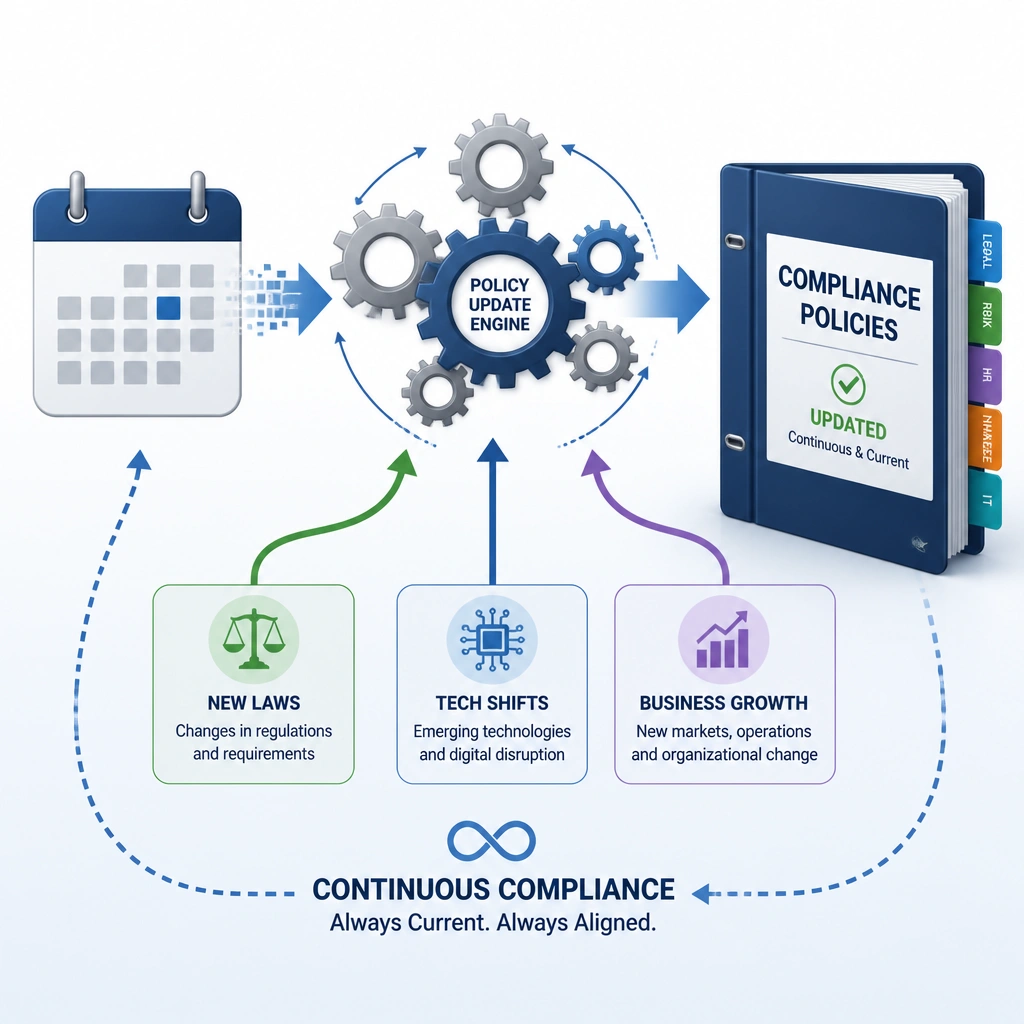
Think about your home router or firewall. Do you just set it up once and never update the firmware or security rules? Of course not! Hackers find new ways in, and new protocols come out. It's the exact same thing with compliance policies. The business landscape changes, new laws are passed, and new risks emerge. If your policies are sitting on a shelf gathering dust from five years ago, you're wide open to a breach. Regularly updating them keeps your defenses current and ready for the real world. Got it? Sweet.
Full explanation below image
Full Explanation
Policies and procedures form the structural foundation of a corporate compliance program, setting the expectations for employee behavior and operational controls. However, a compliance program cannot be static. Regulators, including the U.S. DOJ and international bodies, emphasize that a compliance program must evolve alongside the company's business model, risk profile, and the external regulatory environment. Option D is correct because the primary objective of regularly reviewing and updating policies is to ensure they remain relevant, practical, and effective in mitigating new and emerging risks. For example, the rise of remote work, new sanctions regimes, or updated data privacy laws (such as GDPR updates) require immediate policy adjustments to prevent compliance gaps. Option A is incorrect because keeping policies updated merely as window dressing (a 'paper program') without operationalizing them is viewed negatively by regulators and does not protect the company from liability. Option B is incorrect because policy updates should aim for clarity, conciseness, and usability. Simply making manuals longer and more complex reduces employee comprehension and compliance rates. Option C is incorrect because regular policy updates require expert oversight; they do not replace the need for a compliance officer, but rather serve as a core tool for the compliance officer to manage risk.