
A company implements an internal reporting hotline but maintains a policy that explicitly excludes any anonymous tips from being investigated. What is the primary risk associated with this policy exclusion?
Select an answer to reveal the explanation.
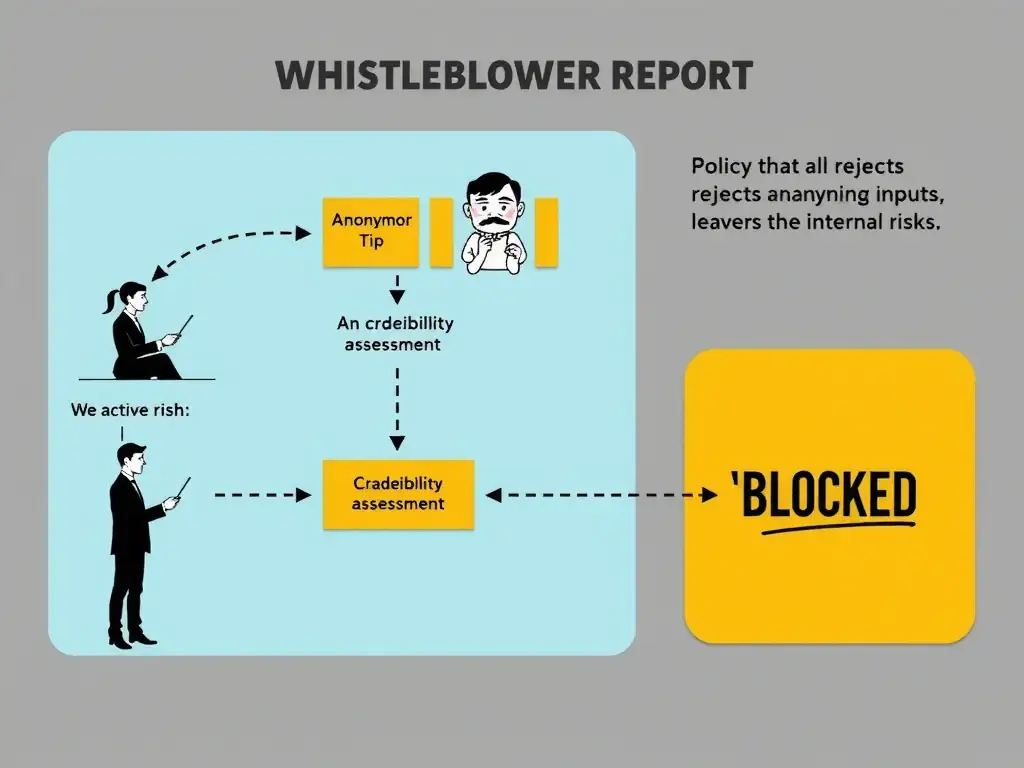
Short Explanation
Here's the deal: if you refuse to investigate anonymous tips, you're shutting down one of your best early-warning systems. Employees won't speak up if they fear retaliation, so major fraud can run under your nose for years. Listen, investigate, and protect the company.
Full Explanation
An effective reporting mechanism is a cornerstone of a compliance program. Statistics consistently show that the majority of corporate fraud and misconduct is detected through employee tips rather than audits. However, employees are often reluctant to report misconduct unless they are guaranteed anonymity, due to fear of career damage or social retaliation. The correct statement is the one saying the organization disables a crucial detective control, leaving it vulnerable to undetected systemic fraud and serious misconduct, because refusing to investigate anonymous tips disables a critical detective control. Credible anonymous reports often contain specific, actionable details, such as account numbers, project names, or dates, that can expose severe financial fraud, bribery, or safety violations. By ignoring these reports, the company allows ongoing misconduct to continue unchecked, increasing its financial exposure and legal liability. Furthermore, if regulators discover that the company ignored credible tips, they will view the compliance program as ineffective, leading to higher penalties and the loss of cooperation credit. The claim about automatic, immediate financial penalties from local law enforcement agencies upon policy publication is incorrect because, while having such a policy is considered a major weakness by regulators such as the Department of Justice or the Securities and Exchange Commission, it does not trigger automatic, immediate financial penalties simply because the policy exists; the penalty typically arises when the unchecked misconduct is eventually exposed. The claim about an unmanageable surge in high-quality, verified reports from external competitors is incorrect because a policy that ignores anonymous tips would discourage reporting, resulting in fewer reports rather than a surge in high-quality inputs. The claim that the legal team will be legally barred from representing the company in any future contract disputes is incorrect because a policy regarding anonymous tips has no bearing on a legal team's standing to represent the company in contract disputes.