
A corporate compliance audit discovers that despite having a comprehensive, written anti-bribery policy, regional managers in a high-risk foreign market are routinely bypassing vendor due diligence procedures. What is the most appropriate next step for the compliance committee?
Select an answer to reveal the explanation.
Short Explanation
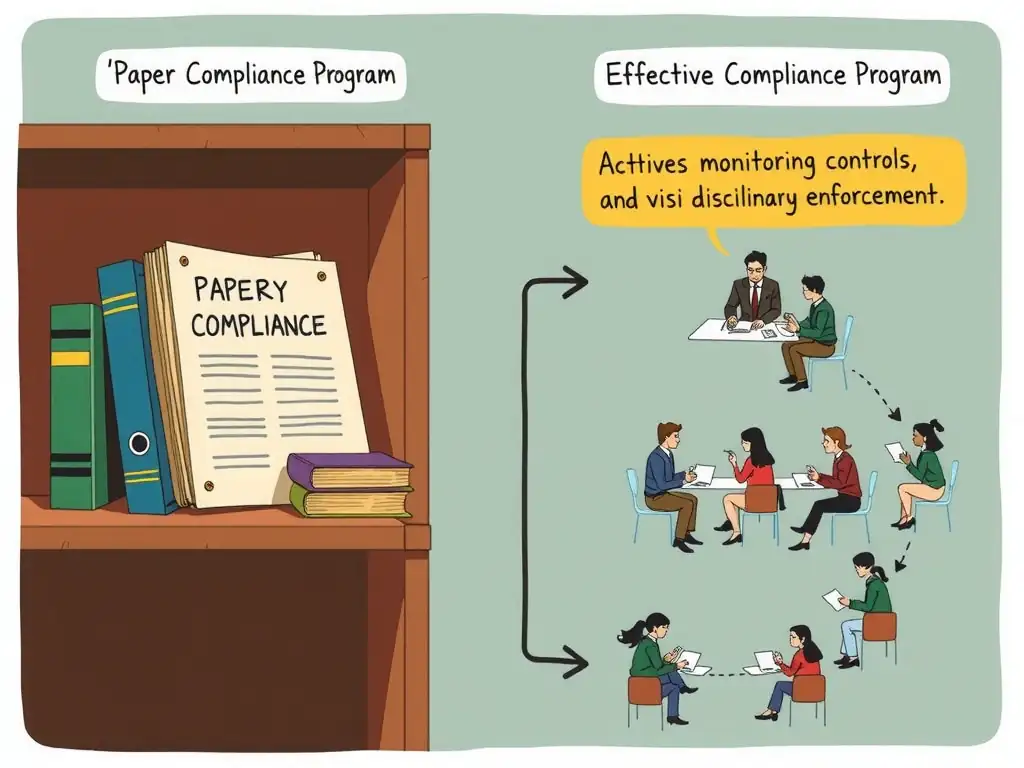
You can have a gold-standard anti-bribery policy, but if regional managers are bypassing vendor due diligence, it's just paper compliance. Regulators care about what's actually happening on the ground, so you need to hold responsible managers accountable and tighten local controls, audits, and training.
Full Explanation
A common failure in corporate compliance is the reliance on a 'paper program'—policies that exist in writing but are not active, enforced, or monitored in daily operations. When an audit reveals that policy compliance is lacking, particularly in high-risk areas, immediate corrective action is required to avoid liability under laws like the Foreign Corrupt Practices Act (FCPA). The correct approach is to initiate disciplinary reviews for the responsible managers while implementing localized controls, audits, and targeted training, because it addresses both individual accountability and systemic remediation. Taking disciplinary action against those who bypassed procedures reinforces that policies are mandatory, not optional. Simultaneously, implementing localized controls, such as secondary approvals, adding audits, and providing targeted training ensures that employees understand the rules and that the organization has mechanisms to detect and prevent future non-compliance. This combined approach demonstrates to regulators that the company takes compliance failures seriously and actively works to remediate them. The option that concludes the written policy itself is sufficient to protect the company legally and defers any local intervention is incorrect because ignoring audit findings destroys the credibility of the compliance program. It leaves the organization exposed to significant legal liability, as regulators view a failure to act on known violations as willful blindness or systemic negligence. The option that discontinues all business operations in that country immediately is incorrect because exiting a market entirely is an extreme measure that should be a last resort, not the initial response to a localized process failure. Most operational risks can be managed effectively through robust internal controls. The option that terminates the contracts of the entire regional workforce without investigating individual involvement is incorrect because firing the entire workforce is disproportionate, legally risky, and highly disruptive. It fails to distinguish between negligent actors, active wrongdoers, and innocent employees, and it does not fix the underlying control gaps.