
Which of the following is considered an essential component of a successful corporate whistleblower protection program?
Select an answer to reveal the explanation.
Short Explanation
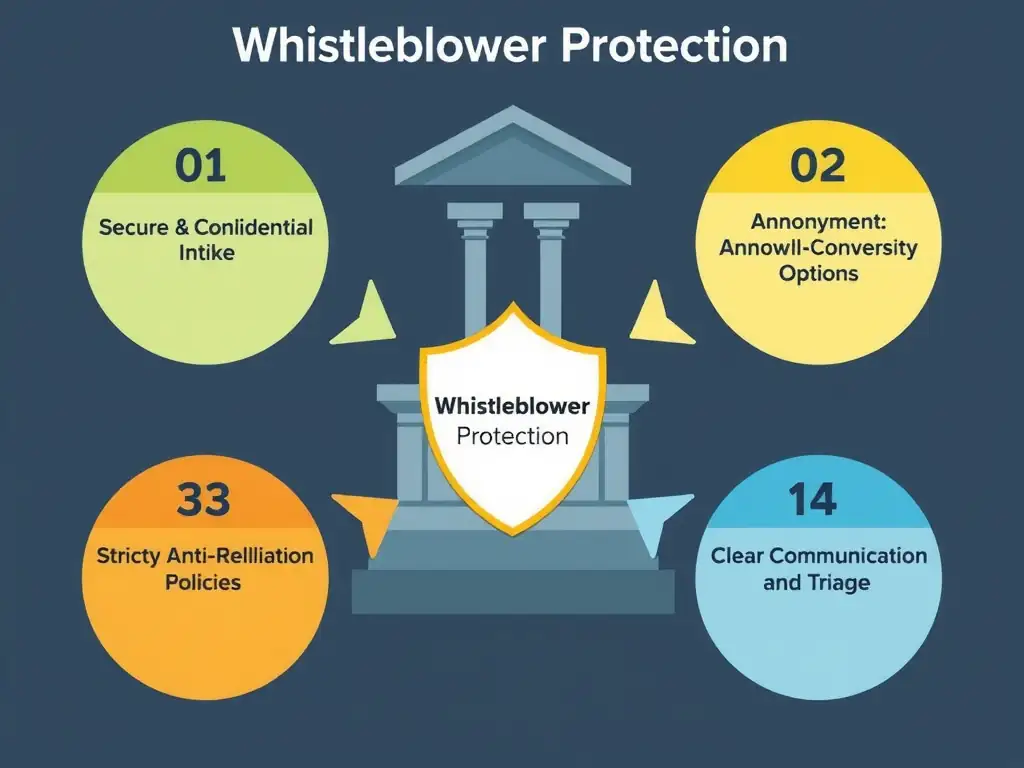
Check this out: if you want employees to speak up when they see something wrong, you have to make them feel safe. Successful whistleblower programs need rock-solid, secure, and confidential reporting channels that protect people from retaliation. When employees know their name won't get leaked and they won't get fired, they'll actually use the system.
Full Explanation
An effective whistleblower protection program is vital for identifying internal misconduct early and mitigating regulatory risk. The foundational pillar of such a program is the availability of secure, publicized, and confidential reporting channels—such as hotlines, web forms, or ombudsperson roles—paired with a strict, active anti-retaliation policy. Establishing clear, secure, and highly confidential reporting channels that protect individuals from retaliation is therefore the essential component. If employees do not believe their reports will remain confidential, or if they fear administrative, financial, or social retaliation, the reporting volume will drop, leaving the company blind to internal fraud or compliance breaches. Keeping the reporting mechanisms entirely confidential and known only to executive board members is wrong because keeping the program's existence secret defeats its purpose; it must be widely publicized to all employees. Restricting reporting eligibility exclusively to external stakeholders and independent contractors is wrong because whistleblower programs must prioritize internal employees, who are best positioned to observe misconduct, though they may also allow external reports. Mandating that all whistleblowers verify their identity and submit detailed personal information to initiate a review is wrong because forcing whistleblowers to reveal their identities, which prohibits anonymous reporting, acts as a severe deterrent to reporting and violates key compliance standards, such as those recommended under the Sarbanes-Oxley Act and EU Whistleblower Protection Directives. Robust protection programs guarantee safety and confidentiality.