
How does a corporate Code of Ethics typically differ in scope and focus from a corporate Code of Conduct?
Select an answer to reveal the explanation.
Short Explanation
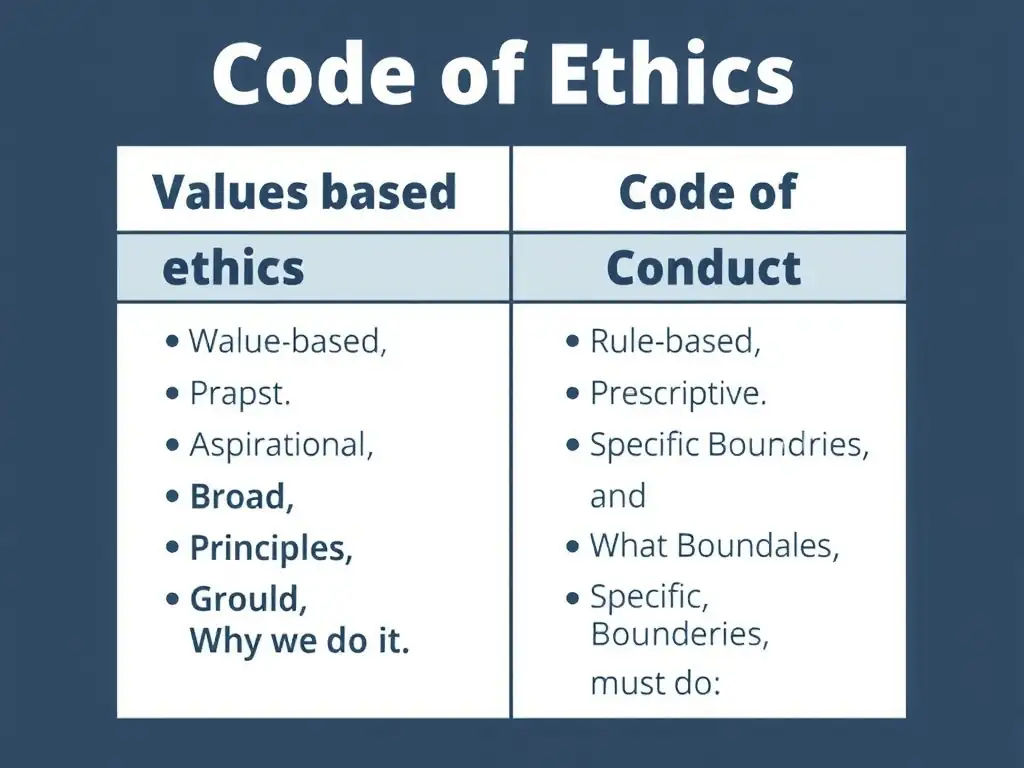
Here's the deal: the ethics code is the company's big-picture moral compass, while the conduct code turns those values into concrete do's and don'ts. You need both: ethics guides the spirit, and conduct guides the action.
Full Explanation
The ethics code and the conduct code both support organizational compliance, but they serve distinct functions. The ethics code is values-based and aspirational. It outlines the broad moral principles and core values—such as honesty, fairness, and environmental stewardship—that the organization strives to uphold. It is designed to influence culture and guide general decision-making. In contrast, the conduct code is compliance-based and prescriptive. It translates the general ethical principles into specific, operational rules, directives, and prohibitions governing employee behavior, such as guidelines on conflicts of interest, social media use, and data protection. The claim that the ethics code is a legally binding contract enforceable in court while the conduct code is merely advisory is incorrect because neither code is typically a standalone legally binding contract, though violating them can lead to employment termination or support legal actions. The claim that the two terms describe identical documents with completely interchangeable components is incorrect because they have distinct scopes and structures, even if they are sometimes packaged together. The claim that the ethics code is exclusively designed for the executive leadership team while the conduct code applies only to frontline staff is incorrect because both documents should apply universally to all employees, from the board of directors and executive officers to entry-level staff. Combining aspirational values with concrete behavioral boundaries creates a robust ethical framework.