An organization hires a senior financial manager who, it is later discovered, was previously barred by a regulatory authority from working in the securities industry due to fraudulent activity. The company's pre-employment screening process failed to uncover this public disciplinary record. This scenario represents a failure in which of the following compliance areas?
Select an answer to reveal the explanation.
Short Explanation and Infographic
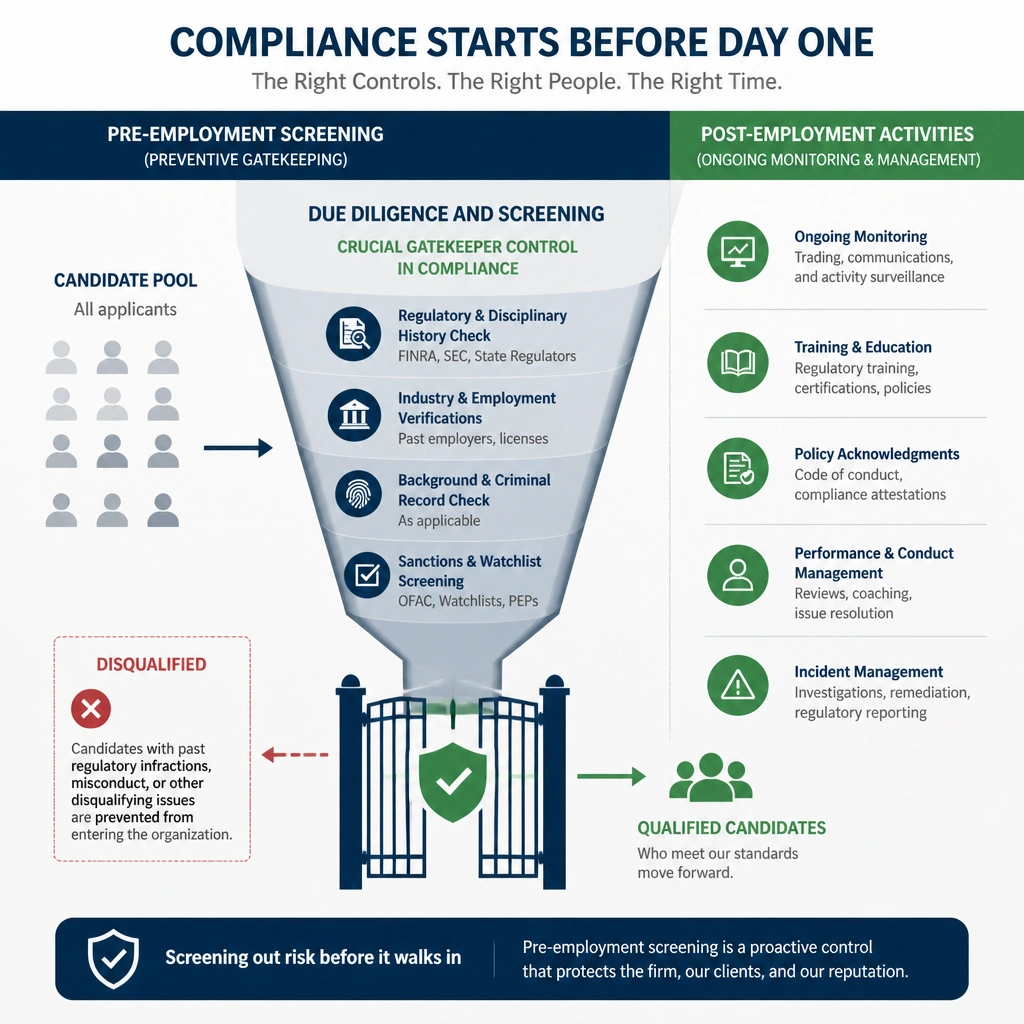
Here's the deal: you can't just let anyone through the door without checking their credentials first. Think of it like letting a stranger into your server room without checking their ID badge—not gonna end well! In the compliance world, we call this pre-employment screening or due diligence. If you hire someone with a history of regulatory violations because your background checks were sloppy, that's a direct failure of your due diligence processes. You've got to vet people before they start, not try to clean up the mess afterward.
Full explanation below image
Full Explanation
The correct answer is A, "Due diligence and screening." An effective compliance program must include reasonable steps to ensure that the organization does not delegate substantial discretionary authority to individuals whom the organization knows, or should know through due diligence, have a history of engaging in illegal or non-compliant activities. Pre-employment screening, background checks, and regulatory registry verifications are key preventive controls within the due diligence framework. When an organization fails to identify public regulatory bars or violations during the hiring process, it exposes itself to significant compliance, operational, and reputational risks, indicating a failure in its screening and due diligence controls. Conducting comprehensive due diligence on employees, especially those in senior or fiduciary roles, is a standard expectation under the Federal Sentencing Guidelines for Organizations.
Let's look at the distractors to see why they are incorrect: - B (Post-employment monitoring) is incorrect because monitoring happens after an employee has already joined the organization. While monitoring is crucial for detecting ongoing compliance issues, it is not designed to prevent the initial hiring of individuals with pre-existing regulatory violations. - C (Corrective action implementation) is incorrect because corrective actions are taken after a violation or control failure has occurred to remediate the root cause and prevent recurrence. The failure to vet the employee in the first place is a preventive control failure, not a remediation failure. - D (Periodic auditing) is incorrect because auditing is a retrospective evaluation of whether controls are functioning as intended. While an audit might later discover that background checks are not being performed correctly, the failure to catch the manager's background prior to hire is a failure of the screening control itself, not the audit process.