
An administrative assistant witnesses a department manager altering expense reports to cover personal spending. However, the assistant decides not to report the violation because they fear the manager will find out and terminate their employment. This scenario highlights a significant weakness in which aspect of the organization's compliance program?
Select an answer to reveal the explanation.
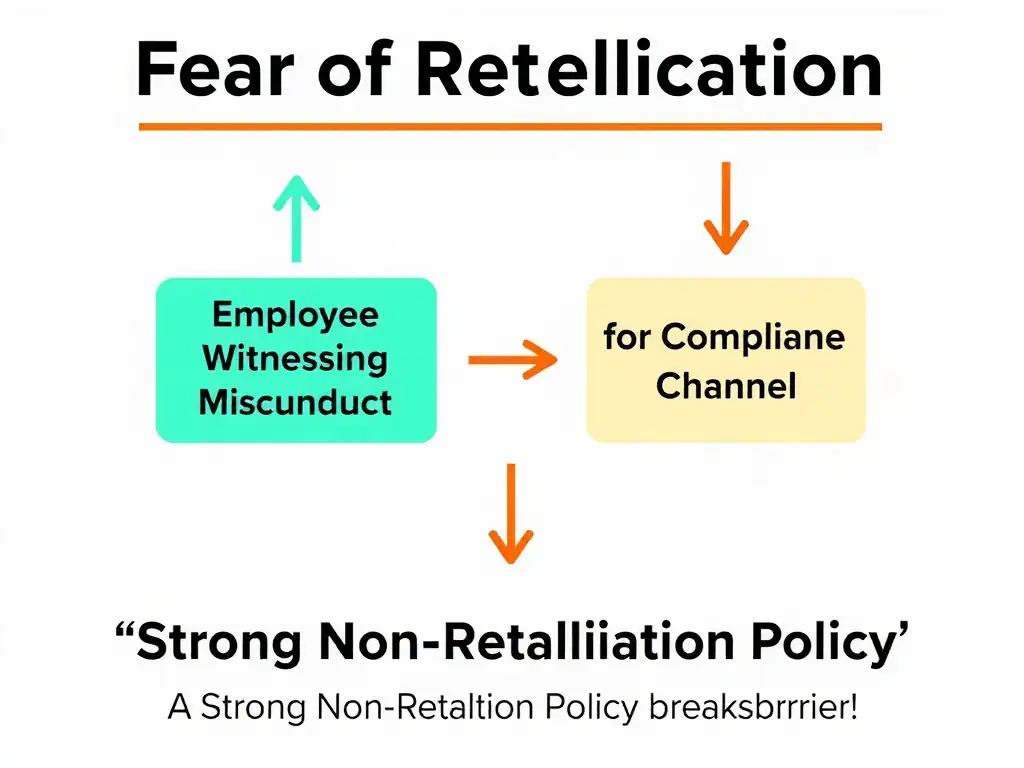
Short Explanation
Think of it like this: you can have the most beautiful compliance handbook in the world, but if employees are too scared of getting fired to report a violation, it's useless. Fear is a compliance killer. When someone sits on evidence of fraud because they don't trust the company to protect them, your non-retaliation policy is just words on paper and your ethical culture is broken.
Full Explanation
An organization's ethical culture is defined by how employees behave when no one is watching, and whether they trust the company to do the right thing when issues are raised. The fear of retaliation is one of the most common reasons why employees remain silent about observed misconduct.
This scenario reflects a weakness in non-retaliation policy enforcement and the overall ethical culture. The assistant's decision to stay silent due to fear of termination points directly to a failure in the organization's non-retaliation protections and ethical climate. Healthy culture actively reassures employees that they will be protected when raising concerns. If employees do not believe these protections are real, they will not report misconduct, leaving the organization vulnerable to ongoing fraud.
Internal financial transaction controls and ledger auditing are not the primary weakness here. While the manager altering expense reports is a financial control issue, the employee's hesitation to report the behavior is a cultural and policy trust issue, not direct failure of the financial system itself.
Regulatory risk identification and prioritization methodologies are also not the weakness. Risk assessment refers to the process of identifying and evaluating compliance risks; the issue here is the failure of the reporting mechanism due to cultural fear, not the failure to identify the risk of fraud.
Third-party due diligence and vendor onboarding processes are unrelated. They relate to the vetting of external vendors and partners, not to an internal employee's decision to report observed misconduct.
To remedy this weakness, executive leadership must visibly support whistleblowers, train managers on what constitutes retaliation, and discipline anyone who attempts to retaliate against reporters.