
When designing an enterprise-wide risk management framework, the compliance department establishes a comprehensive Code of Conduct. From a risk mitigation standpoint, what is the primary objective of this document?
Select an answer to reveal the explanation.
Short Explanation
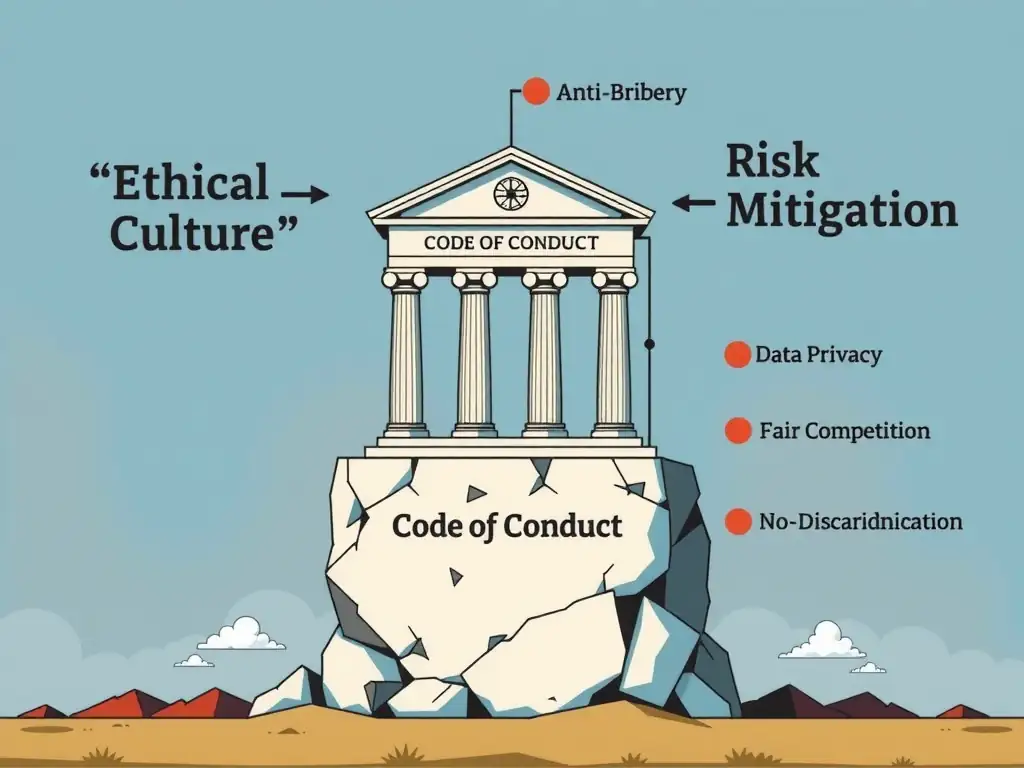
Think of your Code of Conduct as the North Star for your employees. When they hit a gray area, they need a solid foundation to guide ethical choices, not a magic liability shield or a replacement for actual laws. A clear code sets expectations and helps prevent disasters before they start.
Full Explanation
A corporate Code of Conduct is the cornerstone of any effective compliance and risk management program. It translates a company's core values into practical guidelines and behavioral expectations for all employees, officers, and directors. The correct choice is the one that describes the Code of Conduct as a foundational reference that defines corporate values, establishes behavioral expectations, and guides ethical decision-making. From a risk management perspective, the Code of Conduct is a preventive tool. It establishes the 'tone at the top' and provides a clear framework for ethical decision-making, helping employees navigate complex scenarios such as conflicts of interest, gifts and entertainment, and data privacy. By defining acceptable behavior, the code helps prevent misconduct from occurring in the first place. The option that says the document should replace local laws and international regulations with internal corporate guidelines is incorrect because a corporate policy can never supersede or override local, national, or international laws. The code must align with and support legal requirements, not replace them. The option that says the document should shield the corporation from any civil liability arising from illegal employee conduct is incorrect because a Code of Conduct cannot completely insulate a company from legal liability if its employees commit crimes or regulatory violations. However, having a code and training employees on it can serve as mitigating evidence during regulatory investigations, such as under Federal Sentencing Guidelines. The option that says the document should serve as the sole statutory basis for verifying the commercial validity of business transactions is incorrect because the Code of Conduct is an ethical and behavioral guide, not a commercial contract or legal authority that validates business transactions. An effective Code of Conduct should be written in plain language, easily accessible, and reinforced through regular training and executive communication to ensure it is integrated into the daily operations of the company.